
The recent nature’s fury had not only triggered flood that claimed many invaluable lives, inundated huge areas, snapped water, power and essential services in various parts of the country but left a trail of devastations with a tell-tale impact on the ecosystem.
Arunachal Pradesh experienced never seen before calamities and its Capital Complex yet to overcome the tragedies though 27 lives have been lost so far.
Annual monsoon floods are a natural part of Kaziranga National Park (KNP)’s ecosystem but pose multiple threats to animals, including the risk of drowning or getting poached or hit by cars while fleeing rising water. This year’s flood has cost KNP heavily with properties worth around Rs 7.35 crore lost, many endangered species killed and its geography getting totally de-shaped while infrastructures like highlands, roads, bridges, forest camps, watch towers etc damaged, The Sentinel reported quoted Jorhat-based KNP DFO Rohini Ballav Saikia.
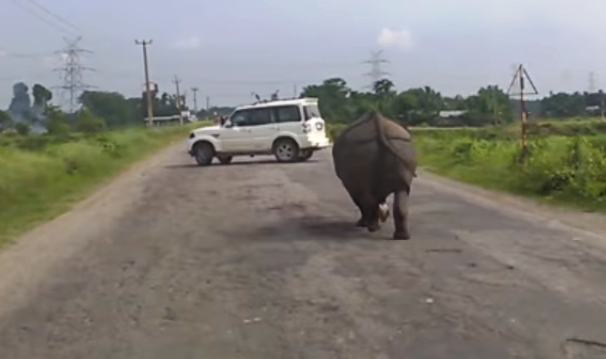
With 85% of total KNP’S 4.3 sqkm area totally submerged, 81 animals including four rhinos were killed, another 78 animals either stranded or injured. The endangered species killed included rhino, snakes, hog deer, swamp deer, buffalo, boar, porcupine were found dead. Eight hog deer were also hit by speedy vehicles while crossing the NH-37 during the peak flood hour this time, according to the DFO.
The KNP is home to world’s largest population of greater one-horned rhinos (Rhinoceros unicorns). Recurring annual floodwater replenishes KNP’s ecosystem, puts the park’s animals, particularly the rhinos, in multiple threats. Swift currents of floodwater tend to wash away the animals, while floods force them to seek refuge in the nearby Karbi Anglong hills, crossing the NH-37. It increases the vulnerability of the rhinos to poaching,” Saikia had told Mongabay on July 19 last
Four rhinos, including calves, were drowned in this year’s flood, but the figure could rise, as more carcasses could surface once the floodwater completely recedes,” park director Satyendra Prasad Singh said in a July 20 interview.
Singh also confirmed one incident of a rhino straying out of the park while fleeing floodwater. An adult rhino traveled 8-km outside the park’s borders, ending up in Panibhoral village on July 12 last. It took several days for forest officials to chase the animal back to the protected areas, said Singh.
KNP in Golaghat and Nagaon districts of Assam, famous being home to two-thirds of the world’s great onehorned rhinoceroses, is a In 1985, Kaziranga was declared a World Heritage Site by UNESCO for its unique natural environment. According to joint census, conducted jointly in March 2015 by state’s forest department and few recognized wildlife NGOs, its rhino population is 2,401 -1,651 adult rhinos (663 male, 802 females, 186 unsexed); 294 sub-adults (90 males, 114 females, 90 unsexed); 251 juveniles and 205 cubs.
Kaziranga, declared tiger reserve in 2006, is home to the highest density of tigers among protected areas in the world besides it is home to large breeding populations of elephants, wild water buffalo & swamp dear. Kaziranga, Located on the edge of Eastern Hoimalaya biodiversity hotspot, is recognized as an important bird area by Bird Life International for conservation of avifaunal species.
The park celebrated its centennial in 2005 after its establishment in 1905 as a reserve forest buts its history is traced back to Mary Curzon, Baroness Curzon of Kedleston, who had visited the area 1904 but failed to see a single rhinoceros, though the area was famous for it. She had persuaded her husband to take urgent steps to protect the dwindling species which he did by initiating planning for their protection. The Kaziranga Proposed Reserve Forest was created with an area of 232 sqkm on 01.06.05.


 20
