
Flowers as ‘a thing of beauty is joy for ever’ have provided enough thoughts to poets, novelists and thinkers of all ages to energize their pens and enrich their creations. William Wordsworth once wrote: “God made the flowers to beautify the earth and cheer man’s careful mood; and he is happiest who hath power to gather wisdom from a flower, and woke his heart in every hour to pleasant gratitude”.
Flowers, finding mention in poems across but have relevance in places of worships besides from births to deaths, marriages to mushairas, functions to funerals. The South Indian women are great connoisseurs of flowers and their braids are invariably decorated with aromatic colourful flowers daily. Karnatak undoubtedly leads India in floriculture.
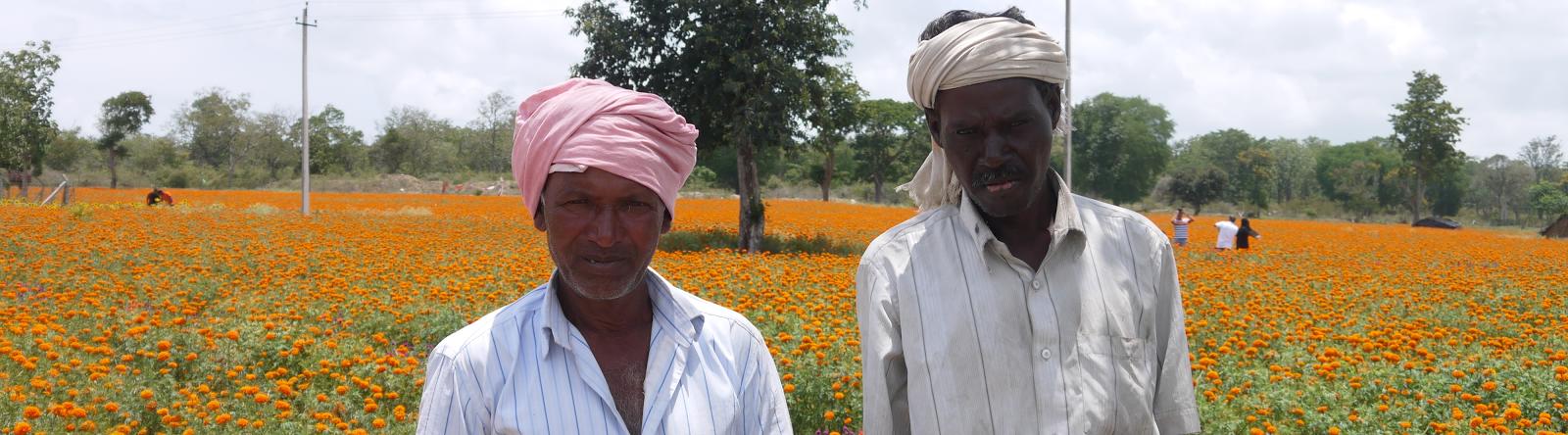
Travelling through NH-766 while returning from Ooty and Mysore recently, large areas of colourful flowers, mainly marigolds, sunflowers etc drew my attention. When I stopped and went inside a flower garden in Madur village, many tourists were already on photo shoot.
Farmer Yashwanta, through an interpreter, informed that the four acre area belonged to three of them, but this year the production was comparatively less due to poor rainfall. The harvest four times in a month and the weekly production of around two quintals is sold in Bengaluru market @ Rs 700 per quintal.
Raggi Muddeaggi Mudde’s write-up on 17.07.17 – Floriculture Industry in Karnataka – stirred up my inquisitive mind.
“Floriculture, or flower farming, is a discipline of horticulture relating to cultivation of flowering and ornamental plants for gardens and for floristry, comprising the floral industry. The development plant breeding of new varieties is a major occupation of floriculturists. Floriculture crops include bedding plants, flowering plants, foliage plants or houseplants, cut cultivated greens, and cut flowers. As distinguished from nursery crops, floriculture crops are generally herbaceous. Bedding and garden plants consist of young flowering plants (annuals and perennials) and vegetable plants.
“Flowers are mainly for export. This business is growing in the world at around 6-10% per annum. In 2007 the size of the industry was $80 billion. In spite of a long tradition of agriculture and floriculture, India’s share in the international market for these flowers is negligible. During the last 10 years, taking advantage of the incentives offered by the Govt, a number of floriculture units were set up in India for producing and exporting flowers to the developed countries. Most of them were located near Mumbai, Bangalore and Delhi and obtained technical know-how from Dutch and Israeli consultants.
“Karnataka is the leader in floriculture, accounting for 75% of India’s total flower production. The state has the highest area under modern cut flowers, and 40 flower growing and exporting units. The country’s first and only flower auction centre is located in Karnataka. There are 18,000 hectares under floriculture cultivation in Karnataka, which went into floriculture for over 300 years. The Tigala community near Devanahalli and Chickaballapur are extremely good at growing flowers.
“The International Flower Auction Bangalore (IFAB), the operating company controlled by growers, in 2003 had taken over the operations of the IFAB, run by the state-owned Karnataka Agro Industries Corporation (KAIC). An agreement to this effect was signed between representatives of South India Floriculture Association (SIFA) and KAICMD, in presence of state’s additional CS Vijay Gore, who is also IFAB chairman. SIFA has a 5% stake in IFAB, while small growers hold 16%.
“Karuturi Networks, a little known Bangalore company, is close to acquiring Netherlands-based Sher, world’s largest producer and supplier of roses, for about $50 million (Rs 220 crore) to emerge as global leader in roses. Sher’s greenhouses in Netherlands, Kenya and Ethiopia produce 600 million roses annually.
“The high-value crops grown in green houses are cultivated under controlled conditions, protected from pests, diseases, wind and humidity. Popular flowers used in the modern floriculture that are in demand are roses, anthurium, gerbera, gladioli, orchids, carnations and bird of paradise grown in poly houses.
Flowers are also used for extracts for perfumes and natural dyes. Dry flowers are used for decoration. One can earn Rs 100,000 per hectare per year from dry flowers. Nursery business – growing plants in pots and in production of seeds are also popular.
“Floriculture offers careers in production, marketing, export and research. Jobs range from cultivation or growing flowers, to seed production, dry seed production, seed production, marketing, decoration. National Horticulture Board helps one to set up a flori business. Agriculture and Processed Food Products Export Development Authority (APEDA) helps entrepreneurs with cold storage facilities and freight subsidies.
Why not Arunachal take a cue? – II
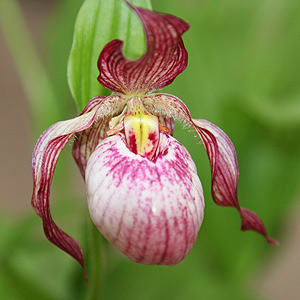
Lady’s sleeper orchid, which grows aplenty in Arunachal, fetches up to £5,000 (Rs. 1,79,000)a piece in UK
The Orchid Society of Arunachal Pradesh with “love for flower” as theme has been instrumental in organizing orchid festival many a times in the state.
Eight-member EU ambassadorial delegation headed by Joao Cravinho on 17.05.12 had sought to know the trade potentials and the challenges confronting of Arunachal Pradesh, so that EU, presently having 50.7% trade with India worth $100 billion in 2011 (49.3% India to EU), could balance the trade by venturing into this State.
While interacting with the members of the Arunachal Chamber of Commerce & Industries (ACCI), he had said the business sector is one of the major players in widening bilateral relations between the EU and India, and that Arunachal could contribute significantly in that direction.
Briefing the diplomats representing 35 nations (Cravinho alone represents 27 nations), ACCI president Techi Lala while enumerating the uniqueness of unexplored Arunachal had said that with the GoAP’s investment-friendly Industrial Policy-2008 and Public Private Partnership (PPP) Policy in place, the ACCI has been working as a catalyst to create an atmosphere conducive to investors and hoped that Arunachal would become an international trade hub with the EU’s cooperation.
ACCI chief adviser Pradeep Kumar informed about the state’s orange bowl Wakro (in Lohit district) whose products are being exported to Bangladesh, benefiting the garden owners by Rs 8 to Rs 10 per year; the Arunachalee banana wine, termed as ‘Queen of Wines’ by French tourists at the Shillong wine festival; and the renovated Arunachal portion of the Stillwell Road up to Pangsau Pass along the Indo-Myanmar border.
Cravinho sought more details and nodded in the affirmative when Kumar sought the EU’s help for technology transfer to produce commercial variety of orchids having global market.
The visit would herald a new era of business opportunities, said ACCI vice president Dominic Tadar, while general secretary Tarh Nachung said Arunachal is the only Indian state where the people are empowered by the Constitution to develop along the lines of their own genius, reflecting the bottom-up development policy, a principle adopted recently by the Planning Commission.
Floriculture scope in NE
The DDK in its ‘Beyond Barriers’ 45-minute programme from 4 pm on 08.01.14 had highlighted the potential of ‘Floriculture industry in North East’ with experts offering opinions from Aizawl, Itanagar, Agartala, Imphal, Kohima and Shillong DD kendras linked live by the NE programme production centre, Guwahati.
Anchor senior journalist Pradeep Kumar set the discussion in motion by saying “Flowers are not only unique example of nature’s beauty but have also enthused poets to spontaneously pen poems while providing means for the livelihood of lakhs of people across the globe.”
When Arunachal Pradesh is known to have over 600 species of orchids of the 1300 found in India and 42 species of rhododendrons, there is no reason why this Himalayan state should fall behind, Kumar poised for an answer.
Arunachal Pradesh Horticulture Research & Development Mission director Egam Basar, speaking as an expert, pointed out that floriculture has a global market worth Rs 6 lakh crore while India’s total export amounted to only Rs 7,500 crore, 0.6% of global share. State’s vast unique endowment offers huge scope for floriculture industry estimated at Rs 10,000 crore and capable of employing 10 lakh people, he disclosed.
“The climate and altitude of the state is conducive for growth of floriculture, particularly orchids which are grown aplenty in the state,” floriculture scientist Dujum Kato pitched in to add. He suggested commercial cultivation of flowers and orchids that could provide a best alternative to livelihood to the Arunachalees.
State’s orchid man Tilling Doley finding no support to market his orchids from Ziro to the South East Asian market after initial success, and had to close down his enterprise setup with financial support from NEDFi after suffering heavy losses. Nothing has materialized so far despite huge potentials in the state, while Sikkim has marched ahead in floriculture generating huge employment and minting money.
An ASSOCHAM workshop was organised at Itanagar on July 28 last at the initiative of ACCI where its senior director Dr Om S Tyagi had announced to hold a three-day workshop-cum-exhibition at Itanagar during October-November next. Arunachalees interested in floriculture should be ready to explore the floriculture scope to turn it into a money spinner.


 20
