
Introspecting history
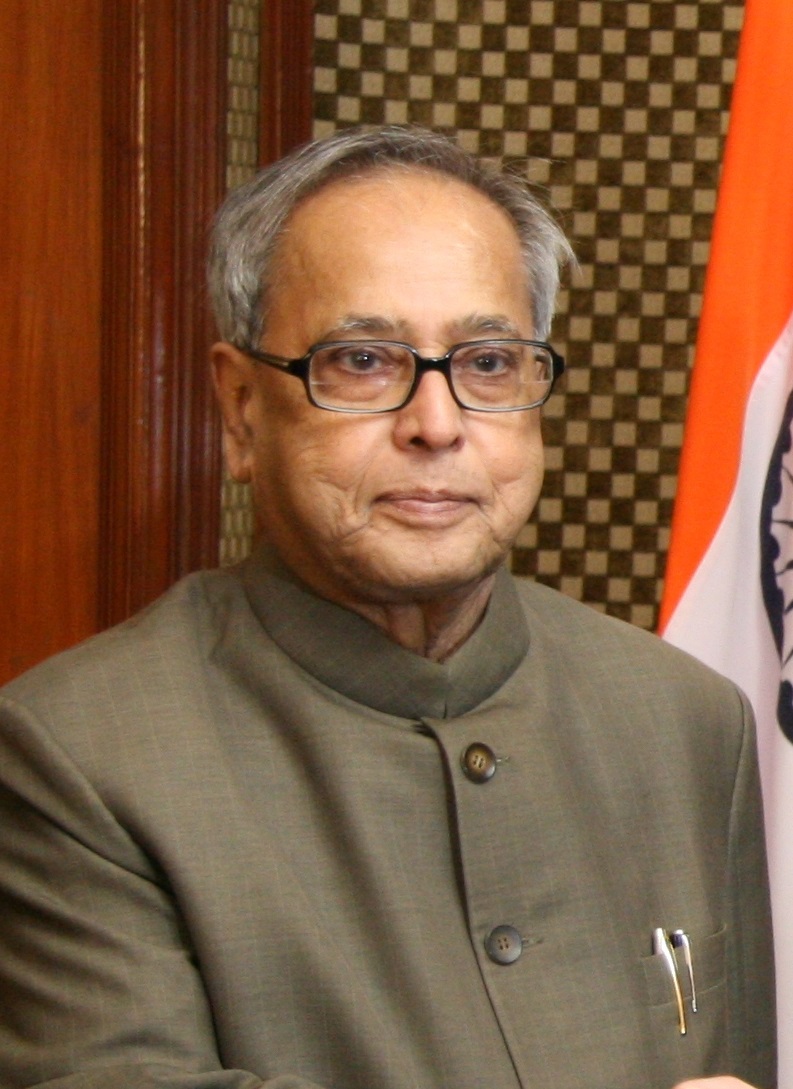
Deviating from age-old tradition of not making public what transpires during meeting between the President and the PM, outgoing President Pranab Mukherjee went public about a letter written to him by PM Narendra Modi.
“Pranab Da, you have always been a father figure and a mentor to me,” an emotional PM Modi wrote in a letter to President on his last day as President on Wednesday. The letter, which spells out the bond between the two leaders who come from different political ideologies, was shared by the former President on Twitter.
“On my last day in office as the President, I received a letter from PM @narendramodi that touched my heart! Sharing with you all,” Mukherjee said in a tweet.
Modi responded by saying, “Pranab Da, I will always cherish working with you.” In the letter made public by Mukherjee, the PM wrote he had come to New Delhi three years ago as an outsider. “The task before me was huge and challenging. In these times, you have always been a father figure and a mentor to me. Your wisdom, guidance and personal warmth have given me greater confidence and strength,” he said.
Modi said Mukherjee’s “intellectual prowess” had been of constant help. “You have been so warm, affectionate and caring to me. Your one phone call asking me ‘I hope you are taking care of your health’ was enough to fill me with fresh energy, after a long day at meetings or on a campaign tour,” he said in the letter written on July 24.
Mukherjee stepped down from office the next day. “Pranab Da, our political journeys took shape in different political parties. Our ideologies, at times, have been different. Our experiences are also varied. My administrative experience was from my state, whereas you have seen the expanse of our national polity and politics for decades.
“Yet, such is the strength of your intellect and wisdom that we were able to work together with synergy,” Modi wrote.
Why(?) is a question, whose answers could be unfolded by a serious introspection of political history. I knew Mukharjee, lovingly called Pranabda, since 1981 and saw the influence he commanded in power corridors of Lautiyan’s Delhi. Nothing used to move in Congress without his green signal, being the top trouble shooter .
Pranabda got his break in politics in 1969 when PM Indira Gandhi got him elected to Rajya Saabha on a Congress ticket. He became one of IG’s most trusted lieutenants, and a minister in her cabinet by 1973 with his meteoric rise. During the controversial internal emergency (1975–77), he was accused like several other Congress leaders of committing gross excesses. His service in a number of ministerial capacities culminated in his first stint as finance minister (1982–84) while being Leader of the House in the Rajya Sabha (1980 to 1985).
It was in 1984 when 21 bullets silenced PM IG forever. Rajiv Gandhi as AICC general secretary was campaigning for next general elections in Calcutta. Pranabda, finance minister then, had to air-dash to fetch him. It was abuzz in political circle that Rajiv had asked him in the plane: Who is next to take over as PM? Pranabda had honestly replied that he was the rightful successor. Rajiv had maintained stoic silence but Pranabda’s opinion did not bode well. He lost out in the ensuing power struggle and sidelined while Rajiv took over as the PM.
He had formed his own party – Rashtriya Samajwdi Congress, which merged with Congress in 1989 after reaching a consensus with Rajiv Gandhi. After Rajiv Gandhi’s assassination in 1991, his political career revived when PM P V Narasimna Rao appointed him Planning Commission chairman in 1991 and foreign minister in 1995. Following this, the elder statesman became the principal architect of Sonia Gandhi’s ascension to AICC presidency in 1998.
When Congress-led United Progressive Alliance came to power in 2004, he won Lok Sabha seat for the first time. From then until his resignation in 2012, he was practically number-two in PM Manmohan Singh’s Govt. He held a number of key cabinet portfolios-Defence (2004–06), External Affairs (2006–09) and Finance (2009–12), headed several Groups of Ministers and Leader of the Lok Sabha.
Pranabda became CWC member on 27.01.78; a member of AICC Central Parliamentary Board & treasurer of AICC and the party in 1978; appointed AICC campaign committee chairman for general elections in 1984, 1991, 1996 and 1998; chairman of AICC central election coordination committee (1999-2012); to Central Election Committee in 2001; AICC general secretary in 1998 and voted Outstanding Parliamentarian in 1997 by Indian Parliamentary Group and served as Sonia Gandhi’s mentor after she reluctantly joined politics.
His talents were reflected during negotiations for Patent’s Amendment Bill in early 2005 when UPA allies from the Left front were opposed to monopoly aspects of intellectual property, he was roped in for his negotiation skills that helped in bringing on board CPI-M leader Jyoti Basu, convinced his own colleagues including commerce minister Kamal Nath that finally had facilitated passing of the billon 23.03.05.
India Today wrote that Mukherjee’s rôle in “skillfully pushing through the historic 123 Agreement and treaty with Nuclear Suppliers Group” may have saved UPA-II Govt from 2008 motion of no confidence. He had played a crucial role in steering the Cabinet pre-Lok Sabha elections when PM Singh underwent a by-pass surgery in 2008–09 by taking additional charges as chairman of Cabinet Committee of Political Affairs and Union Finance Minister despite in charge of External Affairs.
When “The Best Administrator in India” award was conferred on him in 2011, PM Singh commented: “Mr. Mukherjee’s knowledge of parliamentary matters was stupendous. The wide respect he commanded and his long association with the political leaders across the spectrum had proved invaluable in conducting the parliamentary business.”
His political skills and long experience in Govt led him to head a large number of committees of ministers in the Govt, a device that has been employed to obtain consensus within the members of the governing coalition on contentious issues. At the time of his resignation on being nominated as the UPA’s presidential candidate, Mukherjee was heading several groups of ministers (GoMs) and empowered groups of ministers (EGoMs).
He was “very well respected within the party social circles while media described him as “a reputation as a number-crunching politician with a phenomenal memory and an unerring survival instinct. Ultimately, his loyalty to Congress for six decades was rewarded as UPA’s nominee for presidency in July 2012 and comfortably defeated P A Sangma by winning 70% of electoral-college vote.
Congress on downward march now needs a serious introspection. Had Pranabda taken over as PM after Indira Gandhi, I feel India’s political history would have been different, Congress journey perhaps could have been poles apart. Who knows Rajiv Gandhi could have been alive! Congress by sidelining Pranabda had lost its most shruide trouble shooter. There was none in Congress to replace Pranabda, which I experience closely as press secretary to AICC general secretary Prof Shyam Sundar Mohapatra. In fact, Pranabda during his visit to Itanagar as union finance minister to campaign for 2009 assembly elections recognised when I introduced myself in Rajiv Gandhi Bhawan.
With no trouble shooter, Congress miserably lost in 2014 general elections followed by fast development that has been reducing the number of Congress lawmakers across the country with the BJP capturing one after another state kala, baley aur kaushaley.
- Assam invaded with 9 Cong MLAs along with Himanta Biswa Sarma joining BJP
- Uttarakhand captured with 9 Cong MLAs including Vijay Bahuguna shifting allegiance
- Arunachal Pradesh conquered when 33 of 43 MLAs of ruling party PPA including CM Pema Khandu join BJP. All had shifted from Cong to PPA
- Manipur captured with 6 Cong MLAs along with some independents holding lotus
- Goa won with independents, ally of BJP, Congress MLA Vishwajit Rane joining BJP
- UP vanquished with 8 BSP MLAs along with Swami Prasad Maurya, many former Cong & SP MLAs including SP’s Gaurav Bhatia join BJP
- Lotus blooms in Karnataka with joining of 5 Cong leaders including former MP Jayaprakash Hegde
- BJP expands to Odisha with joining of 4 prominent Cong leaders including Biswajit Nayak & Surendra Panda
- Tripura TMC unit’s several leaders including its founder Arun bhowmik & Tripura Congressman Rajeswar Sen join BJP
- Gujarat cannot be left behind and 6 Cong MLAs shift loyalty
- BJP snatched away Bihar’s throne from RJD by engulfing entire ruling JDU
- 2 Samajwadi MLCs quit on Thursday, 3 MLAs ‘waiting’ to join BJP while BJP strategist (president) Amit Saha rushes to Lucknow.
Counting continues with clock ticking tick…tick,….tick..
Seemingly, Congress is still in deep slumber instead of awaking to learn from its mistake and emerge as a strong opposition if unable capture power!


 20
