
Beyond the Horizon
By Pradeep Kumar
Many civilizations were born and perished since centuries along the banks of rivers, which are life givers. “A clean India would be the best tribute India could pay to Mahatma Gandhi on his 150th birth anniversary in 2019,” Prime Minister Narendra Modi had said while launching Swachh Bharat Mission at Rajpath in New Delhi on 02.10.14. It was launched throughout length and breadth of the country as a national movement with aim to achieve ‘Clean India’ by 02.10.19.
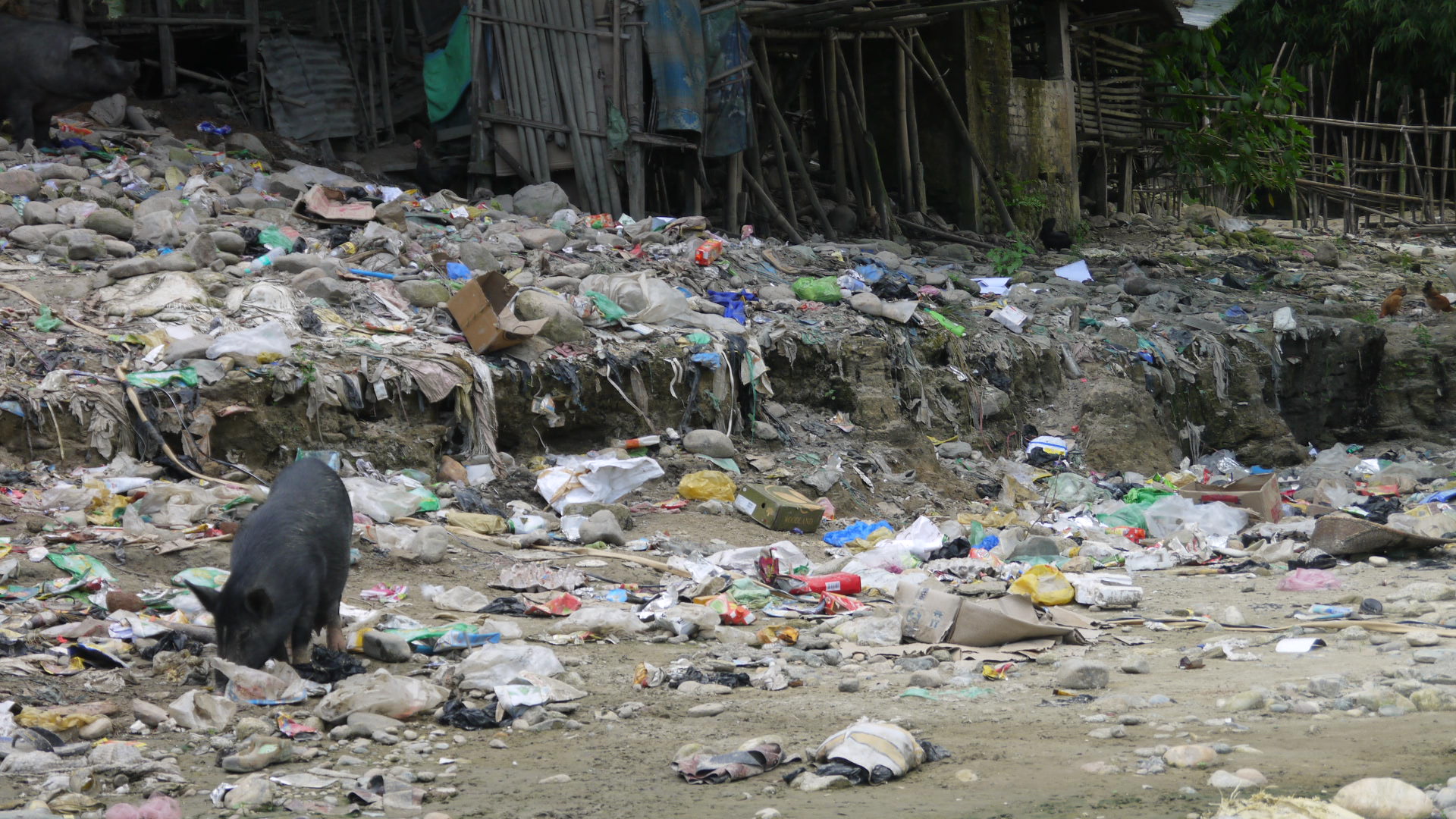
Interestingly, the SBM seemingly has excluded the rivers. Dikrong River, once the main source to feed water to Naharlagun, where the first state capital was set up in 1974, is the glittering example.
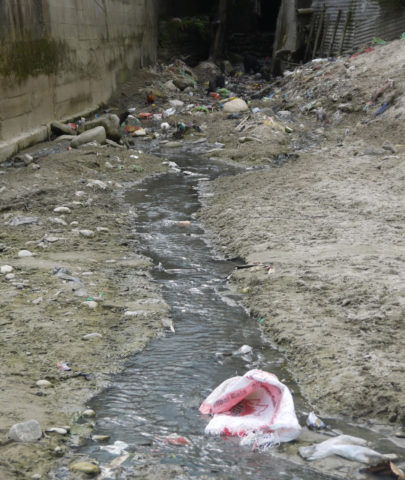
No leader whosoever has ever spoken about cleaning drive to clean rivers except in Ziro. If anyone looks at the Dikrong or Barpani river would get the glittering proof.
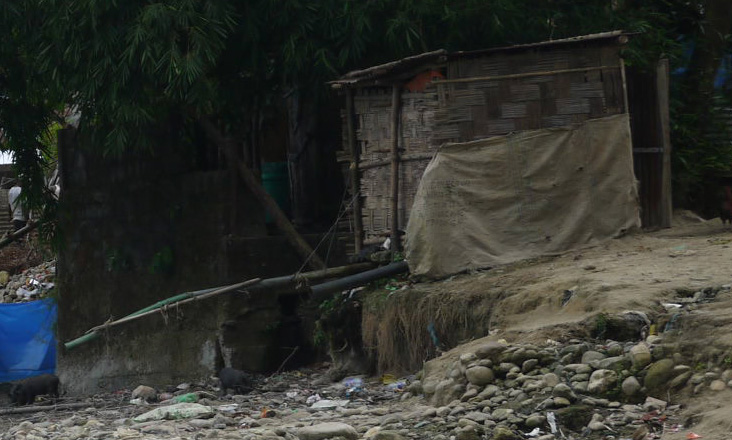
The concept of toilet came to Arunachal Pradesh too late. But shockingly many toilet outlets flows to this river, which is used as dustbins for throwing garbage, dead animals are dumped, clothes are washed by washer-men & civilians while goats & pigs after being killed washed before being taken to market for sale.
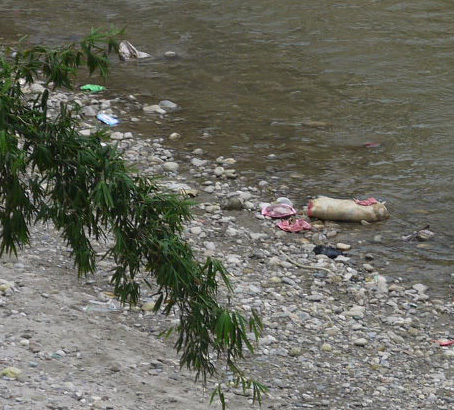 Many poor belonging to BPL category living along the river bank sustain their lives by using the water of the same river. What a tragedy? Neither the Capital district administration nor the Itanagar Municipal Council has taken note or acted against such life threatening activities that pollute its water beyond redemption. Who should be blamed? Is it not the civil society? If yes, will the civil society rise to clean the river for a healthy life and also beautify the capital city.
The other day two noted surgeons reprimanded me for failing in my duty to awaken those who matter from their deep slumber to act. With natural water sources getting reduced by unmindful development, the conflict between the development advocators and conservation protagonists would continue while life would flow like the river water nonstop! But if the civil society fails to realise the damaged being caused now, it would be too late for them repent.
Myths and Realities: Dikrong Rivers have been part of our social, historical, religious and cultural realm. We have read and heard of many myths that revolved around rivers. It has provided great stimulation and inspiration to musicians, artists, and poets. Many songs, paintings, and writings have venerated rivers as mother and deities. Rivers thus have come to occupy and interact with our cultural value system. Like any other myths and legends about river and river valleys, pre historical description of Dikrong river are found in early religious book of Assam like Kalika purana, where Rriver Dikrong is described as Dikkar Basini. Towards east of Dikrong, flows the Subansiri river which is described as golden river in Kalika Purana. There was also description of existence of gold in Dikrong river. The valley of Dikrong has been historically a place inhabited by people of different caste, religion and tribes.
 According to one belief system, Dikrong valley is said to be the birth place of Madhabdev the disciple of Sri Sri Sankardev, Padma ata, Anirudha etc who led the New Baishnavi movement in the north bank of upper Assam. Another legend has it that the great Assamese Guru Sri Sri Sankardev along with 126 disciples lived in the valley for six months and six days at Badati. Seemingly, it was during this period of his stay that he could establish a great Changini Satra and through it made attempts to create good relationships through Baishnav Dharma among various people including the STs and SCs. As far as ecological history of Dikrong River is concerned, we have to trace the history of the region back to 1987 and 1950. “The Great Earthquake of 1950 created havoc, especially in upper reaches of the Himalaya, in and around the Siang and the Dibang river courses as well as in upper Assam plains. There was considerable impact on the topography on both sides of the Brahmaputra valley. This natural calamity was mainly responsible for the abrupt changes in the river ecology. The Brahmaputra and its many tributaries in upper Assam suffered badly due to blockage caused by uprooted trees, boulders, and soil erosion.”
We are well aware of this famous earthquake of 1950 in Assam where like most other district, Lakhimpur too came to be affected badly. The ecological damage of the earthquake to the rivers in state of the Assam and to the neighbouring states to which these rivers flow were far reaching. The earthquake had blocked the flow the river Subansiri in Arunachal Pradesh due to the huge rocks that fell into it. In fact, both the earthquakes caused irreparable changes to the region and its rivers. The earthquake caused landslides, blockage of rivers courses, flash flood when the landslide created temporary dams busted, raising of riverbeds due to heavy siltation, fissuring and sand venting, subsidence or elevation of existing river and lake bottoms and margins and creation of new water bodies and waterfalls due to faulting. This affected the agricultural and navigational system; besides the floodwaters of the Dikrong and the Ranganadi river affected the districts agricultural and navigational system. Many inhabitants of Dikrong Valley shifted to other places. Various people from Majuli and other place of Assam filled up the vacant places. This resulted in multi dimensional changes of the region.


 20
