
By M. Jayashankar & Mahendra Devanda
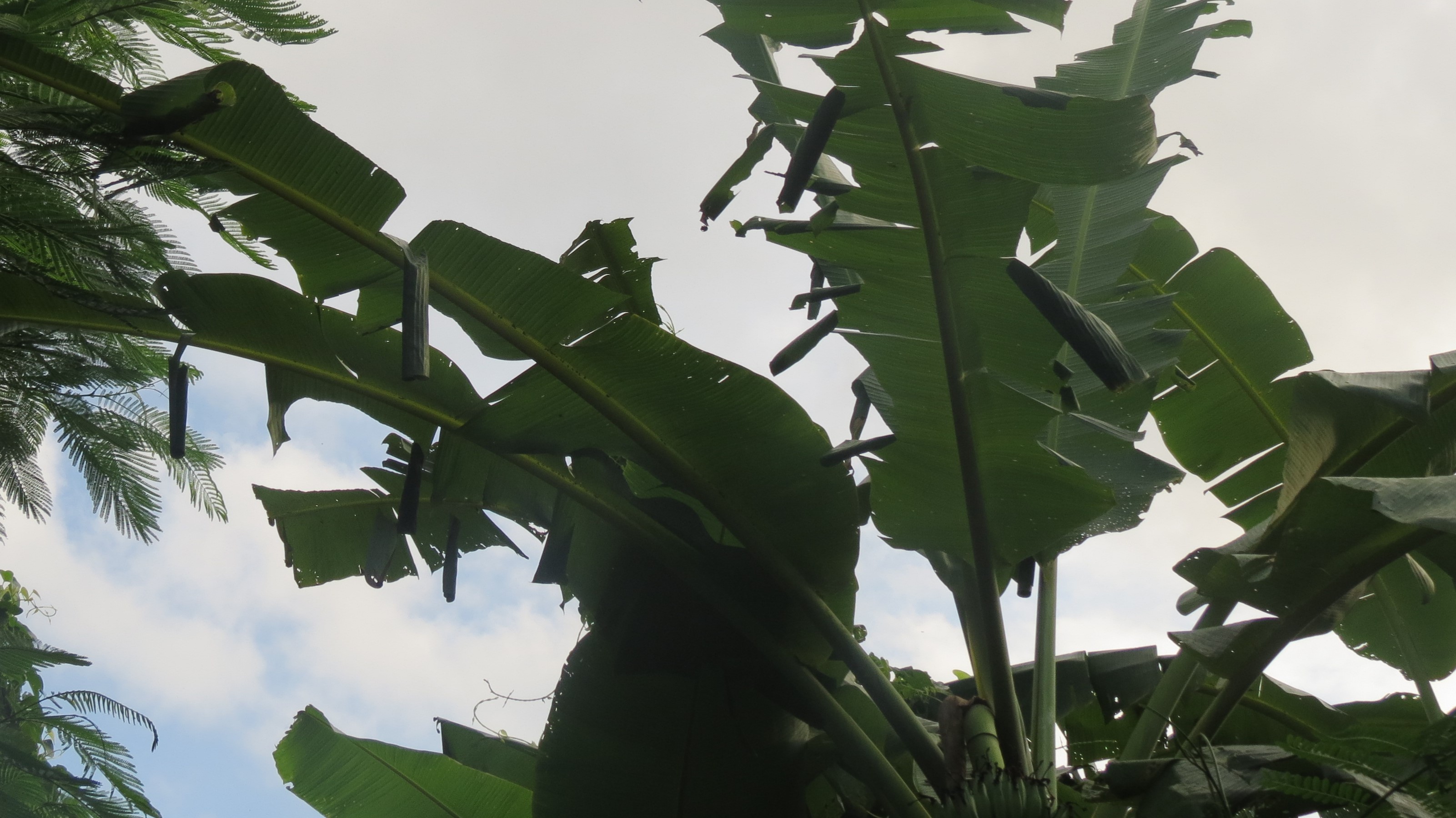
It is customary to serve food on banana leaf in most south Indian functions and festivals. There is a butterfly that has mastered the tradition of rolling the banana leaf during dining, but the difference it is going to spend its early life eating and pooping inside the banana roll. The butterfly is called banana skipper of the genera Erionota. Arunachal Pradesh is home to widely distributed wild banana. A stroll through the APRC/ZSI residential quarters a walking-jogging destination spread over four acres in Senki Valley we spotted numerous rolls on banana plants (technically referred as pseudostem). The smaller rolls were visible only on close examination but the large ones could be spotted as judges hair rolls!!.The caterpillars do the damage by shredding the leaves and making numerous rolls of the leaf blade, up to 15 cm long(aptly called as banana leaf rollers), although they attain a maximum length of 6 cm only. However, the amount of leaf tissue consumed is less compared to the total area rolled by the larva. Native to South-East Asia the skippers spread to Mauritius in 1970 and subsequently to Hawaii, Guam, Saipan and Papua New Guinea.
Banana is the primary host and the larvae are recorded on bamboo, coconut and oil palm as well. Eggs can be spotted by thorough examination of the leaf blade mostly on the underside, laid singly or in groups of up to 25. The eggs hatch into pale green caterpillars in 5-8 days. These shiny black headed crawlers make their way to the edge of the leaf to make characteristic rolls to feed and roll inside till they emerge as adult butterflies. Privacy and ‘no disturbance’ are focal to the caterpillars leading a solitary life in their rolled ‘gufa’. They roll new one if a roll rolls up next to theirs or crawl to another leaf abandoning the first made roll. There are five larval stages attained over a period of one month. All except the first stage are cosmetic in appearance with white waxy powder all over their bodies. This cosmetic application protects them to close their rolls more securely and to survive rain showers. Pupation occurs inside the leaf roll and the butterfly emerging after 10 day pupation is chocolate brown with three yellow spots on its forewings. In South-East Asia they are known to have five generations a year. The adults have characteristic red eye and are hence commonly called ‘palm redeye’. It was difficult to photo capture the adults because of their quick and darting flight, a character of skippers grouped under the butterfly family called Hesperiidae. The banana skipper is known to spread as eggs on leaves of banana plants used as planting material, and possibly, longer distances in vehicles, boats and planes.
There is available data of damage up to 60% of the leaf area of banana plants been recorded during outbreaks of this butterfly population leading to reduction in the total photosynthetic area affecting banana yield. Its natural population is regulated and kept under control by different species of parasitoids-tiny wasps that insert their eggs into larvae of the butterfly slowly killing them. Hand-picking is also practiced for backyard gardens and small plantations. Lashing rains also bring about death of the young caterpillars and strong wind reduces populations by shredding the banana leaves hindering leaf rolling by the caterpillars. A regular vigil to look for the distinctive leaf rolls, up to 15 cm long, made by the caterpillars and subsequent observation for caterpillars in the rolls with shiny black heads covered in wax is indicative of skipper infestation. Use of plant-derived pesticides like neem or chilli sprays is also advised to check severe infestations.


 20
