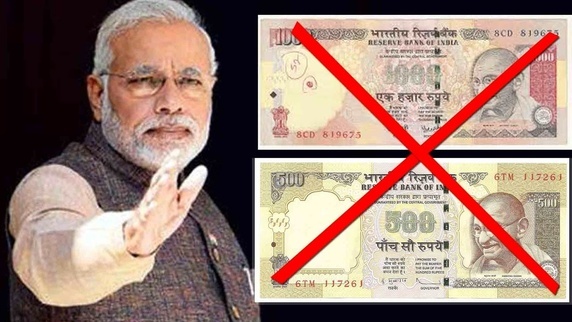
Dance of demonetisation-remonitisation!
By Pradeep Kumar
ITANAGAR | Sept 23 | Arunachal Pradesh, remotest state of India far away from New Delhi, is till caught in a catch 22 situation with demonitisation-remonitisation dance still on.
Firstly, the era of digital money transfer is still a distant dream with internet playing hide and seek and GoI’s Digidham proving a lip-service. The link failure in Naharlagun railway out agency and Borum railway reservation for continuous few days in June last is an example.
Secondly, banks would not divulge the quantities of currency notes received from the RBI, but undoubtedly it would be less anticipating internet banking. Deomali SBI branch in Tirap district had faced acute shortage of liquid currencies for a month in February last causing untold sufferings to 20,000 tribal people. Security for transporting huge hard cash by road and non-availability of helicopter had poised serious challenge.
Why demonitisation was launched and what are the impacts?
Objective of note ban?: Prime Minister Narendra Modi referred to “black money” 18 times in his maiden speech on demonetisation on 08.11.016. But, how many times did he refer to digitization, cashless economy or integration of economy? Not even once. (The Quint)
The narrative of note ban has slowly changed over months. From a war on black money, the GoI gradually described this as a righteous war of the honest against the dishonest. Digitisation and a move towards a cashless economy were also introduced as intended objectives of demonetisation. Why the narrative continued to shift is a million dollar question?
The cost of withdrawing high-denomination currency notes to wipe out black money from the country will be about Rs 1.28 lakh crore during 50-day window till December 30, the Centre for Monitoring Indian Economy (CMIE) said, adding the overall cost could be much higher leading to long-term impact on economy, reported the Economic Times today.
The demonitisation had invalidated 86% of Rs 17.8 lakh crore of currency in circulation on October 28, the private economy watcher estimated. “A steady stream of news reports of empty mandis, low footfalls at malls and drop in business in restaurants, stressed factories paint a grim picture of effects of a sudden withdrawal of liquidity from markets,” CMIE report said on Thursday.
Emphasizing that all estimates are conservative and limited to the 50-day window, CMIE said the GoI and the RBI are estimated to bear a cost of Rs 16,800 crore, largely on account of printing new currency notes and transporting them to banks, ATMs and post offices.
It said businesses are expected to pay the biggest price of demonetisation, which became effective on November 9, and the immediate impact could be about Rs 61,500 crore or 48% of total cost of the exercise.
“We estimate the direct impact on business in terms of drop in discretionary spending by households. This alone adds up to more than half a trillion rupees during the above 50-day period,” it said. After enterprises, the other big sector to get hit is banks, which, “lose a lot more.”
Wage levels of bankers are higher than those of average person in the queue and banks suffer overheads and operational costs in terms of recalibrating ATMs to dispense new notes. “Banks would do little else during this 50-day period and we estimate that they would bear a cost of Rs 35,100 crore,” it said.
People standing in queues to exchange or deposit old currency notes bear 12% of the total cost and could lose Rs 15,000 crore in foregone wages during the period. The long-term impact could be more, CMIE said.
“All estimates are admittedly conservative. All estimates are limited to the 50-day window. However, impact of low liquidity, broken supply chains and loss of confidence in consumers is likely to impact the economy over a longer period,” CMIE said.
The demonetisation move has also hit the pace of announcements of new investment proposals during quarter ended December 2016. New investment proposals worth Rs 1,25,000 crore were observed during quarter ended December 2016 as against Rs 2,36,000 crore per quarter on average in preceding nine quarters of the Modi Govt, the CMIE said.
New investments worth Rs 2,097 crore were announced, on an average, per day during 39 pre-demonetisation days (October 1 to November 8). “This average dropped sharply by 61% to Rs 824 crore during post-demonetisation period. Number of projects announced per day dropped from 6 to 3 by a similar comparison,” CMIE added.
Outcome questioned: New Delhi’s apparent reluctance to announce value of recalled notes is prompting speculation that the mission to unearth black money has failed, Samanth Subramanian wrote in The National on 02.08.17.
Queues at ATMs after demonetisation on 8-9 November 2016 midnight contributed to a decrease productivity, Dhiraj Singh wrote in Bloomberg.
A failure on this front will prove a setback to Modi’s Govt, given the hardships imposed on citizens by demonetisation and its harmful impact on the economy.
Between January and March, economic growth slumped to 6.1%, lower than growth of both targets of 7.1% and the 7.6% seen during same period in 2016.
RBI governor Urjit Patel on 13.07.17 told a parliamentary committee that RBI’s all 59 counting machines had been put into service, seven more hired and likely to buy more.
The question of how effective demonetisation would be against tax evasion and black money was hotly debated. “By making an unexpected announcement that high-value currency would not be valid, the GoI thought that [cash] hoarders would be caught off guard,” How India Lives founder John Raja, a firm that analyses public data, told The National.
“Black money held in cash is a very small proportion of total illegal wealth,” economist C Rammanohar Reddy said. “Those who do hold stocks of cash are powerful enough to launder it and recycle it in different ways into the banking system.”
Even as early as January – three months after demonetisation kicked in – a Bloomberg report revealed that 97% of all invalided notes had already been returned to the RBI. That report was based on anonymous GoI source in the know of the process. However, the RBI then denied that figure as correct.
Dismissing the notion that counting returned notes would take more than nine months, Reddy cited two other possible reasons for the delay.
“One is that the money deposited in the banks is very close to amount of high-denomination notes in circulation then,” indicating that cash hoarders had somehow been able to “launder” their money by converting to legitimately earned income that could go into the banking system, he said.
Alternatively, it could mean that the volume of hoarded, undeclared cash with private citizens was far less than projected, contrary to the GoI’s claims, Reddy said. The other possible reason was that “the high-value notes deposited is more than what was supposed to be in circulation”.
“Whatever the reason, it is an embarrassment to the GoI and the RBI,” Reddy said. “So they are either checking and counter-checking, or they are just holding back” the results.
Demonetisation complete failure?
Modi Govt has defended its move saying the benefits of demonetisation will create an impact on the country’s economy in the long run, Indian Express reported on 05.01.17
As much as 97% of currency notes, outlawed by the GoI on 08.11.16, have reportedly returned to banks, posing a huge question mark on PM Modi’s demonetisation move.
Politically, too, Modi Govt has faced immense criticism from the Opposition as well as from within the ruling National Democratic Alliance with ally Shiv Sena saying: Demonitisation had created a sense of fear that was witnessed during British Rule.
Opposition parties led by Congress have called for a probe into PM’s move to demonetise note asking that a committee be setup and a white paper be presented in Parliament.


 20