
By Pradeep Kumar
ITANAGAR | Oct 01 | Indians rising above castes, creeds and religions invariably celebrate Durga Puja, Dipawali, Christmas and Holi festivals symbolising secular spirit.
India, 7th largest nation by area, 2nd most populous and most popular democracy in the world, celebrate numerous festivals linked to religions, traditions and cultures. But these festivals have broken all barriers to prove that “we are Indians and festivals unite and cement our ties (hum hey Bharat ki santan aur parv hamey jodta hey sampark ko sudhrud karta hey).
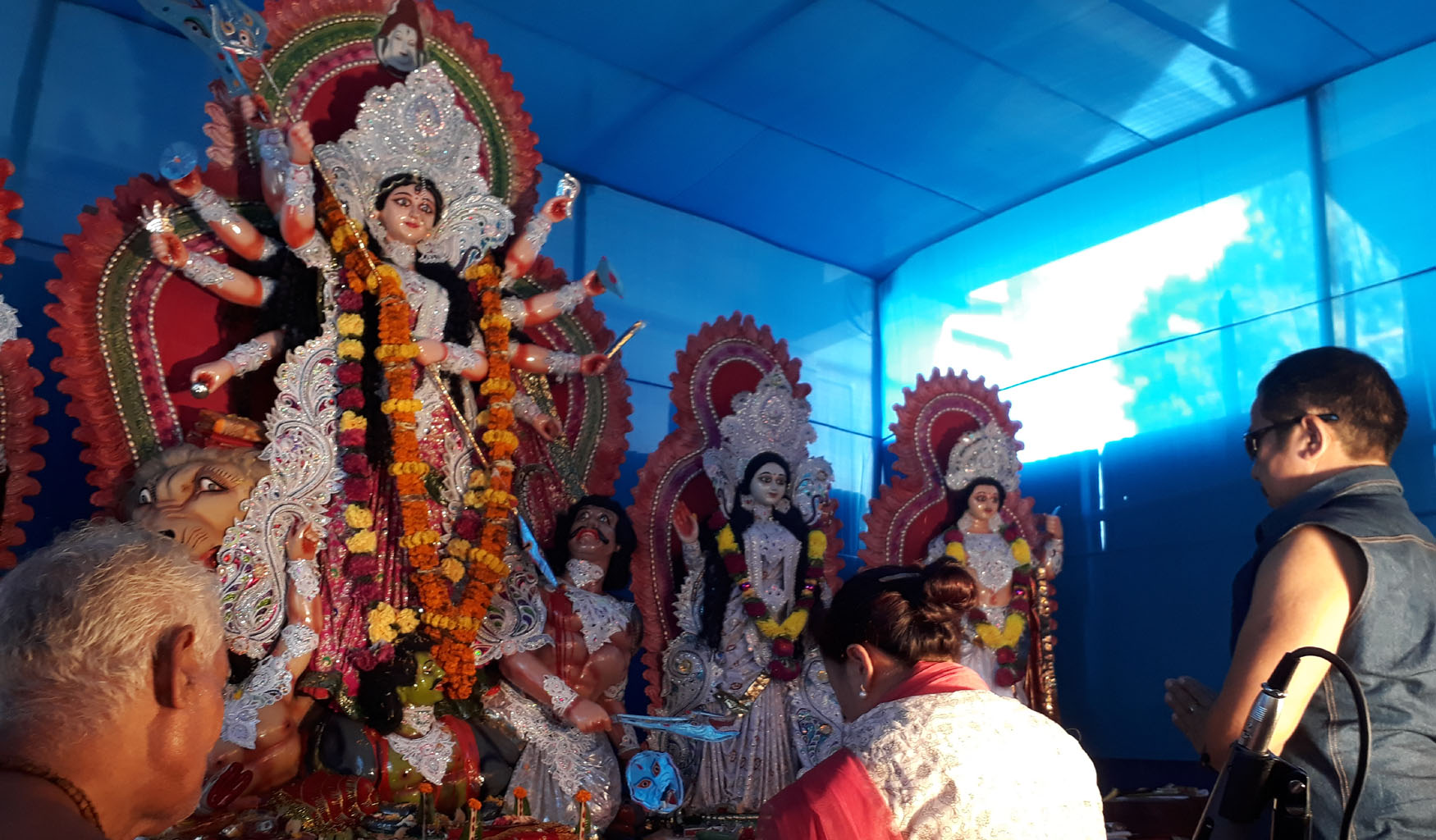
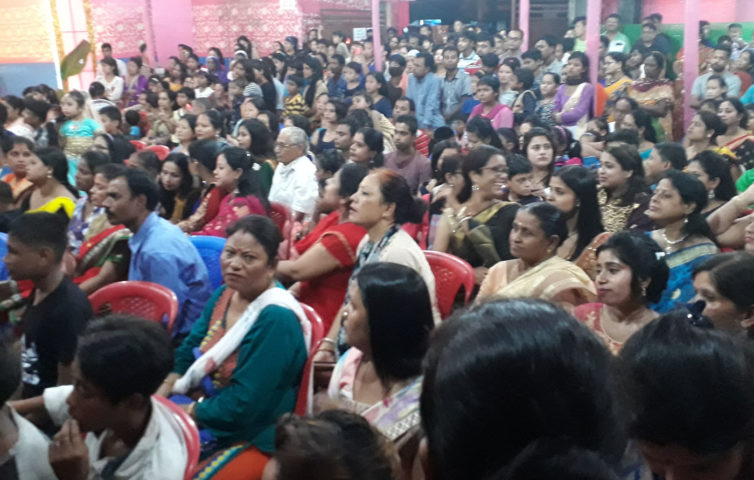
All classes of people made steady rows to numerous puja pandals in Capital Complex to offer obeisance to Maa Durga, set, ate and danced together like family members reflecting bonhomie, even in this tribal dominated state.
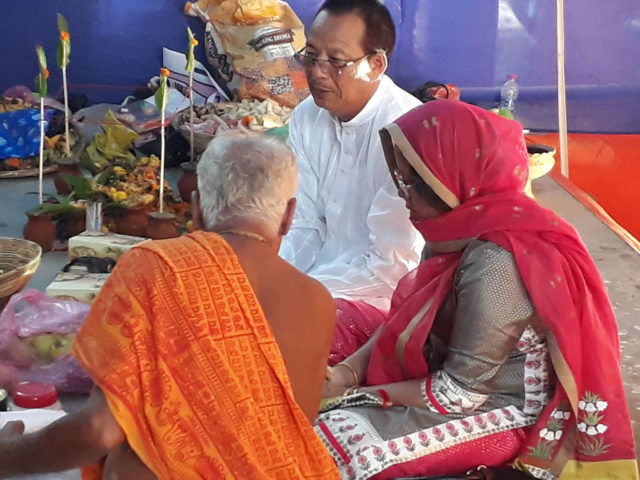
Former Koloriang MLA Lokam Tasar with his wife Yese on Ashtami and Taba Sera with his wife Rashmi on Navami respectively worshipped at Naharlagun Community Hall Pandal following all rituals strictly while lawmaker Rajesh Tacho and his wife did the same at Bharat Seva Sangh ashram at P sector, Itanagar. They are known Arunachalees, but there are innumerable young and old, male and female who took part with great enthusiasm leaving a lasting impact on other devotees, many of whom casually said “Maa maa hey aur maa ko dharm se jodna galat hoga [Mother (Durga) is mother and linking her to religion will be wrong].
Moreover, with hardly any source of entertainment even in Capital Complex, Durga Puja served as a best platform to unite friends and families in this joyous occasion not only to celebrate but to visit pandals, partake prasad and take part in various activities.
Again, during cultural programees the audience dancing to the tune of songs in all pandals for three days was not only worth watching but lessons for others to emulate. Septuagenarian Durga Das dancing at Community Hall pandal was unbelievable but true. This again proved Arunachal is a classless society for which the Arunachalees address only nigam to show highest respect to any guest, contrary to high class society which exemplifies division with addresses like sir, honourable, respectable, his highness, his excellency etc.
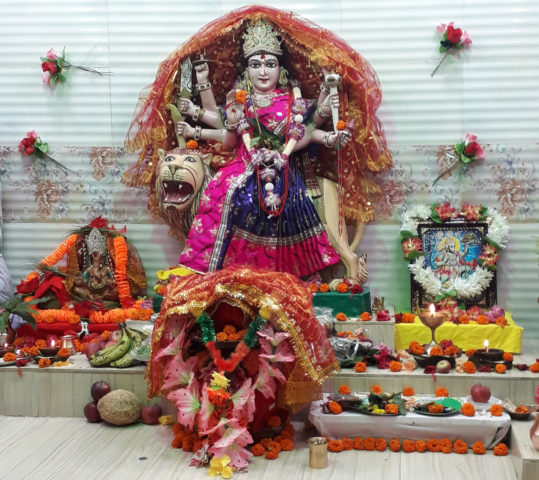
The Nepali community is known for celebrating this festival in their well known Nepali Mandir in P-sector, Itanagar. Beautifully decorated pandals were ek se badakar ek and the multi-colour idols again reflected Maa Durga in her various forms, like Shailaputri, Bramacharini, Chandraghanta, Kushmanda, Skandamata, Katyayini, Kaalratri, Mahadurgi and Siddhidatri.
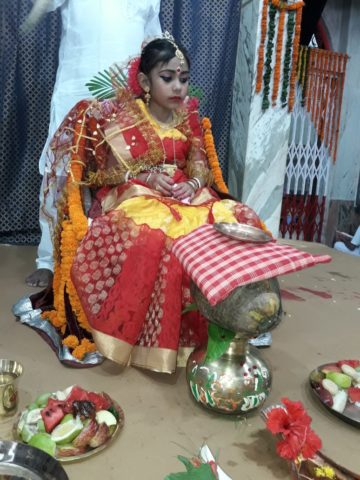 Naharlagun Kali temple conducted Kumari Puja. A girl aged between one to 16, not yet reached her puberty, unmarried, bereft of desire, worldly pleasures and anger etc. are requisite qualities to match the dynamism, purity and serenity of the goddess. A calm, serene and an girl with a bright disposition between one to sixteen years, who has not yet reached her puberty and is bereft of desire, worldly pleasures and anger is the right requisite for the Kumari Puja.
Kumari, to be worshipped as earthly representative of Devi Durga, is considered as most practical form by the devotees. Scriptures have emphasised Kumari Puja, particularly to evolve the purity and divinity of the women of the society. Kumari is another form of Devi Durga, Sri Ramakrishna had said and he himself had worshipped his wife Sarada Ma as Kumari. In Mahabharata Arjuna had performed Kumari Puja. Puranas mention the Kumari form of Chandika while Kubjika Tantra vividly mention it.
The painting of idols of Maa Durga in Barpani Sarbajonina Puja Pandal, Naharlagun was unique. The pandal of Nirjuli Nyakum Niya ground again was built on a mythological relevant theme. The puja passed off peacefully without any untoward incident as police personnel were on their toes under the strict supervision of duty officer of the nearest police station which received appreciation for Capital SP Sagar Singh Kalsi for his sense of duty.
The intermittent rainfall proved the prediction right that Maa Durga would arrive on boat. However, a powerful cyclonic storm accompanied with rain on Thursday evening uprooted the light and decoration tower of Nirjuli Nyakum Niya ground pandal but luckily none was injured. Some trouble makers in Naharlagun G-extension resorted to fighting among themselves and landed in police station.
Besides various activities, an awareness programme on tobacco by Standing Together to Empower (STEP), an NGO, made a difference in Shiv-Hanuman Temple in D-sector, Naharlagun.
Papum Pare DTCC in collaboration with STEP, organised the event, themed ‘tobacco kills’, with Samita Nandy Mazumdar as consultant while NTCP DPO Dr R.R Roniya highlighted various ill effects of tobacco. STEP president Sanjeev Dutta also addressed over 600 gathering.
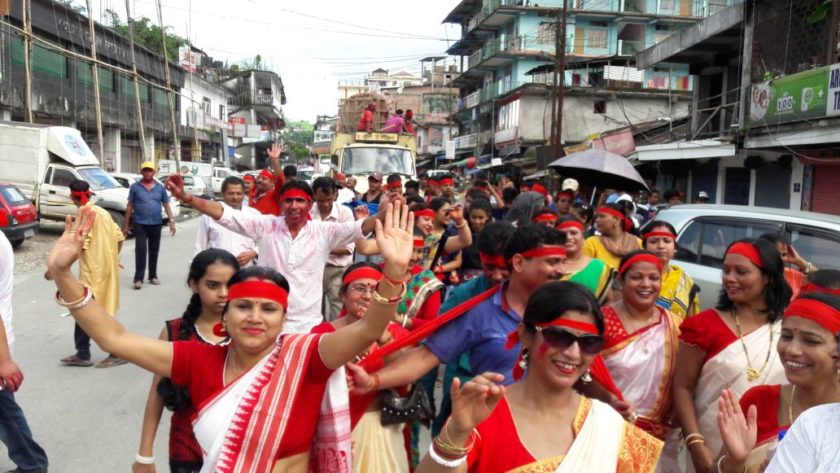
However, on Saturday afternoon, thousands of devotees on long procession with idols of Maa Durga decked on vehicles headed to nearby river for immersion, albeit Maa Durga after bisharjan had retreated to her heavenly abode on horse predicting drought, natural calamities and political unrest in times ahead.
Such spirits of citizens have made India a sovereign, socialist, secular, democratic republic that assures its citizens of justice, equality and liberty and endeavours to promote fraternity among them. Hey na mera Bharat mahan (Is my India not great)?
Our Correspondent adds from Tezu: Two pandals at Shiva Mandir Complex and Jubilee Ground organised by Himalaya Samaj Kalyan Samiti (HSKS) saw large number of devotees offering obeisance in queue to Maa Durga with great enthusiasm and spirit.
Brahmakumars Spiritual University sisters disguised as Durga, Lakhmi, Saraswati, Kartic and Ganesh performed a ‘Live Durga idol show’ to depict power of Rajyoga meditation during September 27 to 29, which left huge crowd spellbound.
Local MLA-cum-Minister Dr Mohesh Chai lauded the organization for its valuable contributions, including chronic drugs de-addiction sensitization, value based education, stress free and better art of living practice to the Mishmi society.
Former minister Nakul Chai, in his address, recalled that Durga Puja celebration was initiated by his father, late Takkeso Chai in 1956 with kerosene lamp but gained momentum since then.


 20
