
Tibetan Rehabilitation Policy, 2014
- Tibetans not liability but India’s asset: Gabriel
- TRP not to settle more Tibetans: Mossang
By Pradeep Kumar
ITANAGAR | Oct 17 | The Tibetan Rehabilitation Policy, 2014, moved as a GoAP resolution, was passed on 4th day on Tuesday of the ongoing assembly session here.
Moving the resolution, Parliamentary Affairs Minister Bamang Felix said: “This assembly is of the opinion that the GoAP do take steps to implement the Tibetan Rehabilitation Policy, 2014 after due consultations with all stake holders and do so by taking steps to protect the territorial and other consequential rights of its tribal population as protected and guaranteed under the Constitution of India and other relevant laws enforce in the state”.
After Chinese Govt annexed Tibet, Tibetans led by HH 14th Dalai Lama apprehending torture had fled in 1959 and came to India as refugees. Few thousands of them were sheltered in this state on humanitarian ground,
he said, adding the GoI after thorough discussion with Tibetan central administration and HH Dalali Lama formed the policy as a uniform guidelines for respective state to follow.
“This is not mandatory as not an act and on its, the state Cabinet decided to amend it in accordance with existing laws for its implementation. It is wrong to believe that the GoAP has made this state a “dumping ground” of refugees.
Many states have already implemented TRP in too, he said, and feared that either politics or divide & rule policy could be behind all misgiving. All 60 members are protectors of the state and its people who know their onus and cannot disrespect their own motherland,” he said and said adoption of this resolution would remove the clouds of doubts hovering over the state.
 Arunachal though largest among NE state, but its 23% area is only habitable because of vast forest area, Pangka Bage said and justified concern of civil society is right. The existing Tibetans should be identified for registration to distinguish them from indigenous people. They being mehman (guests) should be given livelihood opportunities during their temporary stay, he said and advocated mass awareness by forming an expert committee to take feedbacks to evolve the policy to clear all misunderstanding.
 Tage Taki advocated mass consultation, saying India is ‘One nation, one kanun (law)’. Referring to 1959, he said if anything happens to Indians they would flee to neighbouring nations. Haam josh mein akar hosh khona nehi chahiye. But as per 2009 census, there were 1.1 lakh Tibetans in 10 Indian states. The land could be given on 20-year lease and 80:20 job reservation could be applicable to the Tibetans, like rest of Indians, he suggested.
 Terming TRP sensitive and defective, Markio Tado said it should have been thoroughly discussed before the Cabinet accepted it on 12.08.17. He suggested to form a joint select committee on the issue.
 Chakma-Hajong in large number were victimized in Krung Kumey district, Takam Pario said, adding Assam Frontier Regulation, 1945 and Chin Hills Act have been protecting Arunachalees, he said and suggested that Parliament should be pass the TRP before sending to state Govt while opposing it.
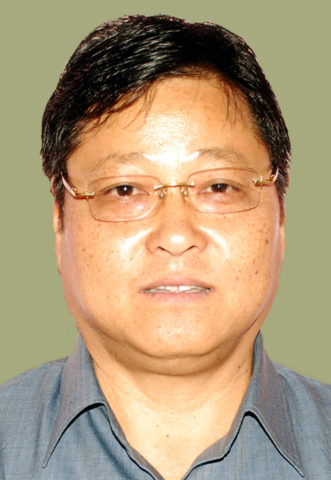 “Why the GoAP brought the TRP to house? Is it time bound? Is there any constitutional crisis? How Siyo villagers were given ST certificates though Tibetans”, Lombo Tayeng questioned?, but supported it.
Advocating thorough knowledge on TRP, Jambay Tashi said that Arunchalees have age-old relations with Tibetans. About 25% of India’s total Tibetan refugees are in Karnatak which has already adopted TRP in toto. The Tibetans living in state’s Miao, Tenzing Gaon & Tezu are not interested in jobs, land and citizenship as they are willing to go back to Tibet, he said.
“Tibetan learning centres – Central School for Tibetan and Tibetan Central Village – are located in India where thousands of Buddhists children are getting modern education while world famous Tawang Monastery Abbot is appointed by HH Dalai Lalma. Tenzing Gaon was buzzing with population decades ago but locking deserted now with 1,000 families shifting to Canada at the initiative of HH Dalai Lama. Such migration of Tibetans is a regular process”, he informed.
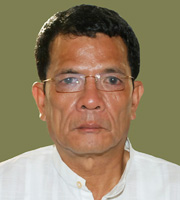 Saying TRP implementation could have affected state’s indigenous population, Tanga Byaling asked if the GoI has sanctioned for the purpose. Has any survey conducted to assess Tibetan population and land under their occupation? Chakma-Hajong population swelled with migration from outside for lack of such initiatives, he said and suggested to set up a panel for updated assessment before its implementation.
 The TRP was formed by UPA Govt, Wanglin Lowangdong said, adding that as this tribal land is inhabited by hospitable people and protected by various laws, the GoAP should ask the GoI status of ILP & PAP after TRP implementation.
Tibetans are most kind, docile, religious, well behaved, law abiding and hard working people, he said, and wondered when the state facing unemployment problem can they be given Govt jobs, but suggested giving some livelihood opportunities.
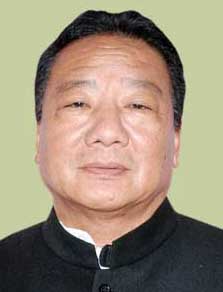 Highlighting the history of Tibet and Tibetans, Japu Deru said that Tibetans have been getting political, socio-cultural support across the world. The TRP has created lot of misgiving among Buddhists and Tibetans though Tenzing Gaon settlement was GoI funded. How could Buddhists become refugees, he wondered? Rajesh Techo urged the GoAP to ponder over the issue seriously.
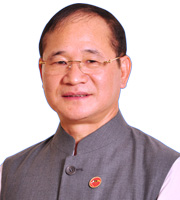 Lone Congress MLA Nabam Tuki in his opposition said that assembly approval was not needed after the Cabinet okayed it. “I am not against TRP but against its implementation in the state,” he said., adding Tibetans cannot be given indigenous right and suggested the GoAP for a rethinking.
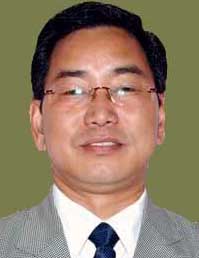 Religions and law abiding Tibetans have been living in Tezu camp in total harmony with local people, Dr Mahesh Chai said, adding they never pose any threat to state while their migration in large number to western countries continue. The TRP adoption is not going to bring much change. The TRP with ‘may or may be considered’…’may be extended’ wordings is clear in keeping indigenous people in mind, he said.
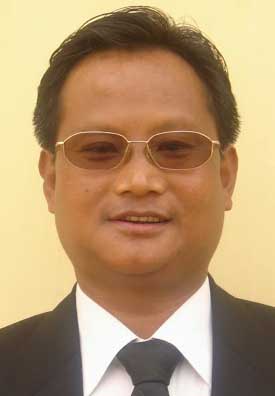 “I always fought against refugees as AAPSU leader. Today the civil society is deeply concerned about TRP and discussing in their favour is contradictory, Thangwang Wangham said, adding termed it as an irony as the state is protected by law. However, it is high time to find an acceptable solution. Borrowing a policy should not be good for future and it should be evolved by the state”, he argued and suggested for GoI’s separate budgetary provision for refugees’ rehabilitation.
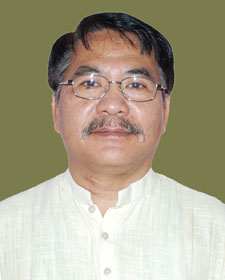 Refugee word is allergic to every Arunchalee, Wangki Lowang said but supported it as Tibetans have no criminal record, unlike Chakma-Hajong whose integrity is doubtful. Tibet has boundary with Arunachal and if India tries for anti-China lobby in UNO the TRP would go in its favour. Fund should not be sought for TRP”, he said, and questioned the consequence if the GoI sends fund for Chakma-Hajong refugees.
 Kamlung Mossang said TRP is not to settle more Tibetans and quoted Dr Chai: “We have lot to learn from Tibetans”. Miao Tibetan camp spread in 2,000 hectares inhabited by 446 families comprising of 1,692 people, which was 1500 in 1995 but the population continues to decrease. Once people of Miao, cut off by road, were fed for long by Tibetans who maintain food stock at least for two years despite very little land in their possession. Road and electricity facilities have already been given to them. Their craft centre’s excellent products are sold in Delhi showroom, where they go with SIB permission and return after few months with huge income contributing to state economy but never caused any harm during last 50 years, he said, to defuse any apprehension about them.
 Tibetans were settled in Changlang in 1975, Phosum Khimhun termed them very innocent but never resorted to anti-social activities and manage their own shops & health service while remaining confined to their demarcated area. Their excellent carpet is a prestige for Arunachal, he said, adding most of them have shifted to Delhi. They are not criminal minded like Chakmas, he said and termed the apprehension in social media baseless.
 Jarkar Gamlin, a former cop in 1982-83, shared his Miao camp experience, terming them very social without any problem. The TRP aims at regulating them, he said in his support.
 The resolution is very clear, Honchun Ngandam said, adding it reflected accountability and transparency in the greater interest of the state. All should rise above any difference political differences and support as the GoAP is always ready to face all problems, he said. Chakma-Hajong, Tibetan, Lisu and Yobin refugees have to be differentiated to understand the TRP meaning, he said in his support.
The TRP was evolved by the GoI, Alo Libang said while Gabriel D Wangsu described Tibetans as asset for India, but not liability and Nyamar Karbak termed TRP as first GoI policy for Tibetans. All support it.
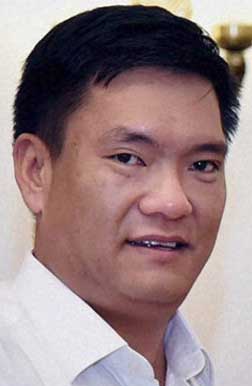 Chakma-Hajong and Tibetans are different refugees, Chief Minister Pema Khandu said adding the Chakma-Hajong demand ST status despite having own state while stateless Tibetans have Govt in exile. He read out the telegram of Jawaharlal Nehru welcoming HH Dalai Lama on his arrival in India. The Tibetan settlements are at Miao (1952), Tezu (1964) and Tenzing Gaon (1972) and various facilities are extended to them, while Chakma-Hajong, who came during 1964-69 have been claiming themselves as Arunchalees. The Chakma-Hajong issue would be discussed tomorrow, he said.
“The TRP with ‘dos’ and ‘don’ts’ for the Tibetans aims at protecting indigenous population. The Cabinet desired that all stakeholders including students’ unions should be involved in all sensitive issue and the TRP is only a policy honouring existing state laws which should have wide ranging open discussion”, he said.
When Tuki said that it would be historic, Khandu clarified GoAP’s clear intention. But Takam Pario asked why without discussing with civil society it has been brought to the house? The TRP need not be implemented into too but would be as per opinion of the civil society, the CM said, before Speaker T N Thongdok put the resolution to vote, which was passed by voice vote.


 20
