
*Unfettered freedom of press advocated
ITANAGAR | Nov 06 | “Freedom is the birthright of every human being. Its sustenance has no nexus to forms of Govt. Despotic and dictatorial regimes face effacement due to constant assertion of these freedoms. Private liberties however impede Governmental resolves for faster development”, said Arunachal Pradesh Speaker T N Thongdok today.
Taking part in a workshop on “Democracy must deliver: Role of Parliament in addressing the challenges” at Dhaka, he said “an illusion thus arises that benevolent dictatorship is far better than democracy as the former expedites development. Such an illusion needs to be negated since human excellence is always founded upon unfettered freedom”, according to an official release.
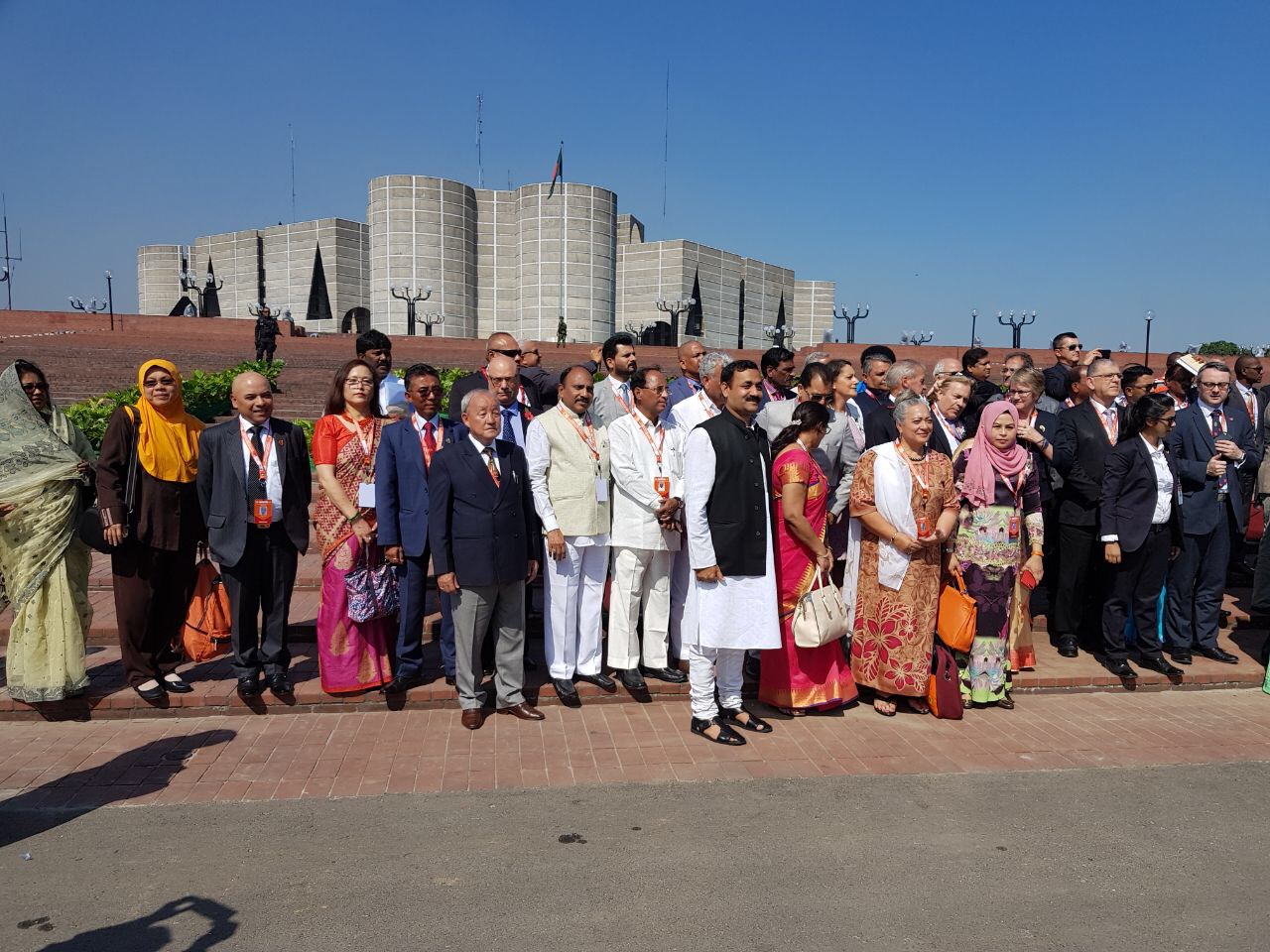
Thongdok, who is on an eight-day tour to Bangladesh to attend the 63rd Commonwealth Parliamentary Conference, said: “Slavish regimes seldom sponsor creativity, innovation and invention. However, freedom has to be regulated within the bounds of democratic framework so that Governments function unimpeded in their delivery on development and challenges stand truncated”.
To enable freedom to be the engine of every activity, the Constitutional framework of any democratic polity must have the following basic features of rule of law, non-discrimination, crusade against corruption with focus on poverty, disease, terrorism & conflicts, environmental degradation, drugs, illegal arms trade and human trafficking. These should aim at sustainable development and faster economic growth
The speaker also advocated that Constitutional framework of all democratic societies should have universal benchmarks, like periodic elections with universal suffrage, primacy of Parliament over other organs, strict separation of powers, proactive civil society groups, promotion of youth in politics, speedier and simpler justice delivery system, right to information regime, unfettered freedom of press and multi party system and pluralism.
The principle of accountability of Executive to Parliament must be made a workable one. This will happen only when Executive becomes completely separate from Parliament. If the political executive emerges from Parliament, this accountability of the Executive to the Parliament will seriously suffer. Parliaments thus have an obligation in regard to the following so that people and Parliament continuously engage themselves in strengthening Constitutional democracies against all challenges, like effective oversight over Executive and Judiciary, effective participation in planning of policies, enactment of purposeful and people-friendly legislation, institutional mechanisms for keeping Govt’s ears to ground so that correctives are continuously applied to errors in Governmental actions, association of media and public in the functioning of Parliaments and ensuring true freedom of speech and vote in Parliaments, he reasoned.
The conflict between freedom and development is a political one. Visionary leaderships in democracies sizably reduce this conflict by innovative measures. There is no fixed model for bringing about a balance between freedom and development. There is also no democracy that is free from these challenges. The quest for equilibrium between the two is thus an eternal journey. The bottom line, however, is that democracy alone can deliver faster and equitable development despite challenges, he concluded.


 20
