
By A O New Service
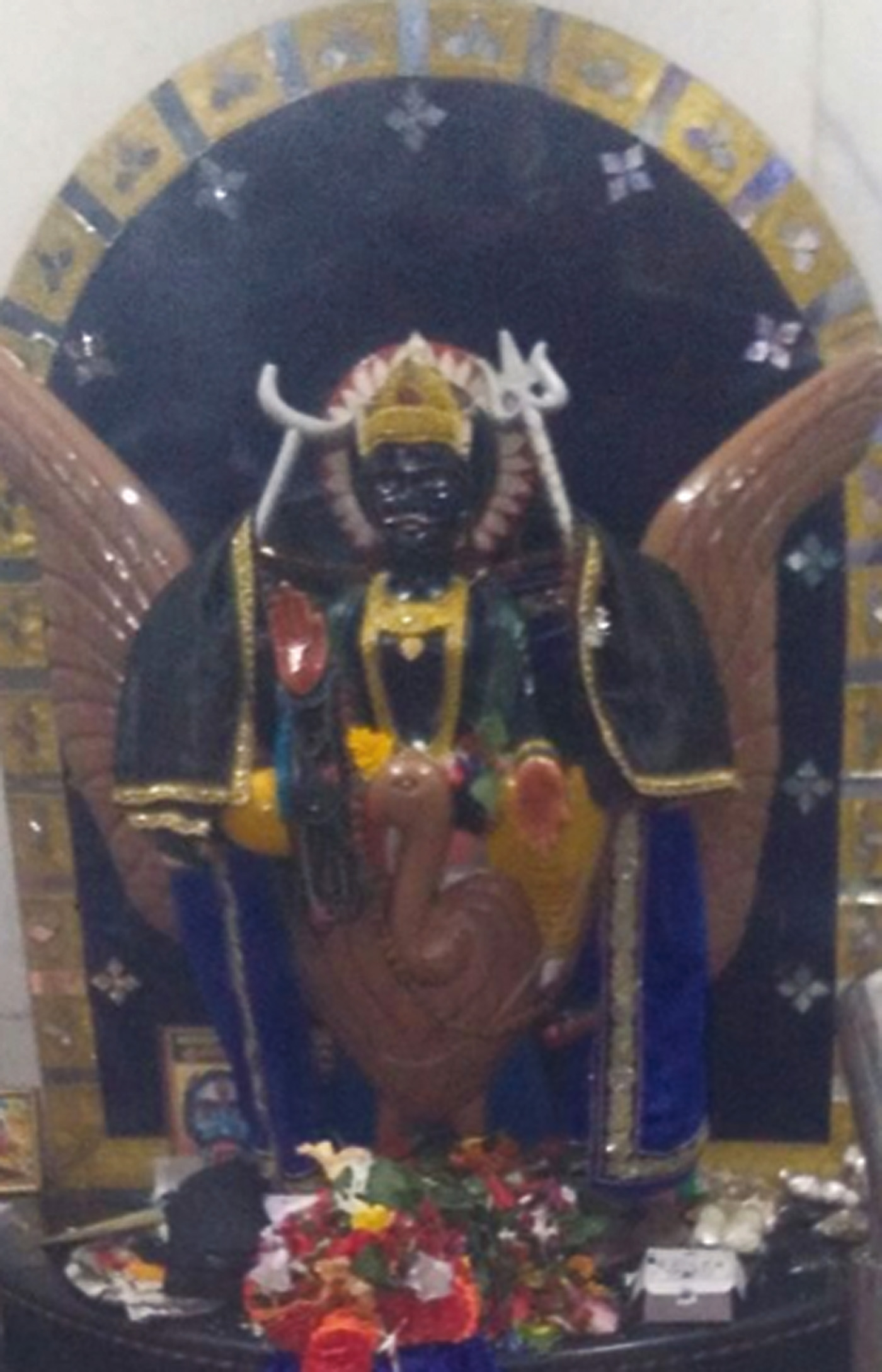
NAHARLAGUN |Jan 03 | Lord Shani is considered to be the lord to punish people for their good and bad deeds. Thus, lord’s worshipers have decided to celebrate 7th foundation day of state’s lone Shani Mandir in E-sector here on January 6 next, according to its committee chairman Debashish Dey.
Worshipers make a beeline every Saturday to propitiate the lord to seek his blessings. The nearest Shani Mandir is located at North Lakhimpur.
Shani is the son of Sun god (Surya) and his wife Chaya and brother of Lord Yama (god of death). As an ardent devotee of Lord Shiva, Shani was given the authority to reward or punish people for their good and bad deeds. Shani is often dreaded in astrology since when Shani afflicts a horoscope, the individual suffers bad luck. Here are some unknown facts about Shani Dev.
A legend says Shani kicked his foster mother as a young boy when she was delaying to feed him. Therefore, it is said she cursed him to become lame in one leg. This is however symbolic. Shani moves very slowly in the horoscope (29.5 years to complete one revolution around sun) when compared to other planets and this is why he is said to be Mandha (slow moving) or lame.
Shani refers to planet Saturn, and is one of the nine heavenly objects known as Navagrha in Hindu astrology. Shani is also a male deity in Purnas, whose iconography consists of a handsome dark (black) figure carrying a sword.
Shani as a planet appears in various Hindu astronomical texts in Sanskrit, such as the 5th century Aryabhatiya by Aryabhatta, the 6th century Romaka by Latadeva and Panca Siddhantika by Varahamihira, the 7th century Khandakhadyaka by Brahmagupta and the 8th century Sisyadhivrddida by Lalla. These texts present Shani as one of the planets and estimate the characteristics of the respective planetary motion. Other texts such as Surya Siddhanta dated to have been complete sometime between the 5th century and 10th century present their chapters on various planets as divine knowledge linked to deities.
The manuscripts of these texts exist in slightly different versions, present Shani’s motion in the skies, but vary in their data, suggesting that the text were open and revised over their lives. The texts slightly disagree in their data, in their measurements of Shani’s revolutions, apogee, epicycles, nodal longitudes, orbital inclination, and other parameters. For example, both Khandakhadyaka and Surya Siddhanta of Varaha state that Shani completes 146,564 revolutions on its own axis every 4,320,000 earth years, an Epicycle of Apsis as 60 degrees, and had an apogee (aphelia) of 240 degrees in 499 CE; while another manuscript of Surya Siddhanta revises the revolutions to 146,568, the apogee to 236 degrees and 37 seconds and the Epicycle to about 49 degrees. The 1st millennium CE Hindu scholars had estimated the time it took for sidereal revolutions of each planet including Shani, from their astronomical studies, with slightly different results.


 20