
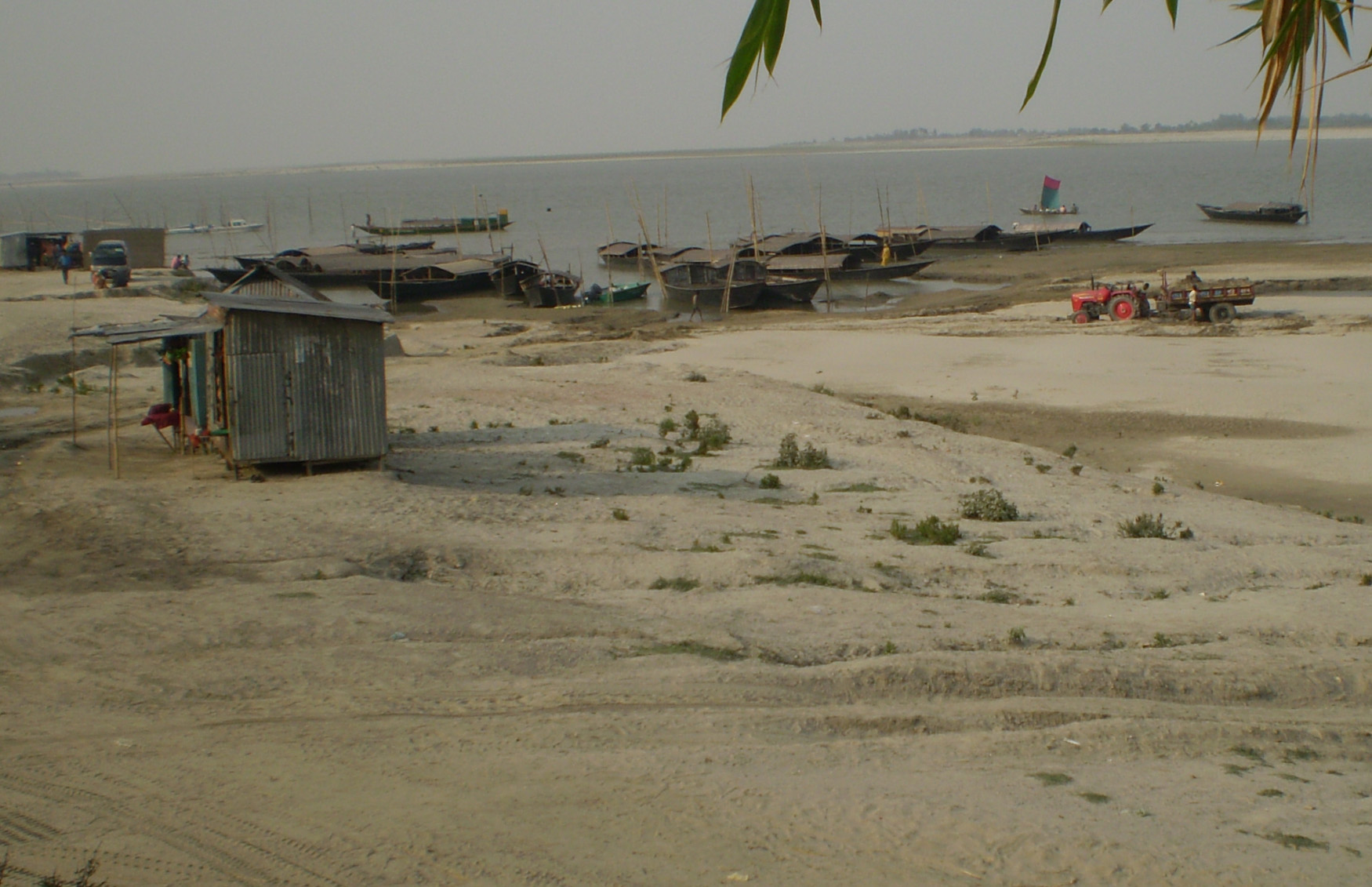
Dried up Brahamaputra
By Pradeep Kumar
ITANAGAR | Jan 18 | China damming Brahmaputra River is globally known so also its chameleon policy. Brahmaputra, known as Yarlung Tsangbo in Tibet, has total length of 2888-km, 1625 km lies within Tibet Autonomous Region of China, while only 918-km and 337-km stretches fall within India and Bangladesh respectively that gives China an advantage to exploiting the river for its own benefit.
The Siang drying up (Dry Siang could spell doom!) story quoting then GoAP spokesman Tako Dabi flashed by me through the ANI around 11.30 pm on29.02.13, had served its purpose with then External Affairs Minister SM Krishna directing India’s Ambassador to China to take up the issue and referred to his statement in Parliament over China building a dam at Zangmu in middle reaches of Yarlung Tsangpo which was run-of-the-river HEP immediately after meeting his Chinese counterpart Yang Jiechi at New Delhi on March 01 last.
Chinese external affairs ministry spokesman Hong Lei on 02.03.13 while clarifying Dabi’s stand had admitted that China had built a ‘run-of-the-river’ dam over the Tsangpo which would have no downstream effect.
According to environmentalist the said dam reportedly allows only 30% flow downstream and rest 70% is used for generating power and other purposes. I caution about more distressing Beijing’s plan about another 140 GW hydropower dam during 2011-15 to meet its energy targets as reported by Reuters on Apr 18.
With the Centre, Assam and Arunachal gasping for breath to avail the first user right under established International Water Treaty so as to stall China’s bid to claim it by building its proposed dams over Tsangpo or Siang or Brahmaputra, where would the buck stop?
Calling a spade a spade during seminar, state Governor JJ Singh had taken a dig at the media for twisting it in the headline then or now for its rhetoric on either drying up of the Brahamaputra quoting official data since 2005 or diversion of Tsangpo by China.
“While there has been no significant change in the water level of the river, diversion of its water by China is next to impossible proposition. Can the water be diverted from 12,000 feet level by crossing the Himalayas and other mountain ranges of 17,000 feet spanning over 1,000-km beyond Lhasa? Take a map, do your home works, before doing your job,” he chided the media (in 2007) as misuse of its freedom. Media cannot forget that it is a force multiplier”, he had reasoned.
The world is changing from uni-polar to multi-polar with several countries emerging significantly and the seminar is an academic exercise aimed at a brainstorming session to facilitate an acceptable solution to the border row, ICSSR deputy director Dr. C.J. Thomas had said in his introductory remarks.


 20
