

Kurung Kumey chung chur chopper
Beyond the Horizon
By Pradeep Kumar
Arunachal Pradesh, still an unexplored state, is also known as a “land of chung, chur and chopper”. One could imagine the tough challenges in touring by foot march many unseen but inhabited remote villages located far away from present day hustle bustle of modernity.
Kurung Kumey along China border is inhabited mainly by Nyishi, Bangru and Puroik tribes. The district as per 2011 census had a population of 89,717, making it 617th district of India out of total of 640. Its population density is 15 per sqkm and decadal population growth rate of 111.01% (2001–2011) and sex ratio of 1029 females for every/1000 males and literacy rate of 50.67%. It is named after Kurung and Kumey, two principal rivers, which according to myth were two sisters. As Kurung eloped to marry, her parents shouted and threw ashes after her for which it flows in ashy colour with violent roar. Kumey with clear water flows silently as she got married as per her parents’ wishes.
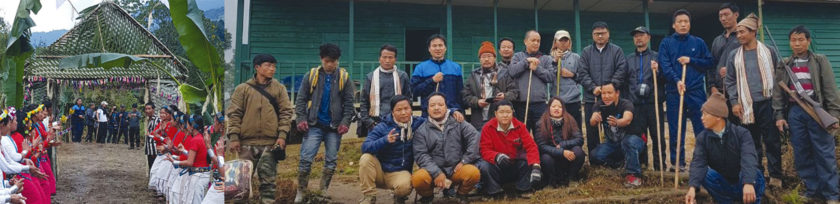
Present DC Kanki Darang could be one of the very few senior officers who dared to change my pet quote: “Arunachalees do not know what they do not know!” by venturing on a arduous five-day foot march to few remotest Palo, Polosang, Machane, Mili, Gaane and Sape villages under Sarli and Polosang circles, first time since the district was set up in 1959. The team included AEs Toko Talam (RWD), Bengia Kagung (power), APEDA PO Talo Nguri, DlO Bamang Apo, CTMDH medical superintendent Dr Boni Taluk, BEO Bamang Tach, DRRO i/c Toku Natung, PHED JE Yumlam Tajum & APCAB BM Kipa Kaman.
“Mili is last village along Mukhpla Pass located at 2nd control point, Gaane last village along Jammu Pass route located at 3rd control point along Indo-China border. The tour, part of public outreach programme under Sankalp se Siddhi Tak (New India Manthan) intended to take stock of various development activities undertaken in those areas,” according to Darang.
The entourage was greeted with much excitement and enthusiasm by the inhabitants, GBs and PRI leaders of all villages while lauding the initiative of the DC, who also had distributed blankets and warm clothes to senior citizens. While interacting with the villagers, he had enquired about their expectations, process of execution of development activities and exhorted them to take up agri-horticultural activities for their sustenance. He had assured Mill and Gaane villagers of providing safe drinking water connection and solar light to the households.
When contacted, Darang proudly claimed that he has travelled to all administrative circles of his district despite tough terrain without road connectivity. The district has seven circles, namely Nyapin & Phassang (Nyapin sub-division); Parsi-Parlo, Kolorinag & Sangram (Koloriang sub-division) and Sarli & Damin (Damin sub-division) spread in two assembly constituencies – Nyapin and Koloriang, part of of Arunachal West Lok Sabha constituency.
Two suspension bridges Sarli to Wabia and Sarli to Namjo, serving as lifeline for Walu, Sipe, Chene, Palo, Milli, Machane, Bala, Gane, Polosang, Kapu, Waru, Sarma, Riya, Vatline & Chulla villagers besides lone route for military patrolling in Indo-China were washed away by heavy rainfall & landslide in 2017. Thus, Kurung Kumey DC was urged to rebuild those bridges soon to provide immediate succour to border villagers.
Interestingly, it was former CM Kaliklho Pul, who as finance minister, had warned of a “Kargil-like” situation in Arunachal Pradesh, saying villagers were migrating from the border areas because of a lack of development and this would give China an opportunity to venture deep inside Indian territory.
“What happened in Kargil will happen in Arunachal,” he had said at a tribal ministers’ conference in New Delhi on 28.10.14 while referring to the intrusion of Pakistani soldiers and terrorists in the heights of Ladakh in 1999. Those intrusions eventually led to Kargil war.
“People living in the border areas are migrating to urban places as they do not have even the minimum infrastructure facilities. These places are getting empty because of which China is coming inside,” Pul had told the conference, attended by then Union minister for tribal affairs Jual Oram.
“You speak here about seven, eight-lane roads, metro trains and what not, but our people do not even have tracks for walking. There is no drinking water, nothing,” he had said, adding administrative circles on the border were yet to be connected by road.
“There has to be a special dispensation for states like Arunachal, Sikkim and J&K because if they are not settled, India itself will be unsettled,” he had told this editor later. Pul’s statement had coincided with border face-offs at various points in Ladakh and at Asaphila in Taksing in Arunachal Pradesh over raising infrastructure along the border.
Pul had said that the Govt should not only retain the population settled along the border but also encourage more people to inhabit in empty swathes of the hillsides along the border. Lack of development in far-flung areas was aggravated because of the Centre’s policy of population-based funding, he had reasoned.
Reacting to reported Chinese army incursion at Asaphila in Upper Subansiri district, Union MoS (Home Affairs) Kiren Rijiju had told at Itanagar on 27.10.14: “Such cases will continue in areas where there is no permanent structure such as Chaglagam in Anjaw district and Asa-Pila-Maya in Upper Subansiri district”. The post-1962 strategic GoI policy decision of not developing border areas with China had left border villages in Arunachal Pradesh undeveloped.
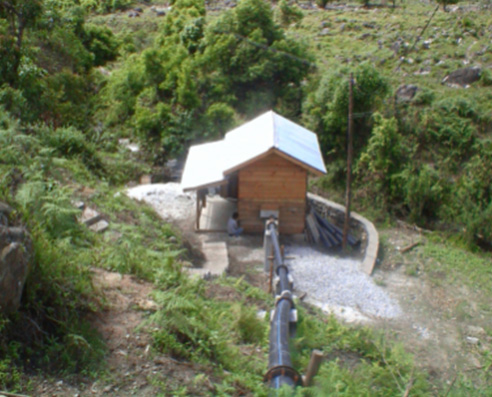 However, Pul is gone but his innovative development projects stand stall today. Kaho, a non descriptive village perched on a hill top in an inaccessible area along Indo-China-Myanmar tri-junction border in Anjaw district, boasts of 24-hour power supply from a micro hydel project, a privilege not available in most developed part of India including Capital Complex. At Pul’s imitative, DC P S Lokhande & hydropower development SE R K Joshi had built Kaho hydel project in January 2008, operated by the villagers to meet electricity requirements of its 51 residents besides supplying power to the Army border post as a goodwill gesture. Kaho micro project is still a role model for power starved Arunachal Pradesh, though known as ‘future power house of India’. It was Pul who had facilitated a media team to visit Kibithoo too.
People of Manigong and Semasibo villages, far away from basic amenities, endure hardship, as was found during a free medical camp organised there by Turbung Daleng Welfare Society (TDWS) during 20-21.12.17. Left on god’s mercy to fend for themselves had promoted Manigong and Nemasibo denizens to migrate to towns, including Kaying, Aalo and Itanagar in search of basic facilities, according to TDWS chief advisor Tayor Jempen.
Good sense seemingly has prevailed upon the GoI as Army has identified eight villagers along international border, at the initiative of state Governor Brig. (Retd) B.D. Mishra, to develop them as self sustaining units with proper living amenities as was announced on 20.12.17.


 20
