

Impacts from climate change visible globally
Where Arunachal
stands in 21st century?
This land-locked hilly state with total road length of 21,555 km consisting of 2,302 km NHs; 12,169 km major district and 5,455 km rural roads and with a total estimated population of 16.8 lakh with a density of 17 per sqkm paints a very gloomy picture. It is s farthest from United Nations Millennium Development Goals (MDGs) adopted in 2000 aimed at efforts of international community to “spare no effort to free our fellow men, women and children from the abject and dehumanizing conditions of extreme poverty.” Because this state’s road density is 25.74 km per 100 sqkm (March 2011) while national average is 115-km per 100 sqkm and road connectivity is still a day dream as even two to three households makes a census hamlet on a hilltop. Yuesa Gonpa and Khromten Gonpa villages of Tawang district with two persons each is the best example.
Thus, I had written on 19.07.17: Turning travesty to dev triangle: Will CM Khandu take a cue from Gabriel mantra?
By Pradeep Kumar
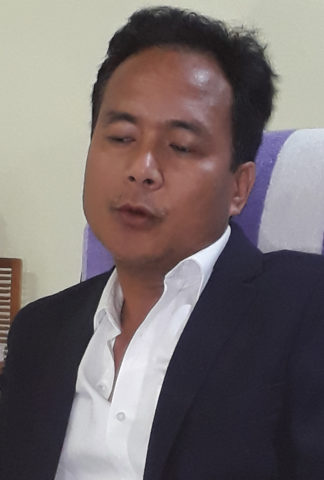 ITANAGAR | Mar 17 | Journalist turned lawmaker Gabriel Denwang Wangsu, representing Kanubari Assembly seat of Longding district, has stumbled upon a trendsetting initiative to provide panacea to people leading hard life in far-flung and inaccessible hilltops.
Toeing the principle of – “A people’s representative is duty bound to facilitate basic necessities of life and end their poverty to his/her people,” – I conceived that idea to provide solace to my people living in far-flung and inaccessible hilltops far away from the hustle bustle of modernity. Hardly few families form a hamlet and sustain their lives against numerous odds in this Himalayan state,” Gabriel told this daily in an exclusive interview today.
“I was deeply saddened by their hard life but while flying over my area in a helicopter stumbled upon an idea of bringing the hilly habitants to lower areas and provide them all facilities to become part of development of to fend for themselves to,” he said.
After prolonged persuasion they, particularly head of families were convinced to bid good bye to their birth place as road was built to new settlement areas, CGI sheets given to build houses, electricity to light their houses and water supply to take up cultivation, particularly cash crops like cardamom, potatoes as alternative to shifting cultivation (jhooming) ensured, he disclosed.
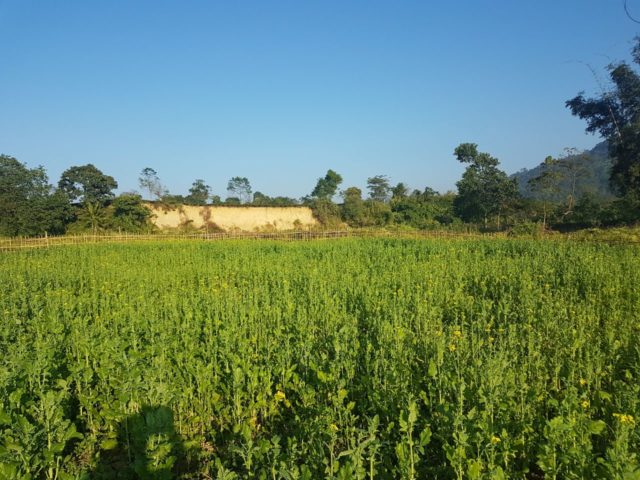
Many from large village Banfera shifted to a nearby area and Pamtingshe, Wunil and Laho were opened as new settlements recently while Laho village chief has desired to shift too, he said, adding “I am extremely happy the initiative taken up in 2017 has yielded the much desired results”
Traditional shifting cultivation, destroying the environment of the state, considered as one of the 12 biodiversity hotspots of the world serving as global lungs, has been replaced by terrace cultivation (Practiced since NEFA days), even pisciculture taken up while they have learnt about the value of cow urine to convert it to bio-pesticide and cow dung as fertilizer through vermicompost for organic cultivation.
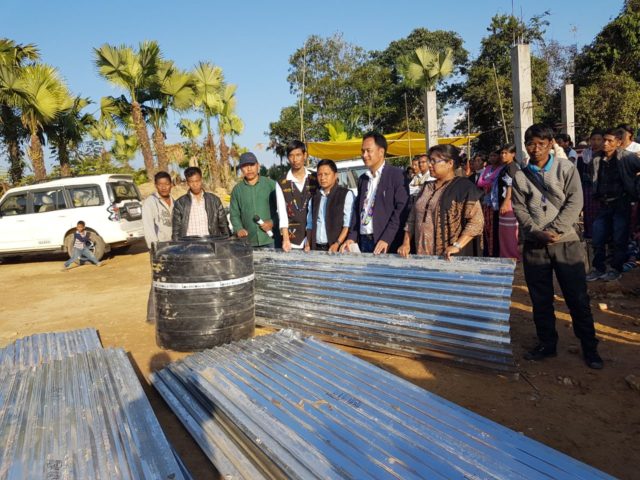
“I have provided syntaxes, built concrete fishponds, cow dung and urine storages. Development is very complex and calls of multi-pronged approaches which have been helping about 40 to 50 families to lead decent life now,” added the MLA, resident of Hasse Russa village.
The hilly areas have been congested and this would facilitate decongestion, protect environment by ending wanton burning and cutting of trees and would serve as a panacea to face the impacts of climate change, he reasoned.
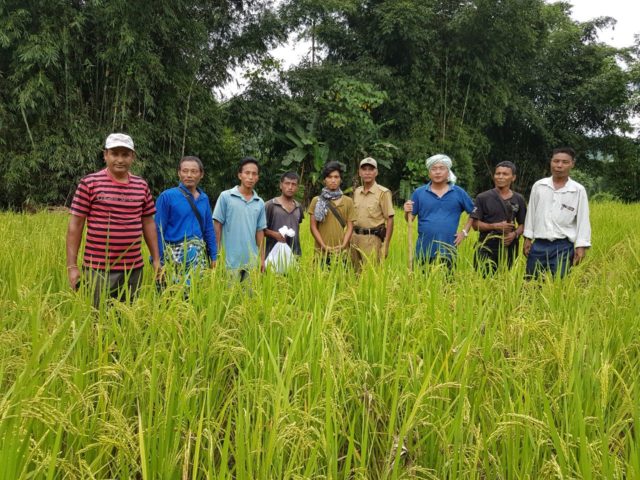
The people of his constituency have been cultivation beetle, but its leaves became yellow and dropped early under climate change impact causing huge losses to the cultivators, he cited an example. (His documentary Triumph over Tisa that documents dangerous life of betel cultivators who travel in bamboo rafts through the treacherous Tisa River to market their products in Assam market).
Kanubari Assembly constituency covering roughly 25 sqkm is spread in around 35 villages and hamlets including Banfera, Chopnu, Chopsa, Longhua, Nokfan & Wanu with total 2,793 households and 15,294 population.
Lawmaker evolves panacea for hilly Arunachal
By Pradeep Kumar
ITANAGAR | Mar 17 | Journalist turned lawmaker Gabriel Denwang Wangsu, representing Kanubari Assembly seat of Longding district, has stumbled …https://t.co/CJD0zpWlP4 pic.twitter.com/cam4UVYdrf— Arunachal Observer (@ArunObserver) March 17, 2018


 20
