
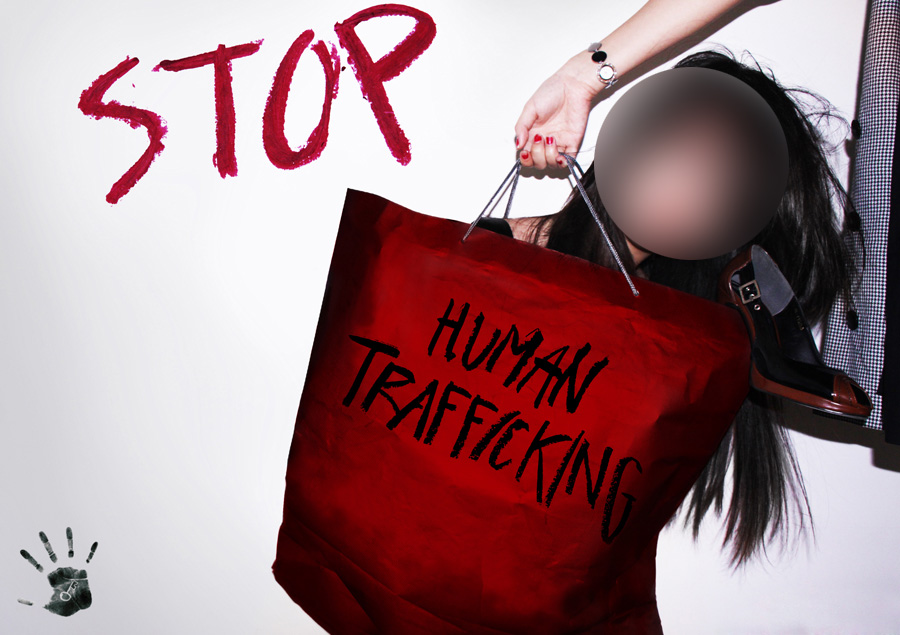
- 5 rescued from railway station
RANGIA | May 27 | Five persons in their 20s and a minor boy about 15, were rescued from a house near railway station here where they were lodged for alleged trafficking, police said on Saturday.
A police team, acting on a tip off, raided the house and rescued them on Friday, a police officer said, adding a search has been launched for the absconding trafficker.
The five, during police interrogated, disclosed that they had separately come to Paltan Bazar in Guwahati on Friday from different parts of Assam, Meghalaya and West Bengal in search of employment when an unknown man suddenly came to them and offered jobs in biscuit and iron factories in Jammu and Kashmir.
They offered Rs 8000 PM as salary and other facilities to them, who belonged to poor families in Darjeeling, Shillong, Helem, Gohpur and Lakhimpur, the police stated. The innocent five were brought to Rangia by traffickers and lodged them in a room from where the police rescued them and made arrangements to send them to their respective homes.
Rangia railway station is being used as a transit point by human traffickers due to easy communication from there to the rest of the country and Nepal, the police said.
The Railway Protection Force rescued six girls, including four minors, on May 21 when they were being allegedly trafficked from the railway station here, five minor boys and five men on May 15, besides 16 girls, including nine minors, early in the month from the same place, the police added. (Agency)
AONS adds: NE has a horrid truth of human trafficking but unacknowledged, as reported by Impulse NGO Network (INGON) chairperson Hasina Kharbhih October 2017.
The NE, sharing borders with China, Bangladesh, Burma, Nepal and Bhutan, invariably makes it an easy passage for organised human trafficking. From the rat-hole miners of Jaintia Hills to flesh trade in Silchar, Kharbhih shares the details of human trafficking.
“In the last three decades of dealing with human trafficking, I have realised that the problem of scores of youth and children getting trafficked across the border is society’s negligence to acknowledge what’s happening. Once we accept that there is rampant human trafficking from and to the NE India, we’ll be able to decipher the cause that leads to it. The NE India has an acute shortage of employment opportunities for its rural populace. Due to this, many rural children and youth are forced to seek employment that later proves hazardous for them.
Child trafficking: When INGON first began working in Meghalaya villages, we discovered that a massive percentage of the rural children had gone missing. Deeper research revealed that due to lack of income sources, the villagers would send their children to do odd jobs like serving tea at tea stalls or run similar errands at token shops. Traffickers were taking this opportunity to lure these with promises of well-paid jobs and cross them over to other states, districts or countries with considerable ease.
Since India’s NE shares international borders, it invariably becomes a source, transit and a destination point to provide an easy passage in and out of India for organised human trafficking syndicates to operate undetected.
Rat-hole miners: Our research found out that there is an acute demand for young children for coal mining in Jaintia Hills that engages slave child labour from Nepal and Bangladesh for low wages. Approximately 70,000 children, from Bangladesh, Nepal and Meghalaya’s villages are engaged in this dangerous enterprise without any threat of punishment or discovery. The reason why little children are employed in this business is technical. The mining here requires manual recovery of coal from the deepest recesses of the earth via tunnel-like passages. These are so narrow that it is traversable only by little children. Since the process resembles the scurrying of rats, it is called rat-hole mining.
I’ve discovered children as young as five, working in these mines. Desperate families are promised handsome salaries in exchange for their children’s work, but they often have no idea that their children will end up living in such dangerous conditions. Many families are still looking for their children. They haven’t heard from them for the last two or three years. Children have been dying in these rat holes and the dead bodies are not being taken back because it’s not possible to get them out. They are not even being reported because, in the context of our state, they’re illegal migrants.
On learning about such horrific truth, INGON wrote to Asian Human Rights Commission (AHRC) for global advocacy on children trafficked to the coal mines. With the help of Global Development Network (GDN), INGON transformed this research for media advocacy, which drew massive national and international media attention and influenced the powers-that-be, to address the issue. Consequently, INGON managed to rescue about 1,200 children from these mines.
Later, on learning that the rescued children were getting replaced with new recruits, INGON was forced to file a PIL in National Green Tribunal, which on its 17.04.14 order had banned rat-hol mining in Meghalaya; an effort for which I received the CNN-IBN India Positive Award.
Domestic help: We’ve even found children migrating to neighbouring Nagaland to work as domestic help in homes of Govt officials. The employers claim treating them well and paying, but child labour is a criminal offence. The problem will continue to persist despite such efforts to rescue children, till the Govt takes tangible steps to educate and empower them.
Youth trafficking: We have noticed a huge demand for young NE girls for job within India and Southeast Asia. Lured by unauthorised recruiting agencies, these girls are either coerced into the commercial sex trade or domestic work.
Flesh Trade across the border: While all other borders that NE India shares with its neighbours are equally feasible for this market, the trend of trafficking girls through Myanmar started nearly a year ago.
Last year, six Mizoram girls, who were being taken to a neighbouring nation, were rescued. The destination points are usually Singapore & Malaysia. Recently, eight Manipuri girls, who were being trafficked to Singapore by members of an international gang, were rescued in Myanmar. Due to their Govt’s adoption of the Impulse Model, our team in Myanmar coordinated in rescuing the girls from a 5th floor room of a Yangon hotel and took care of their stay, legal processes, counselling, and repatriation. We used a combined expertise to rescue them and brought them back home our care via Kolkata on 30.09.17.
With huge demand in domestic flesh trade, young women are trafficked for offshore market. The organised red-light area in the heart of Silchar town, HQs of Assam’s Cachar district is a very audacious example. This is in total violation of Immoral Trafficking Prevention Act, 1956, which prohibits prostitution centre in a public place. Police once raided Silchar brothel in 2016, but being present, I was surprised why the local people never protested and allowed the brothel to continue. Fresh girls are brought from different states and sold to the brothel frequently. However, these girls should be given an alternate source of income before evicting them.
For marriage: Another worrying factor is demand for brides in Haryana, Uttar Pradesh and Rajasthan, which have a poor female sex ratio. Our research has found that young girls are trafficked from Assam often to be forcibly married off to men in those states.
However, I have been continuing my efforts with firm belief that: Every problem has a solution.


 20
