
Beyond the Horizon
By Pradeep Kumar
“During growth of the ancient civilizations, ancient technology was the result of incredible advances in engineering in ancient times. These advances in the history of technology stimulated societies to adopt new ways of living and governance. However, many ancient inventions were forgotten, lost in the pages of history, only to be re-invented millennia later,” Ruchi Sharma wrote on 08.09.14.addign “Here are the best examples of ancient technology and inventions that demonstrate the ingenuity of our ancient ancestors, whose inventions then are clues to modern science.
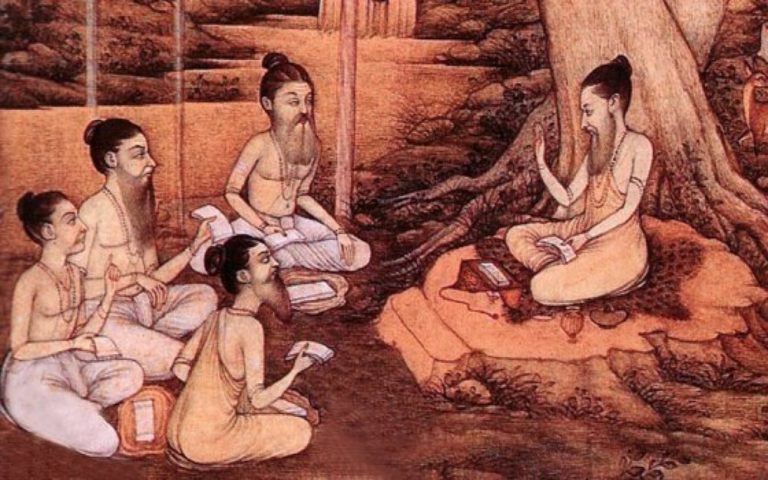
Acharya Kanad or Kashyap first developed atomic theory
The land of India is known to be the land of saints and gods filled with numerous unexplainable mysteries. In ancient times, various saints after years of meditation had found the secrets hidden in Vedas 1,000 years ago. These inventions later came to be known as modern science. Some of the saints came out with such amazing inventions that shocked the kings of those times as well.

Acharya Kanad or Kashyap first developed atomic theory
John Dalton (1766-1844), an English chemist and physicist, is the man credited today with the development of atomic theory. However, a theory of atoms was actually formulated 2,500 years before Dalton by an Indian sage and philosopher, known as Acharya Kanad, born in 600 BC in Prabhas Kshetra (near Dwaraka) in Gujarat. His real name was Kashyap, who had originated the idea that anu (atom) was an indestructible particle of matter.
An interesting story states that this theory occurred to him while he was walking with food in his hand. As he nibbled at the food in his hand, throwing away the small particles, it occurred to him that he could not divide the food into further parts and thus the idea of a matter which cannot be divided further came into existence. He called that indivisible matter anu, i.e. molecule, which was misinterpreted as atom. He also stated that anu can have two states – Absolute rest and a State of motion.
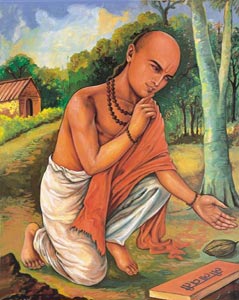
Bhaskaracharya developed force of attraction
“Objects fall on the earth due to a force of attraction by the earth. Therefore, the earth, planets, constellations, moon and sun are held in orbit due to this attraction.” The meaning of these lines is parallel to that of Newton’s Law of Gravity. But these lines are not said by the European scientist. They are said by an Indian – in Surya Siddhanta, dated 400-500 AD, the ancient Hindu astronomer Bhaskaracharya states these lines. Approximately 1200 years later (1687 AD), Sir Isaac Newton rediscovered this phenomenon and called it the Law of Gravity.
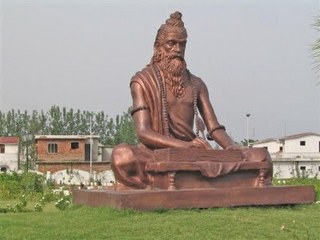
Father of medicine Acharya Charak
Acharya Charak has been crowned as Father of Medicine. His renowned work Charak Samhita is considered as an encyclopedia of Ayurveda. His principles, diagnoses, and cures retain their potency and truth even after a couple of millennium. When the science of anatomy was confused with different theories in Europe, Acharya Charak revealed through his innate genius and inquires the facts on human anatomy, embryology, pharmacology, blood circulation and diseases like diabetes, tuberculosis, heart disease, etc.
In Charak Samhita, he has described the medicinal qualities and functions of 100,000 herbal plants. He has emphasized the influence of diet and activity on mind and body. He has proved the correlation of spirituality and physical health contributed greatly to diagnostic and curative sciences. He has also prescribed and ethical charter for medical practitioners two centuries prior to the Oath. Through his genius and intuition, he forever remains etched in the annals of history as one of the greatest and noblest of rishi-scientists.

Sage Bharadwaj: In 1875, the Vymaanika-Shaastra, a 4th century BC text written by Maharshi Bhardwaj, was discovered in a temple in India. The book dealt with the operation of ancient vimanas and included information on steering, precautions for long flights, protection of the airships from storms and lightning, and how to switch the drive to solar energy, or some other “free energy” source. Vimanas were said to take off vertically or dirigible. Bharadwaj refers to no less than 70 authorities and 10 experts of air travel in antiquity.

Rishi Kanva: The science of wind has been explained by Sage Kanva in Rigveda sections 8/41/6 in Jagati meter of God wind. Sage Kashyapa has described the features and properties of this substance in Rigveda 9/64/26 in the hymns of God Pavamana Soma in meter Gayatri. Kanva was a great Rishi, a descendent of Sage Angirasa. He looked after Shakuntala when she was abandoned by her mother and father (Rishi Vishwamitra). Bharat, the son of Shakuntala was also brought up by him.
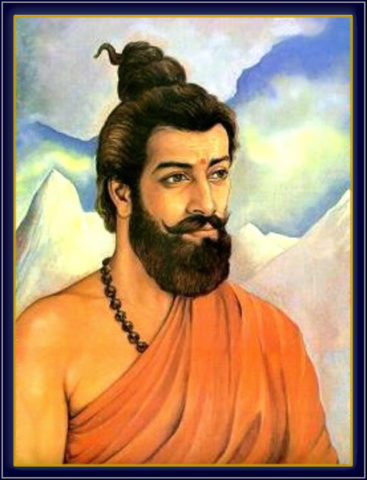
Sage Kapil Muni: Author of the Sankhya Darshan: Kapil muni was born equipped with rare intellect, dispassion and spiritual powers. He authored Sankhya Darshan that defined the term “Dhyaan or Meditation” as “the state of mind when remains without any subjectivity/objectivity i.e. without any thought (when the mind is away from worldly objects), is called the “Dhyaan or Meditation”. He teaches that there is an unbroken continuity from the lowest inorganic to the highest organic forms. The source of world according to him is Prakriti (fundamental nature). (With Wikipedia inputs)


 20
