
By A O News Service
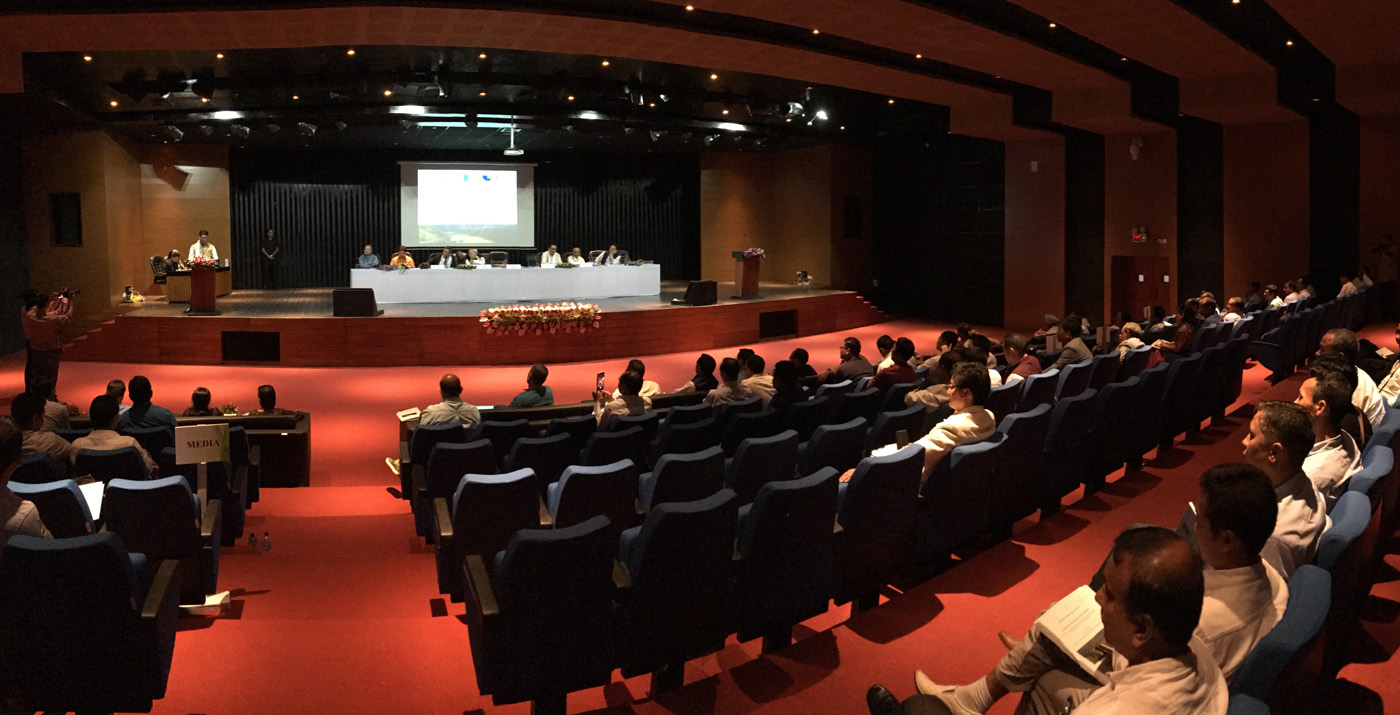
ITANAGAR, June 22: Chief Minister Pema Khandu today stressed on focusing solutions to climate change impacts while appreciating thought provoking presentations on chosen themes by selected invitees during day-long Legislator’s Dialogue on ‘Implications of Climate Change on Agriculture and Disaster Risk Reductio’ in Arunachal.
It was organized by Indian Mountain Initiative (IMI) and Sustainable Development Forum Arunachal Pradesh (SDFA) in collaboration with Indian Himalayas Climate Adaptation Programme (IHCAP) here today and followed by a session on ‘Promotion of bamboo’ in the state with IMI secretary & SDFA chairperson Fantry Mein Jaswal behind the initiative. Speaker TN Thongdok was also present.
With his startling disclosure that about 700 small streams and rivers of the state have dried up, Khandu said it was matter of great concern but urged the PHED department to finalise the proposed catchment area bill to place before the next cabinet sitting for discussion.
Terming climate change a global phenomenon, he said in his concluding remarks that instead of focusing only on problems like 80% today, there is an urgent need for such a workshop involving all stake holders to dove-tail all development projects and schemes to tackling climate change impacts.
Admitting inability of the state Govt to avail Climate Adoption Fund, he called for efforts to explore possibility of availing green energy funds and exhorted the officers to address information knowledge gaps.
Applauding support of IMI, SDFA, Swiss Agency for Development & Cooperation (SDC) and IHCAP, particularly IMI interventions for welfare of Himalayan states,he assured to incorporate today’s all recommendations in state action plan for implementation and include a climate change expert in CM’s Advisory Council.
Referring to 2015 Paris Agreement which encourages green energy and India is a signatory, he expressed his concerns over increasing urbanisation and reduction of forest coverage from 82% to 80% and stressed on mass awareness events among local groups on the climate Change. Pointing out that Arunachal being the third largest bamboo producer of India, he attributed lack of skill and entrepreneurship for growth of the sector in the state. He lauded RGU assistatnt registrar Gomar Basar citing the example of success story of Soi village where local groups had rejuvenated spring and stream water to tackle water crisis through own efforts.
He said that Sikkim Lok Sabha member P D Rai had moved a private member’s resolution in Lok Sabha in 2010 had urged the Ministry of Environment, Forests and Climate Change to prepare a white paper to address specific concerns arising out of climate change in the North-Eastern region, which ultimately drew PM Narendra Modi’s attention to be redirected to Agriculture ministry, the CM informed.
As bugle for 2019 elections has rung and the party (BJP) will form next Govt in the state, implementation will be taken up seriously, he announced.
Huge discovery of fossil oil led the present generation travelling on camels to fly by jets but with exhaustion of fossil oil camels would be adopted as mode of transportation, DyCM Chowna Mein, said in his address, besides giving the example of change of area to cultivateg apple in Shergaon and Wakro losing its status of orange bowl of the state.
Bio fuel has been invented by a company in Pune which would be introduced I Manipur soon and Arunachal would follow suit as it emanates less carbon dioxide to be environment friendly, he disclosed.
Arunachal boasts of 78 of India’s total 79 species of bamboo with 15,000 sqkm coverage but the state has no bamboo industry as National Bamboo Mission has failed to meet the industrial demands for incense sticks for which raw materials are imported from Vietnam, he said and stressed for incorporating arresting slide zone in detailed project reports of any project and adopting a wholesome policy.
Speaking on relevance of climate change in 21st century, Negi, in his welcome address, reflected on importance of equitable distribution of resources while IMI president Sushil Ramola set the context for the dialogue by pinpointing that the problem is global but the issues are local which need urgent redressal. He noted that solutions to address cross cutting issues within climate change, like agriculture and disaster risk reduction would require an understanding of local ground realities and stressed on united efforts of IMI, SDFA and GoAP to achieve the desired goal.
Speaking on the impact of climate change on agriculture & disaster, GoAP Advisor (sustainable development) G N Sinha enlisted redressal measures for addressing issues, jhoom cultivation while presenting the state’s Sustainable Agriculture Mission. He emphasized on the need to sensitize the public, policy makers and planners on climate change while acknowledging the role played by IMI in addressing it.
SDC Dy head Dr. Shirish Sinha spoke on opportunities for systematic planning and development while building a climate resilient Arunachal and urged GoAP to build Itanagar as a ‘Climate Smart’ city.
As part of the discussion, legislators and officers present were divided into 10 groups to identify key problems within agriculture and disaster risk reduction in local constituencies, and suggest ways to combat the issues.
SFRI’s Dr. LR Bhuyan highlighted characteristics, uses and species of bamboo found in the state and discussed its possible uses.
Pointing out that the numerous rivers emerge from the Himalayas which sustain around 1.3 billion lives downstream in South Asia, Chief Secretary Satya Gopal termed Legislators’ Dialogue as 3rd most important initiatives of the GoAP to tackle climate change for which the GoAP has evolved a project worth Rs 60 crore has been approved for onward submission.
The GoAP had formed State Disaster Management Authority in 2011 but PRIs and urban local bodies have a vital role to play in it while bamboo offers huge scope for cottage & handicraft industries to generate employment which needs hand-holding support of the GoAP.
Summing the dialogue that evoked thunderous applause, MP Rai, also IMI councilor, cited the example his Sikkim state which on 01.01.16 had set 10 sustainable development goals with 169 targets and working with commitment to achieve them be enacting legislations. The Sustainable Welfare of Generations Bill, 2017 being examined now by law department is the best example , he said and suggested that IMI along with other multilateral agencies could help the GoAP in building correct arguments for adequate fund allocation by 15th Finance Commission. He stressed on re-looking jhoom cultivation collectively by providing alternatives and on bamboo promotion emphasized that with recent change in legislation, conditions should promote entrepreneurship in bamboo sector.
SDFA secretary Rezina Mihu also spoke.
The (IMI) is a platform for sustainable development by building on the collective knowledge, experience and energies of all stakeholders from all the states in the Indian Himalayan Region (IHR) to find solutions for the complex problems, such as climate change, agriculture based livelihoods, sustainable urbanization and disaster risk reduction. It achieves this through support of people in all 12 mountain states, organized as IMI state forums and state chapters by providing link on the ground.
One of the distinguishing features of IMI’s effort has been its unique ability to engage policymakers and administrators from national and state governance machineries. Considering its responsibility towards mountain communities, IMI also advocates on issues of significance to these communities, over and above those in its sectoral focus, for better social policy planning at all levels of governance for catalyzing action. (with IMI inputs)


 20
