
By Pradeep Kumar
NAHARLAGUN, Aug 01: The trauma centre of TRIMHS would be reality soon to provide 24X7 services, said New Delhi-based AIIM’s Jay Prakash Narayan Apex Trauma Centre Prof Dr Sajeev Bhoi and assistant Prof Dr Tej Praksh Sinha.
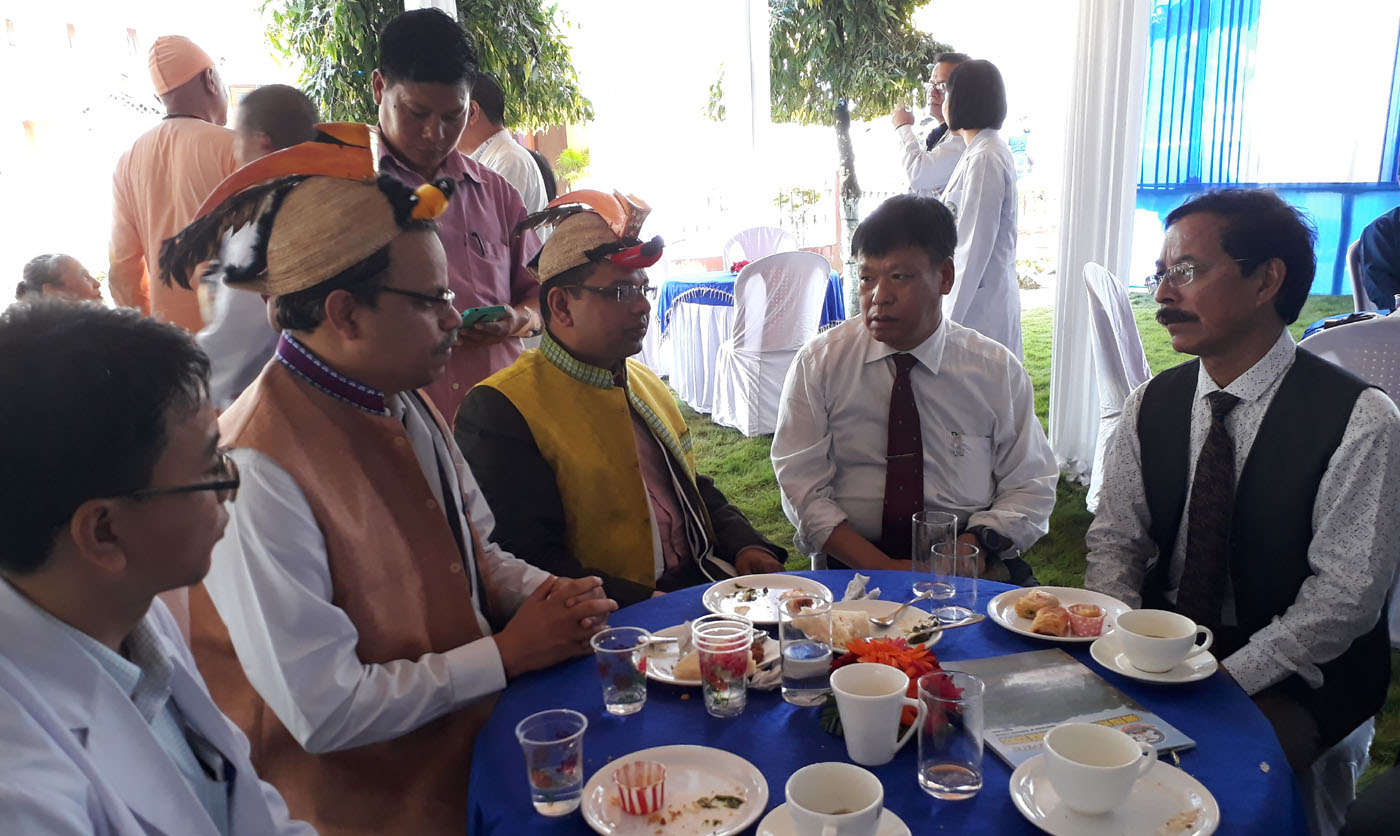
The due associated with TRIMHS for last five years for their strong bond with director Moji Jini had a threadbare discussion today to expedite setting up of the trauma centre. Their discussion covered to set up the trauma centre by strictly adhering to its requirements right from the first step to leave lapse. Joint director Dr xx Doye also joined the team.
The mistakes of other states should not be repeated, Dr Sinha told this daily from his personal experience, adding the centre would be a reality soon with such committee Govt and willing team. “We both will come back soon for this serious job,” the duo disclosed.
With this Himalayan state too prone to accidents and accidents victims are brought to Capital Complex very often even flown by choppers from interior parts, the trauma centre would prove to be life saver, Dr Jini added.
A trauma center is a hospital equipped and staffed to provide care for patients suffering from major traumatic injuries such as falls, motor vehicle collisions, or gunshot wounds. A trauma center may also refer to an emergency department or a “casualty department” or “accident & emergency” without the presence of specialized services to care for victims of major trauma.
Trauma centers vary in their specific capabilities and are identified by “Level” designation: Level-I being the highest, to Level-III (Level-3) being the lowest (some states have five designated levels, in which case Level-V is the lowest.
The highest levels of trauma centers have access to specialist medical and nursing care including emergency medicine, trauma surgery, critical care, neurosurgery, orthopedic surgery, anesthesiology and radiology along with highly sophisticated surgical and diagnostic equipment. Lower levels of trauma centers may only be able to provide initial care and stabilization of a traumatic injury and arrange transfer of the victim to a higher level of trauma care.
The operation of a trauma center is extremely expensive. Some areas, especially rural regions, are under-served by trauma centers because of this expense. As there is no way to schedule the need for emergency services, patient traffic at trauma centers can vary widely. A variety of methods have been developed for dealing with this.
A trauma center will often have a helipad for receiving patients that have been airlifted to the hospital. In many cases, persons injured in remote areas and transported to a distant trauma center by helicopter can receive faster and better medical care than if they had been transported by ambulance to a closer hospital that does not have a designated trauma center. The trauma level certification can directly affect the patient’s outcome and determine if the patient needs to be transferred to a higher level trauma center.


 20
