
Beyond the Horizon
By Pradeep Kumar
“Life is eternal, man is mortal” – goes the common adage. As death is inevitable, all mortal beings perish. Likewise those who served as Prime Ministers also after playing their roles on life drama left for this immortal world. But few of them left indelible marks by their novel deeds in the hearts of countrymen to cry to their hearts’ content.
India since attaining freedom from British rule on the midnight of 15th August 1947, Gandhiji’s blue-eyed man Pt Jawaharlal Nehru of Indian National Congress became the first Prime Minister of free India, who served the nation from 1947-64.
The PM is the chief executive of the Govt in India’s parliamentary system while as the Constitution the Presidents is de jure head of the State and his de facto executive powers are vested in the PM and his Council of Ministers.
In all 14 full-time PMs have served India since then, who were: Gulzarilal Nanda (1964); Lal Bahadur Shastri (1964-66); Gulzarilal Nanda (1966-66); Indira Gandhi (1966-77); Morarji Desai (977-79); Charan Singh (1979-80); Indira Gandhi (1980-84); Rajiv Gandhi (1984-89); VP Singh (1989-90); Chandra Shekhar (1990-91); PV Narasimha Rao (1991-96); AB Vajpayee (1996); HD Deve Gowda (1996-97); IK Gujral (1997-98); Atal Bihari Vajpayee (1998-2004); Manmohan Singh (2004-14). However, the most remembered PMs, according to me, are Nehruji, IG, Rajiv and Atalji.
Nejhruji had returned from Dehradun the previous day, but next morning collapsed reportedly due to heart attack and remained unconscious until his death till 2 pm. His death was announced to Parliament in words similar to Nehru’s own at the time of Gandhi’s assassination: “The light is out.” He was cremated next day at the Shantivan on the banks of Yamuna River with 1.5 million mourners flocking into the streets of Delhi and the cremation grounds to join the mourning.
I remember as a five-year-old child of a remote village in Odisha when the entire villagers performed Nehruji’s final rites on the bank of Gangahar River on 28.05.1964.
In 1955, Nehru was awarded Bharat Ratan, India’s highest civilian honour, conferred by President Rajendra Prasad without taking advice from the PM as would be the normal constitutional procedure.
Nehru, the stalwart leader made such a powerful imprint on India that his death had left India with no clear political heir to his leadership. Later Lal Bahadur Shastri succeeded him as the PM.
Indira Priyadarshini Gandhi’s assassination in PM’s official bungalow on 31.10.84 by her body guards had left Indian shell shocked. She was rushed to AIIMS at 9.30 and where doctors operated on her but declared her dead at 2:20 PM.
However, IG had the premonition of future as proved by her last speech: “I am here today, I may not be here tomorrow. But the responsibility to look after national interest is on the shoulder of every citizen of India. I have often mentioned this earlier. Nobody knows how many attempts have been made to shoot me, lathis have been used to beat me. In Bhubaneswar itself, a brickbat hit me. They have attacked me in every possible manner. I do not care whether I live or die. I have lived a long life and I am proud that I spend the whole of my life in the service of my people. I am only proud of this and nothing else. I shall continue to serve until my last breath and when I die, I can say, that every drop of my blood will invigorate India and strengthen it’, her last speech a day before her death delivered to a mammoth gathering at Parade Ground in Bhubaneswar.
For instance, he beautifully narrates how US President Lyndon B. Johnson found IG to be a charming woman, for whom he could set aside all protocol and walk her down Pennsylvania Avenue to Blair House, where she was staying, taking unawares the White House security staff and throwing the traffic into confusion. Johnson also attended the Indian ambassador’s dinner, uninvited, just to be with India’s first, and indeed the world’s second, woman prime minister. The two leaders struck an instant rapport that promised stronger ties between the world’s two largest democracies.
IG, daughter of Pt Nehru, a central figure of the INC, till date is the first and, only female PM of India, who served as PM from January 1966 to March 1977 and again from January 1980 until her assignation on 31.11.1984, making her the 2nd longest serving PM after her father. As PM, she was known for her political ruthlessness and unprecedented centralization of power. She went to war with Pakistan in support of independence movement in East Pakistan, which resulted in an Indian victory and creation of Bangaladesh, as well as increasing India’s influence to the point where it became the regional hegemony of South Asia.
Citing fissiparous tendencies and in response to a call for revolution, IG ordered state of Emergency from 1975 to 1977 where basic civil liberties were suspended and the press censored and widespread atrocities were carried out during the emergency. However, in 1980, she returned to power after free and fair elections.
In 1999, Indira Gandhi was named “Woman of the Millennium” in an online poll organised by the BBC.
She was cremated on 3 November near Raj Ghat and the site is today known as Shakti Sthal. Her funeral was televised live on domestic and international stations, including the BBC. Following her cremation, millions of Sikhs were displaced and nearly three thousand were killed in anti-Sikh riots. Her son Rajiv Gandhi on a live TV show said of the carnage, said: “When a big tree falls, the earth shakes.”
Rajiv Gandhi was blown to death by LTTE suicide bomber Dhenu at Amethi around 10.10 pm on 21.05.1991. I remember electro mechanical type writer of news agencies then used to function till 8 pm. But around 10.30 pm, PTI machine made sound for me to switch it on and the first sentence was “Rajiv Gandhi’s head was blown off”. I immediately had dialed then IGP to inform him with a request to alert police personnel across the state.
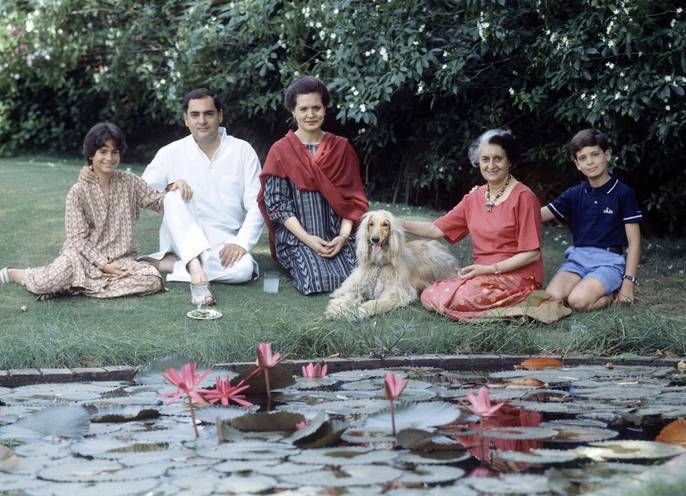
Rajiv took office after 7th PM (1984 to 1989) after assassination of him mother to become the youngest Indian PM at the age of 40. After studying in UK, he returned to India in 1966 and became a professional pilot of Indian Airlines, married Sonia Gandhi in 1968, settled down in Delhi to lead a domestic life with their children Rahul Gandhi and Priyanka Gandhi. Rajiv Gandhi remained apolitical but after death of his elder brother Sanjoyin an aeroplane crash in 1980, he reluctantly entered politics at the behest of Indira and won Amethi Lok Sabha seat of his brother. He became AICC general secretary and given vital role in organizing 1982 Asian games.
After IG’s assassination, he became PM and his leadership faced acid test as within next few days as mobs rioted against Sikh community including in Delhi. In 1984 December general elections, an Congress won the largest Lok Sabha majority to date, 411 seats out of 542 due to nationwide sympathy vote. Rajiv’s period in office was mired in controversies; perhaps the greatest crises were Bhopal Gas Disaster and Shah Bano case. In 1988 he reversed the coup in Maldives, antagonizing militant Tamil groups such as PLOTE, intervening and then sending peacekeeping force to Sri Lanka in 1987, leading to open conflict with the LTTE. In mid-1987, the Bofors Scandal damaged his corruption-free image and resulted in a major defeat for Congress in 1989 elections.
He remained AICC president until 1989 elections and while campaigning for the 1991 elections,he was assassinated by a LTTE suicide bomber.
In 1991, Rajiv was conferred Bharat Ratna and Revolutionary Leader of Modern India during India Leadership Conclave in 2009, both posthumously.
But 16.08.18 became totally different from other such somber occasions when Yamraj might have thought for a moment if he committed any mistake.
The nation mourns the immense loss and the void created with the demise of former PM Atalji that will never be filled again.
He proved himself to be worthy of people’s love and affection. A stalwart political leader and a powerful voice for the country, Atalji was also a great man at heart, possessing great intellectual power. Some interesting and lesser-known facts about him, ccording to BJP.org, were: His favourites – clothes: dhoti kurta…occasionally a pathani suit; colour: blue; places: Manali, Almora & Mount Abu; food: Fish & Chinese cuisine, khichdi, kheer & malpua; eating joints in Delhi: Paranthewali Gali’, Sagar and Chungwa; Singers & instrumentalists: Vocalist Bhimsen Joshi, sarod mMaestro Amjad Ali Khan and flautist Hari Prasad Chaurasia; Songs: Ore Maanjhi by S.D. Burman .and “Kabhi Kabhi Mere Dil Mein” by Mukesh\Lata Mangeshkar; Singers: Lata Mangeshkar, Mukesh & Mohammad Rafi, Films: Hindi — a) Devdas, Bandini & Teesri Kasam; English– Bridge Over River Kwai, Born Free and Gandhi; Poets: Surykanth Tripathi Nirala, Bal Krishna Sharma Naveen, Jagannath Prasad Milind in Hindi and Faiz Ahmad Faiz in Urdu.


 20
