
Experts highlight Arunachal’s uniqueness
* Mithun – a great source of entrepreneurship: Dr Heli
By A O News Service
ITANAGAR, Sept 21: India has only one culture that is agriculture which encompasses green, white and blue revolutions, Rajiv Gandhi University environment science department dean Dr Nishamani Kar said, quoting an agriculture scientist.
Addressing participants of two-day state level training on “Agro entrepreneurship development” at Dorjee Khandu Convention Centre here on Saturday, he said that people of this vast state of Arunachal Pradesh are dependent upon agriculture sector as their primary livelihood. Thus, it offers enough scopes for multi-faceted entrepreneurship, he said.
Highlighting the huge animal resources of total 29 cattle breeds of the state grouped in to seven, he said this sector equally offers greater scopes but lack of adequate knowledge is serving as the greatest hurdle for growth of agriculture sector.
Responding to a question from this daily that when great social reformer P V Rajgopalan during his visit to the state had termed Arunachal Pradesh as a living university for rest of India, will RGU influence the GoAP and GoI to exploit huge fuel trapped in coal cells that could meet India’s requirements for 100 years as predicted by former ONGC CMD Chudamani Ratnam?
Prof Kar said that the university under the guidance of UGC mandated to develop human resources but cannot influence policy decision of either state or central Govt.
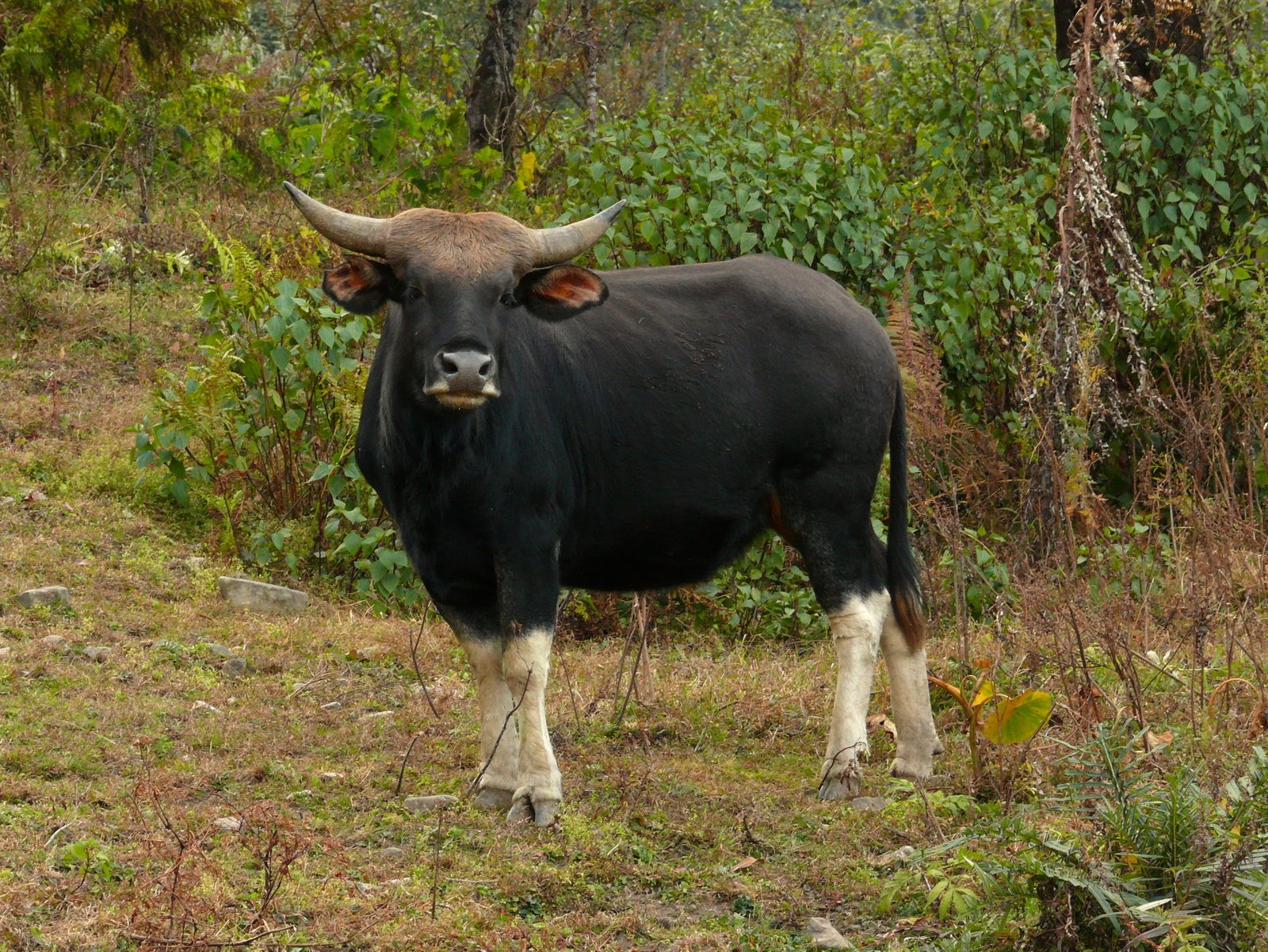
Responding to another question from DNGC geography faculty Dr Helina N. Mantaw on domesticating mithun which lives in wild, mithun scientist Dr Taba Heli said that they could be easily domesticated by moulding them to come from higher reaches to lower ranges for their protection as the mithun has high social relevance. This also calls for mass awareness among the masses, he said.
When asked by social activist Dr Rima Taipodia if mithun could be domesticated as a source of earning? – Dr Heli said that the proposal to GoAP to ban killing of mithun is not implemented as yet for which mass slaughter continues. Many mithuns die in accidents, attack by wild animals, besides ritual sacrifices. There has to be a mechanism to regulate their population not only to make them domesticated and a profitable source of income, he reasoned.
Terming agriculture as a great source of earning in Asian nations, Dr Mantaw advocated adequate knowledge on prevailing laws including registration, trading license, tax payment etc for becoming an agri entrepreneur. Moreover, proper planning and selection for cultivation, survey of area, availability of water, local condition, processing of products, branding, marketing, packaging are essential to face most competitive present markets, she said and highlighted the process for obtaining bank loans.
Numerous fruits are grown in Arunachal, like oranges, banana, pine apple, she said and also cited the examples of successful nursery and dairy farming. In temperate areas of the world have huge grasslands which boost dairy business. Dairy business is booming in European nations as the traders there are very calculative and demarcate 1½ to 2 hectare grasslands for a cow and calf for their growth, she said.
However, Planning Commission has divided India into 15 agro-climatic zones but Arunachal having different climates in upper reaches and lower reaches falls in zone 2, she said indicating an Indian agro-climatic map.
This Himalayan state boasts of highest indigenous mithun population of 2, 54,460 though also found in Nagaland, Manipur and Mizoram, said mithun scientist Dr Taba Heli, adding Mizoram mithun population reduced to less than 2,000 for which the state Govt declared it as endanger species and receiving central funds for its protection and conservation. Regrettably, Arunachal lacks any policy to protect this species as well as unique animal yak having multiple usages. Thus, this calls for a policy to protect and conserve them.
Though considered semi-wild for living in wild areas, mithun in true sense is a domesticated animal and behaves soberly if one approaches soberly. The status of an Arunachalee is known with the number of mithn he possesses. One mithun costs around 50,000 to 60,000 for which it is known as a moving bank or ATM, he said, adding “No mithun no marriage was the common saying since olden days placing the animal as a valuable asset of Arunachal society”.
Dr Heli is right as commonly the bridegroom’s father offers mithuns to bride’s father in exchange of his daughter as a social custom. The number depends on the status of both families, he added.
Mithuna are found in South East Asian nations and Bhutan and Nagaland purchase mithun every year from this state. But, weedicides are used in large quantities in Upper Siang and Papum Pare districts in large cardamom cultivation which serves a poison and kills mithun in large number.
Infectious food and mouth disease (FMD) is prevailing in severe form for which animal husbandry & veterinary department is conducting vaccination to save them. It poses challenges as mithun lives in inaccessible community forest and the mithun owners cannot bring them for schedule vaccination against FMD, he said.
Mithun Protection Society (MPS) instituted in 2014 with him as chairman has been making all out efforts to protect this animal. State’s first Mithun Breeding Firm was set up at Sagalee in 1995 with GoI and GoAP support, he said, adding its milk is very thick and one bottle milk is diluted by mixing three bottles water for consumption.
Mithun and its natural habitat conservation with community participation was set up as pilot project in Doimukh with Ratan Tat Trust funding where 800 mithuns were kept in an area of 800 hectares. The second project was set up in Kimin and the maintenance is done with Rs 20 lakh corpus fund of the MPS. This also serves as an eco-tourism with watch towers and porter tracks.
Thus, mithun, an interesting but high value animal with over 20% protein in its meat, could be a great source for entrepreneurship. Thus, community should be involved with participatory approach in protecting the forest to protect mithuns as this animal survives in nature. However, mithuns are identified with marks leading to conflict among owners for which he was instrumental in introducing micro chip and card for proper identification for communal harmony.
Community mithun conservation centre has been offered but has not yielded any result as yet. However, mithun popularization has been continuing by organizing mithun mela where all facilities are extended besides conducting awareness programme. The last mela was conducted at Boa Simla in Kale district which recorded 104 mithuns, he added.
NYP president H P Biswas, highlighting on Community Horticulture Farming for Livelihood Generation (CHFLG) in Anjaw district with NABARD support, said that the NYP first took up large size cardamom cultivation in Gioliang that prompted to take up in large scale production of large size cardamom involving 22 opium addicts by forming two farmers’ club at Goiliang and Kasonglat in 2010 and their first harvest in 2012 had Rs 1.76 crore. This expanded the cultivation to 10,000 hectares to make every Anjaw farmer lakhpatis.
Interestingly, the local SBI was unable to keep the money for which it was shifted to Tezu SBI branch for safe custody, he said.
Moreover, during the CHFLG launching event by then Health and Family Welfare Minister Kalikho Pul at Hayuliang on 03.12.14 that had intended to improve the lot of 1,016 families of 125 villages in eight circles.
While this project is recognition of the good deed, NABARD has made a documentary of the success story as national role model to be uploaded to NABARD’s national portal and YouTube soon besides distributing one lakh posters of Anjaw cardamom growers in the country.
Sharp rise in local SBI branch deposits by the cardamom growers’ earning proved the fact, which was supplemented by progressive farmer D Awailang, “I earned Rs 25 lakh from my 10 acres land in Dalai Valley in Chaglagam circle in 2013.”
When local SBI manage had approached NYP vice president Pradeep Kumar to seek his help to influence the local to seek loan from the bank. He was told by Kumar that lakhpatis do not seek loans. This a model of NYP and with commitment if one works, agro entrepreneurship would ink many success stories in the state, Biswas added.


 20

