
By A O News Service
NAHARLAGUN, Oct 07: Arunachal Pradesh, known as a ‘Land of Dance and Songs’ and ‘Land of Festivals’, whose younger generations inherit the skills, customs and traditions by birth. Come any festival, the community gathers and folk lore rent the air with young and old dancing to reflect festivity.
As Arunachal offers folk songs, many young children are interested to learn either classical form [of music or modern. It may be noted that Sanskrit text Sangita-Ratnakara of Sarangadeva of 13th century is regarded as master text for Hindustani and Carnatic music traditions.
Thus, many qualified teachers teach classical music to many students including locals. One of them is Shakti Sinha (Saha), who has been teaching for last two decades.
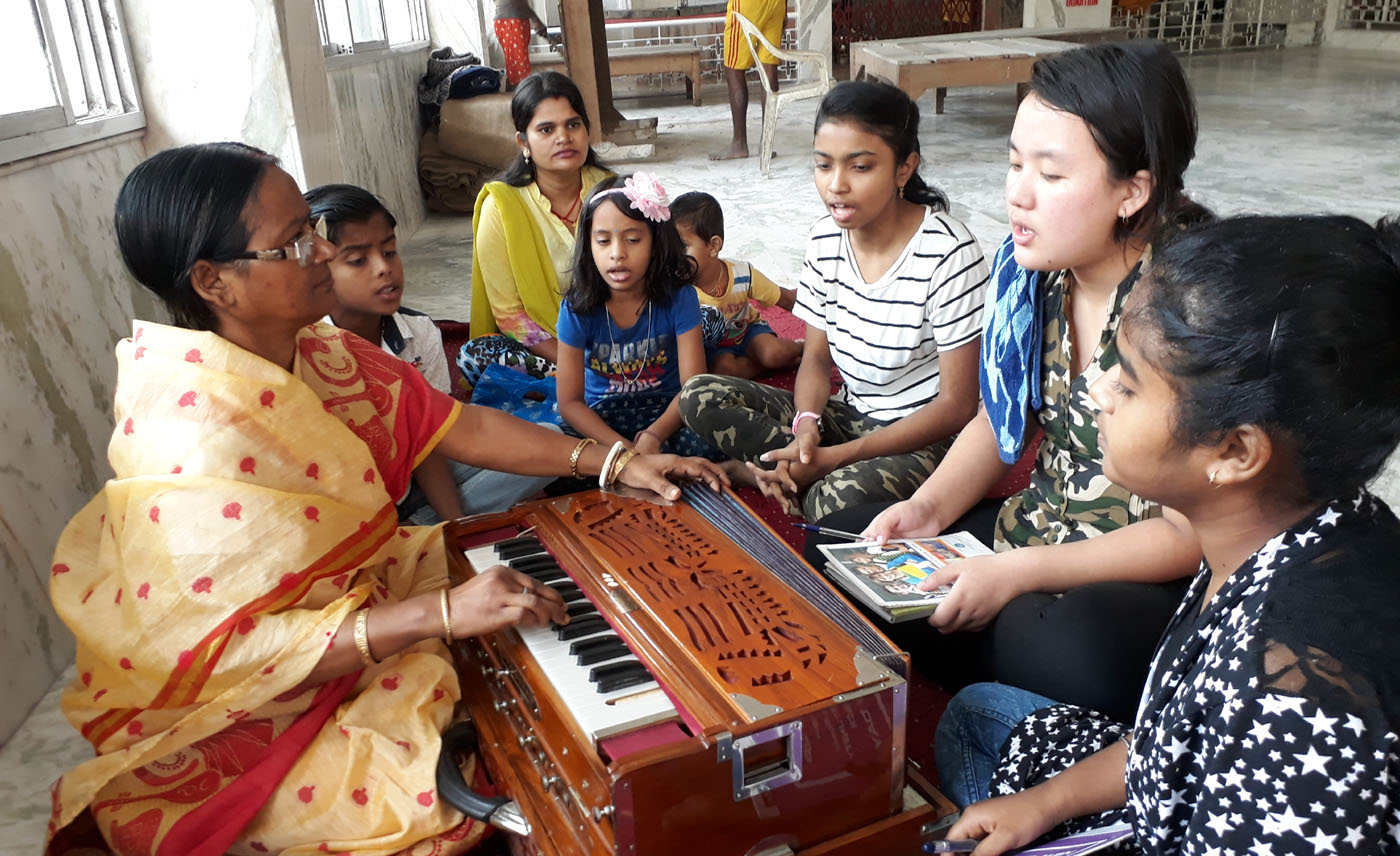
Elderly Sinha was imparting training to students Deki Peldon (Cl-IX), Riya Baroi (Cl-XI), Sonu Kumar (Cl-VII), Bipasa Bose (Cl-X), and Mampi Choudhury (Cl-II) in local Kali Temple here on Sunday when I saw by chance.
“My classes for 25 students in eight shifts continue for one honour each,” Sinha said while Deki and Riya said that the learning process has turned interesting and educative.
It may be noted that Indian classical music has two foundational elements – raga and tala. While raga forms the fabric of a melodic structure, the tala measures the time cycle. Raga gives an artist a palette to build melody from sounds, while tala provides a creative framework for rhythmic improvisation using time. Indian classical uses harmony, counterpoint, chords, or modulation far apart from Western classical concepts.


 20
