
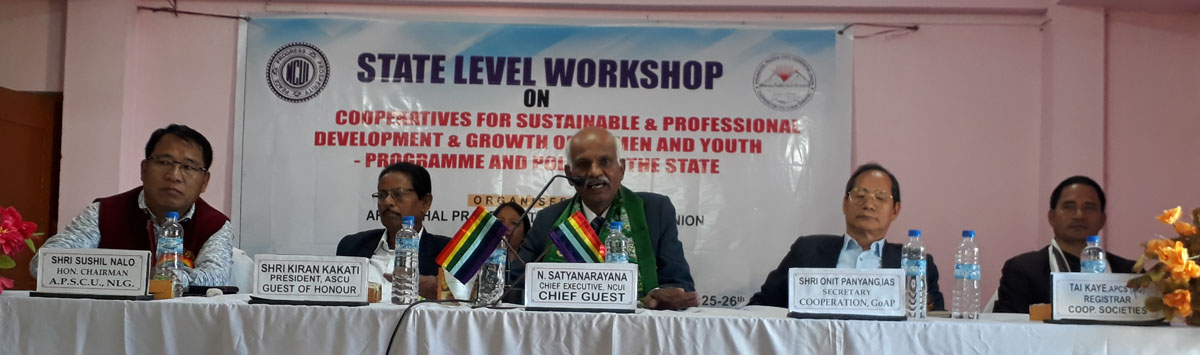
Indian cooperative sector most diversified in world: Satyanarayan
Cooperative panacea to Arunachal problems
Responding to question – If union minister A K Antony in 90s had termed Arunachal cooperative sector best in India, why hundreds of men and women from Damin (Upper Subansiri) have been crossing snow-fed mountains to Tibet to collect essentials through barter trade in this 21st century? – Satyanarayana said that Gandhiji had advocated school, cooperative society and panchayati system in each village for proper socio-economic development and Arunachal is no exception.
There would be no shortcoming if these three institutions work effectively. In case of problems, the Govt involving the cooperative union should identify the lacuna and remove them through policy support, he reasoned. He consented to ensure his view reaches the GoAP in written form.
By Pradeep Kumar
NAHARLAGUN, Oct 25: ‘Indian cooperative sector is most diversified in world,’ said National Cooperative Union of India (NCUI) chief executive officer (CEO) N Satyanarayana, while addressing a workshop on “Role of cooperatives for professional & sustainable development and growth of women and youth – programme & policy in the state” in Arunachal Pradesh State Cooperative Union (APSCU) conference hall here on Thursday.
Cooperative form of social and economic activities dates back to time immemorial as referred in Vedas, Upanishads, Bhagawat Purana, Kautilaya’s Arthashastra, Manu Sanghita and Greece philosopher Plato. The Rig Veda mentions cooperative as:
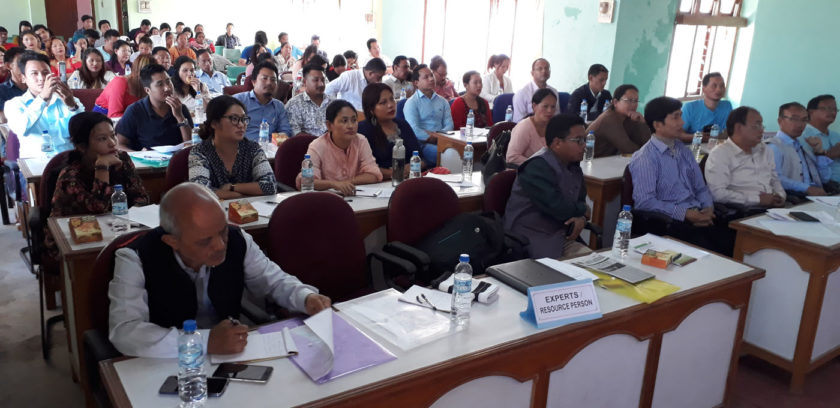
“May you all have common purpose, May your hearts be in unison, May you all be the same mind so that you can do work efficiently well.” But, India’s co-operative movement begun with enactment of Co-operative Credit Societies Act in 1904 by Imperial Legislative Council, he told cooperative society registrar Tayi Kaye, representative of nine federal cooperative societies; seven district cooperative unions; 16 large scale multi-purpose cooperative societies(LAMPS); 38 primary cooperative societies; 13 departmental officers; five RGU research scholars; students of DNGC (economics & arts), Namsai’s Arunachal University of Studies research centre, among others, attending the workshop.
Citing numerous examples success stories of cooperatives in Gujarat, Maharashtra, Kerala and Karnatak, he explained as to how white revolution spearheaded by Tribhuvandas Patel under the guidance of Sardar Patel and Verghese Kurien led to birth of Kaira District Milk Union Limited in 1946 and Anand Milk Producers Union Limited or Amul in 1948. Amul gave the impetus to white revolution to become world’s largest producer of milk and milk products. Kurien is credited with the success of Amul, largest food brand in India and its products are now available in more than 20 countries, he added.
There are 8,000 lakh cooperative societies in India and many national level institutions, like Tribal Marketing Cooperative Society, National Scheduled Castes Finance and Development Corporation, NABARD, etc would provide funds, even with subsidy up to 40% for genuine cause, he clarified. He spelt out mantras for sustainable development with professional for growth while empowering women and youth, particularly in rural area by encouraging them to become entrepreneurs. Sustainable development should aim at social growth without exploitation and environment protection, which, he said, should be in tune with Sustainable Development Goals (SDGs) of 2030 Agenda, adopted in historic September 2015 UN Summit with 17 goals and 169 targets.
Highlighting various activities of cooperative sector to serve the needy sections of the society, NCUI governing council member Kiron Kakoti said that they are not business enterprises unlike others for which always need Govt support. Giving an example of starting of a cooperative college for which the Govt had stopped funding to cooperative sector, he said such attitude was against cooperative movement and growth. His views were dittoed by Satyanarayana that political leaders lack clear concept of role, functions and potential of cooperative sector.
Appreciating top NCUI officers for visiting this remote state, APSCU chairman Suhsil Nalo, while highlighting various chronic problems hindering growth of cooperative system, urged NCUI for adequate funds for infrastructure development, training of state cooperators, exposure and study tours within and outside India. All grievances received assurances of Satyanarayana for quick action.
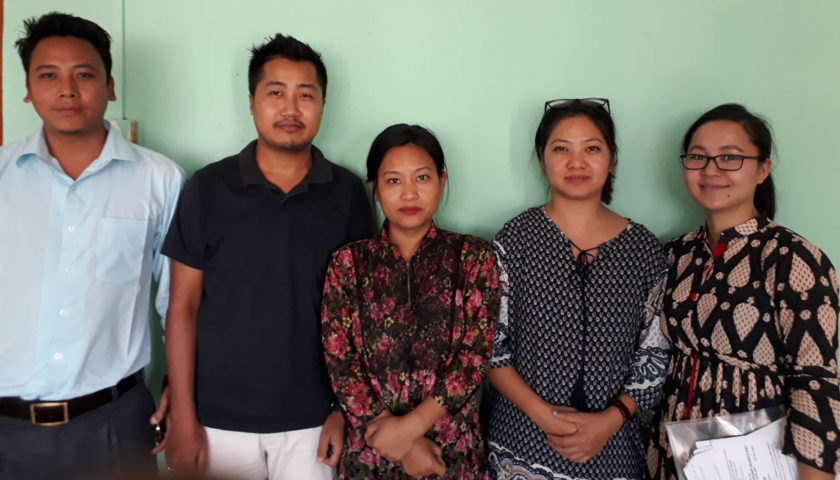
RGU research scholars Nasi Koji, Kosen Jide, Chalak Lowang, Chow Indramang Mamcha & Jawan Yamdo
Pinpointing that fund scarcity as the greatest hurdle for state cooperative, Cooperative secretary Onit Panyang, advocated that given financial and material supports state cooperative could widen its base and services across the state, particularly who are yet to avail the services of PDS. Thus, he urged the NCUI for extending the support sought to give a new thrust to huge potential of the cooperative sector to make it more vibrant and self-reliant.
APSCU CEO Pelbeng Tayeng and vice chairman R Rime also address the participants followed by technical session with RGU commerce HoD Prof Otem Padung, Arunchal Pradesh Cooperative Training Centre principal Ligum Ado, SRLM state mission manage Hillang Tasap, which was summed up by cooperative DRCS Michi Gambo.


 20

