
By Pradeep Kumar
Beyond the Horizon
Pakistan, the hub of terrorism in South East Asia, despite humiliating defeat after unprovoked attacks on India in Bangladesh War (1971) and Kargil War (1999), learnt the hardest lesson, thanks to the tactic but bold move of Prime Minister Narendra Modi.
Salute to the defence forces as we the Indians have been leading peaceful life since 1947. The Army personnel by dedicating their lives to the nation have been guarding the border from all external threat. Anyone who has visited Bumla Pass, located at 17,000-feet, where 1962 Chinese War took place, would know the yeoman’s service of Army personnel guarding the frontier that records 10 to 15 feet snowfall during winter while temperature goes below minus 23 degree Celsius.
I saw it myself many a times how the jawans and officers perform their duties smilingly, particularly during visit with chief minister Nabam Tuki on 21.10.13 when he was so touched that he had spoken to them emotionally and embraced each of them to boost their morale.
Bumla Pass had fallen to the Chinese Army during 1962 War, but they withdrew soon afterwards because of difficult terrain, hostile climate and inaccessibility due to absence of infrastructure. But Indian Army continues to serve against all odds. Their committed service in Jammu & Kashmir is also well known to the world. But, a Pakistan-based Jaise-e-Mohammad (J-e-M) terrorist had crossed the limit of humanity by murdering 40 CRPF personnel at Phulwama on February 14.
India accuses Pakistan of training, arming and sending militants to Indian Kashmir to join insurgency that has killed thousands, but Islamabad denies the charge. But this time Pakistan was caught in a Catch-22 situation forcing air strike by IAF fighters on J-e-M hub on Feb 26, eliminating large number terrorists, which infuriated Pak had denied.
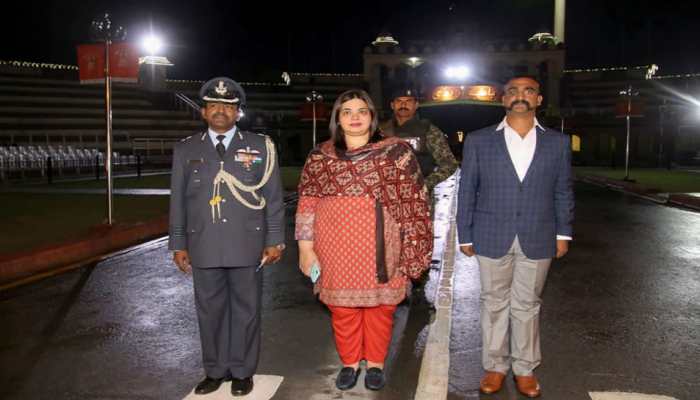
IAF wing commander Abhinandan Varthaman, who was arrested by Pakistani rangers on Feb 27 arrived at Wagah border after Pakistan Prime Minister Imran Khan announced his release on Thursday and issued one-page visa to enter the country.
IAF pilot’s capture in Pakistan took place amid escalating military tension between the two nations. On Feb 27, Abhinandan’s MiG 21 had shot down Pak’s F-16 fighter jet before falling into an ambush which led to the crash of the MiG 21 he was flying and landed on Pakistani soil after ejecting from his jet and was arrested by the Pakistani forces. However, it is believed India put back-channel diplomatic pressure with the help of allies to make Pakistan release the pilot immediately. On Thursday, PM Khan announced in National Assembly that Abhinandan would be set free as ‘peace gesture’. India has meanwhile maintained that Pakistan is obliged to release the pilot under the Geneva Conventions.
Varthaman was reportedly assaulted by public and rescued by Pak rangers. His bleeding image due to inhuman torture went viral which turned out to be a cobweb in which Islamabad’s true colour was exposed to the world.
Pakistan’s open rouge policy towards New Delhi is known but the USA and China proved chameleons in East Asia geo-political theatre changed their colour this time.
USA President Donald Trump reaction was supportive to end the crisis. The world had seen tough stand of Washington against its ally Pakistan after the USA had zeroed down and eliminated al-Qaeda chief Osama bin Laden in a textbook precision air raid on his hideout, near a Pakistan defence establishment in Abbottabad and asked Pakistan to free the ISI from abetting jehadi terrorists, including Haqqani Network, enlisted by USA as specially designated global terrorists.
Though tense over the Indo-Pak conflict but the Indians united against the call of PM Modi to “stand like a wall” against a sworn enemy that “seeks to destabilize India”. Pakistan’s old ally China had asked Islamabad to act against terrorism. Cornered by global community for its inhuman act, Pakistan PM Khan had pleaded for restraint to find solution through dialogues.
This has refreshed memories of was 26-year-old IAF group captain Kambampati Nachiketa, held captive by Pakistan, the first and only prisoner of war of 1999 Kargil war.
Serving as flight lieutenant in No. 9 Squadron of the IAF in 1999, he was assigned to hit enemy targets at altitudes over 17,000 feet with deadly 80mm rockets. On the fateful day of 27.05.99, he was carrying out strikes against enemy posts from his MiG 27 fighter aircraft. Disaster struck when his aircraft experienced engine failure while raining rockets on the Munthadalo range in Batalik area. Left with no option, he had to eject from the jet. He saw his colleague squadron leader Ajay Ahuja, whose MiG 21 jet was struck by a Pak missile.
Nachiketa was soon taken hostage by Pakistani forces and taken to a prison in Rawalpindi where he was brutally beaten up by Pakistani soldiers till a senior officer intervened by realizing the situation and handled the way a captive deserves, Nachiketa had told NDTV in 2016.
Bowing to scrutiny from international media as well as the United Nations, Pakistan finally had released Kambampati Nachiketa eight days later on and handed over to the International Committee of Red Cross in Pakistan to return home via Wagah border.
Pakistan deserves no mercy from any corner for no respect for humanity in the name of religion and needs to be taught much harder lesson for peace to rule in South East Asian nations.


 20
