
- Protect cultural heritage facing extinction: Prof Bora
By Pradeep Kumar
RONO HILLS, Mar 29: “It is well neigh impossible to indentify the original tribes, even the early mountaineers who retained their original customs and life styles could be the original occupants of central Arunachal Pradesh,” said former RGU VC Prof. Tamo Mibang in his keynote address to a galaxy of historians in Rajiv Gandhi University here on Friday.
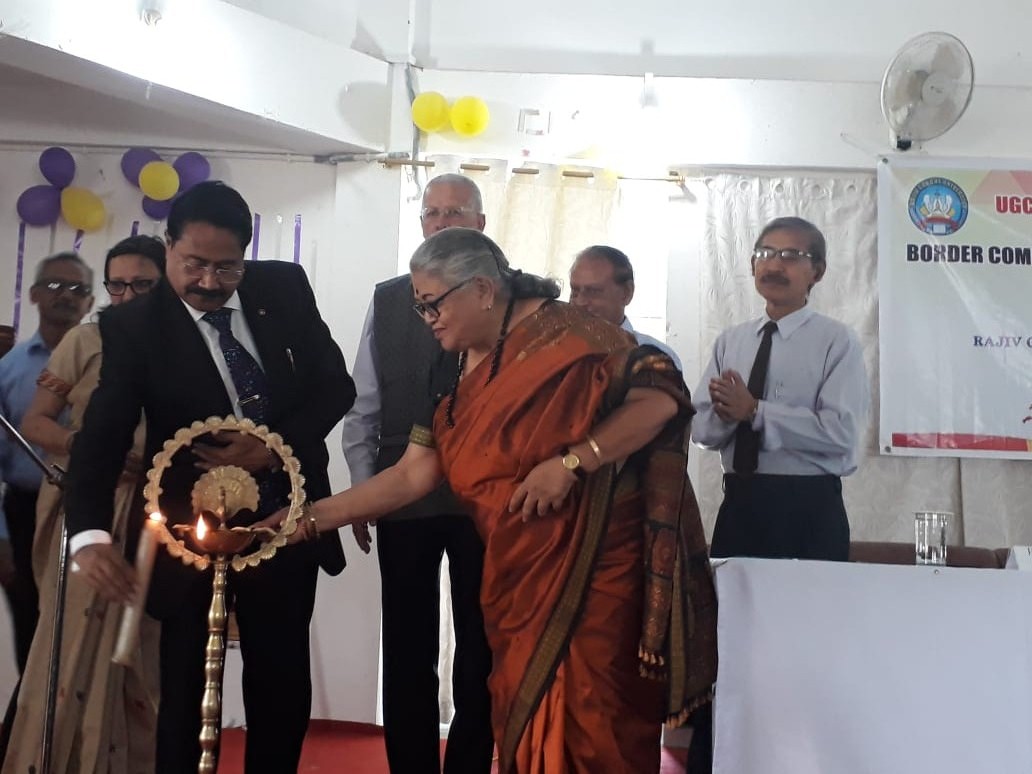
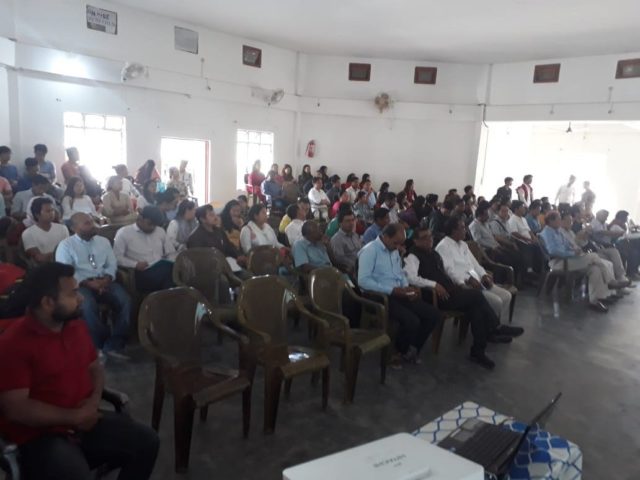
Considering NE as a buffer zone between China and India till 20th century, the British Govt was suggested to set up Crown Colony in NE India and Burma to take up humanitarian activities in their own interest as and permanent foothold on India which is an obsolete theory today, he said on the inaugural day of two-day national seminar “Border communities of central Arunachal Pradesh” under special area programme of UGC, organised by history department.
Tracing the origin of tribes of central border communities, who claim to be ancestors of Abotanis, would require in-depth mythological studies, including festivals, bamboo & Mithun cultures, way of life, their unknown immigration route.
Punctuated by historical records including massacre by It may be recalled that when Genghis Khan’s invasion into Indian subcontinent (including Burma – present Myanmar) during 1221 to 1327 to massacre people to Aka chief Tegi Raja and village councils for self administration, he hinted at sense of dignity, treasure origin, historical narratives and folklores, subjected to waves of immigration, including Ahoms, Tibetan groups, with whom Adis and Nyishis were linked.
Arunachal Pradesh is still under protective policy of GoI, Inner Line Regulation, 1873, introduced by British imperialist for peace and good governance. Though the GoAP data claims 110 tribal groups but it is confusing as there is no ethnological study. However, 64.22% population is ST as per 2011 Census, against 88.5% in 1961 census. This means 35% migrated from rest of nation, he said.
Many cultures are endangered, many are under threat and many are critically endangered. No language in Arunachal is safe. All belong to one cultural group. Na, Kamaba have affinity with Buddhist. There was a resistance movement against alien culture, but Talom Rukbo had launched Donyi-Polo movement. Moreover, Rangfra religion became popular in Tirap and Changlang districts while Idu Mishmi practiced Intiyaism religion. Thus, classifying dominant and lesser tribal groups stands questioned, he added.
Is RGU contributing for multi-faceted development of society or not? – wondered its Vice Chancellor Prof. Saket Kushwaha as chief guest, saying that if ‘no’ the varsity fraternity has to respond though purposeful activities for perpetual contributions to the society.
In his inaugural address, he said the projects taken up so far by RGU students are much below expectation and exhorted them to take up more projects to make the varsity visible. He called for attitudinal change to achieve the goal.
Former UPSC chairman Prof. David Reid Syiemlieh, a historian himself as guest of honour, advocated sustained research in focused areas of this region, particularly local areas as history has no boundary. With many varsities coming up, it is but natural that local issues would draw attention of the researchers, he reasoned.
Seminar was conducted on eastern border communities for which present one is on central border communities, he said, adding it should center around larger aspects of humanity. Recalling his past experience of 80’s as a former RGU VC, he said that the varsity has made huge difference in this knowledge era through research and teaching.
The very thought of Arunachal brings to mind serene valleys and beautifully dressed people but the time calls for preservation and protection of rich age-old cultural heritage of the locals facing extinction, said former Dibrugarh University history HoD Prof. Shiela Bora.
Prof Bora, though had seen the hard days of RGU, said that she feels herself out of place among the gathering, but stressed on thorough research as documents alone would help in protecting the culture.
Former RGU history HoD Prof S Dutta, who was one of the pioneers of state higher education to serve during 1967 to 2007, said that RGU through its activities had placed itself behind NEHU.
Referring to sensitive and strategic importance of this state because of repeated claims over its territories by China, he called for more in-depth studies on various aspects, particularly on unstudied tribes.
Central border communities live in their own world without any contact with common people, he said to underscore the importance of the seminar but hinted at oral tradition of local people through which traditions are passed from generations to generations .
“Is Arunachal Pradesh in India or in China?” – is a common question asked by his students even today, said history department dean Prof Sudhir Kumar Singh. Such projects hold key to clear this misgiving by facilitating to link this remote region to rest of India.
This UGC project is third in series, said history department of head Prof Sarah Hilalay. Seminar deputy coordination Dr. P. K. Nayak lauded one and all for their participation followed by a panel discussion chaired by Prof. Syiemlieh for the panelists to highlight their views on prospects and problems.


 20
