
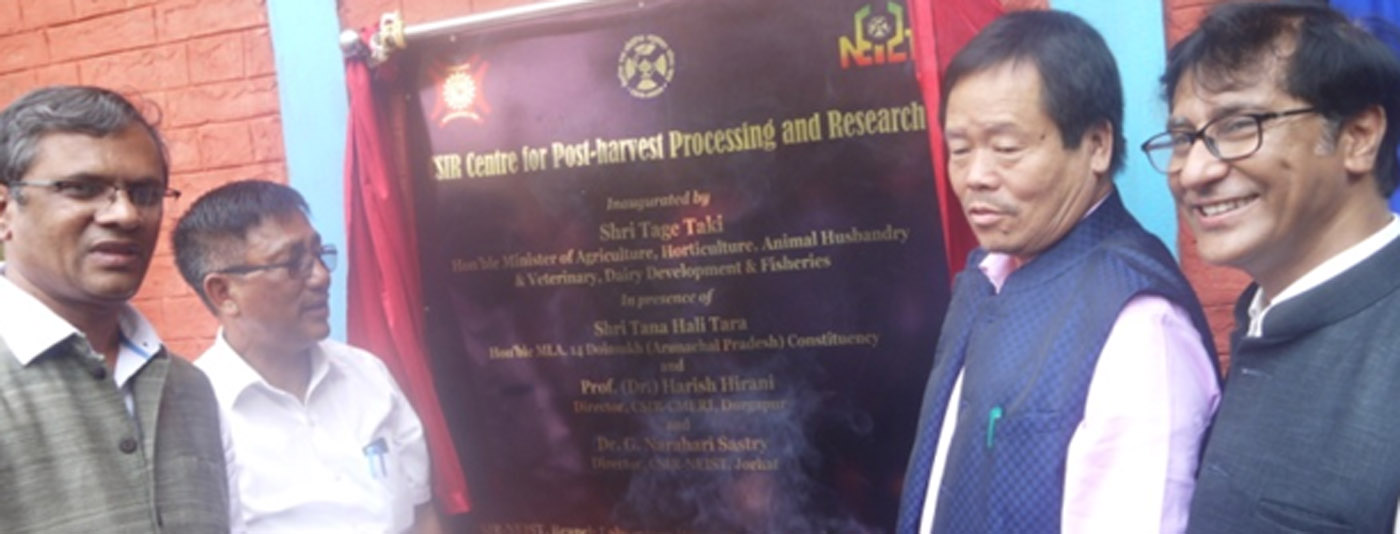
By Pradeep Kumar
NAHARLAGUN, Aug 20: Giving a clarion call to Durgapur-based CSIR to conduct in-depth research to convert vast hidden natural resources of Arunachal Pradesh into encashable resources, Agriculture, Horticulture, Animal Husbandry & Fisheries Minister Tage Taki on Tuesday said that would immensely help in doubling farmers’ income by 2022 in tune with the call given by Prime Minister Narendra Modi.
After inaugurating the centre for post-harvest processing and research (CPHP&R) of North East Institute of Science and Technology (NESIT), a branch of Jorhat and constituent establishment of Council of Scientific and Industrial Research (CSIR) here and inspecting it, he said that it would be a boon to boost socio-economic status of farmers with the traditional patterns being discarded by the farmers.
Expressing concern that despite 83,743 sqkm fertile geographical area known for indigenous growth of numerous indigenous medicinal plants, most of 94% of rural population of the state who depend upon agriculture suffer for their ignorance to add value to their produces, he said. Arunachal cannot compete with Punjab or Haryana because of different practices not even with Bihar in vegetable production but could turn into a CSIR laboratory, particularly at pollution free Sela Top, Mechuka, Ziro and Tawang to spell the mantra, like cultivating feeds for export varieties of Australian cows to reduce production cost or improving gene of cow varieties to end import or developing a 12 HP tractor to meet state’s requirements, he advocated.
Seeking the CSRI help in quality improvement along with area expansion with area specific requirements like producing a multi-purpose power tiller for use in any hilly area, he lauded progressive farmers, mostly women from Nyapin, Koloriang, Aalo and Capital Complex attending the event. The district agricultural officers have been directed to ensure formation of women self help groups, who would be encouraged to take up cash crop production, like maize, marwa or soybean for the department to offer forward marketing.
Pointing out that he would soon seek advice from South Korea and Japan about high yielding crops, he announced that the successful SHGs would be offered cows, pigs, chicken for higher economic benefit but non performer would get nothing, he cautioned. Citing example of Bangalmara-based NEIST woman beneficiary Miju Deori whose monthly income from mushroom production has risen from Rs 70 in 2008 to Rs 70,000 in 2019, the minister wondered why others cannot achieve success like her.
If agriculture-horticulture sector succeeds with CSRI technology, it could meet the requirements of India, Taki said as chief guest to the applause of the gathering. However, he assured all possible helps to CSRI in its mission Arunachal.
Doimukh MKA Tana Hali Tara, speaking as guest of honour, said that roti, kapda aur makan are basic necessities of human beings but produced by the farmers for which second Indian Prime Minister Lal Bahadur Shastri had coined ‘Jai Jawan Jai Kisan’ was a slogan in 1965 to underscore the importance of farmers. He exhorted the beneficiaries to avail the benefits of CPHP&R and lauded the CSIR for targeting eastern most state of the nation.
Arunachal Pradesh with vast land resources and suitable agro climatic condition could be a leader if the CSIR (CMERI) technologies could be used, Durgapur CSIR (CMERI) director Prof Harish Hirani said while citing the example of ginger whose 95% water content once dried could add value.
Such CPHP&R has been set up at Pasighat and the process is on at Ziro, he said, adding there is no dearth of technologies which the CSIR is ready to offer and support, even to any NGO to run through a Govt scheme. Proper use of the technologies would help turn the PM’s dream a reality, he said.
The CSIR has been evincing keen interest in NE India, Arunachal in particular, as advised by PM Modi to tap and convert traditional knowledge to scientific method for India to turn vishwa guru, Jorhat CSIR-NESIT director Dr G N Sastry said.
Of total 38 CSIR labs, one each at Naharlagun and Imphal has been disseminating knowledge to benefit the farmers. Arunachal with mostly women farmers could lead from front if scientific approach is adopted, he said and lauded the minister for suggesting various steps for technological improvement.
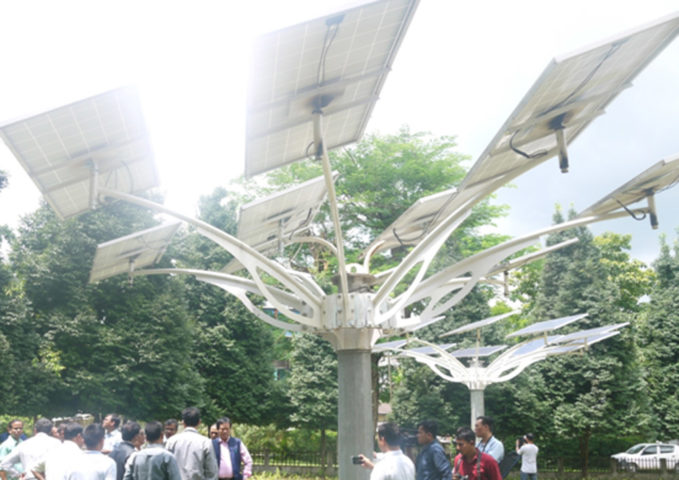
Four such solar panels worth Rs 3.75 lakh each have been installed
in NEIST to generate 12 unit energy each depending upon sun light
Though NESIT could do lot of things but willing involvement of stakeholders are very essential, said in-charge principal scientist Dr Chandan Tamuly, adding all scientists were committed to work for the state for which a training session on CPHP&R for farmers would begin immediately


 20

