

By Pradeep Kumar
SHILLONG, Aug 27: Meghalaya SOS Children’s Home, set up on 12.08.99 in Uniam area here as unit of the global voluntary organization, has been consistently working to give life to uncared for neglected children of the society, said its in-charge M K Pradhan.
Spread in 10.5 acre area close to NH-44, the SOS Home has total 135 children inmates who are nurtured by 40 staff including 13 mothers in well built concrete accommodation including an auditorium of 200 sitting capacity, he told in an exclusive interview to this daily.
Two projects for strengthening families involving 127 families of nearby villages with 439 children are ongoing under assistant director Sudipta Paul’s guidance.
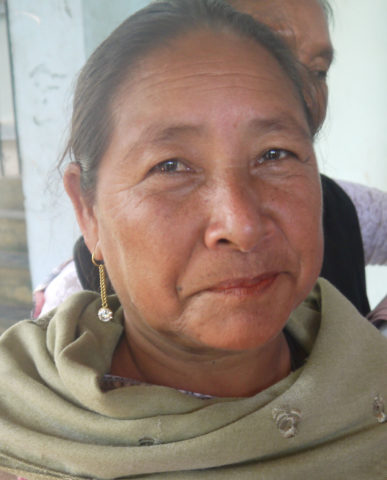 Manusha, head of the beneficiary groups, of Lairkhla village, about 13-km from here, said that the projects aim at improving socio-economic development by ensuring their decent livelihood.
“We are being encouraged to take up cultivation of cash crops, like ginger, broom, bamboo besides set up poultry firms to boost family income,” she said, adding “I have 12 children of whom the eldest of 38-year-old, a graduate, is a Govt employee, one is pursuing BA and six of them two daughters and four sons are married”. In fact, five of my children were adopted by the ongoing projects for facilitating smooth education, she added.
The male folk extend all possible support despite Meghalaya being a matriarchal society, she said responding to a question from this editor.
The SOS, the largest independent, non-governmental, nonprofit international development organization headquartered in Innsbruck, Austria, has unit in all states and union territories except Arunachal Pradesh and Jharkhand.
It provides humanitarian and developmental assistance to children in need and protects their interests and rights around the world. The first SOS Children’s Home was founded in 1949 in Tyrol, Austria, by an Austrian philanthropist Herman Gmeiner. SOS Children’s Homes are active in 135 countries and territories worldwide today.
These Homes provide alternative families to children without adequate parental care. Children of different ages and background live together in a house with a full-time parent, usually a woman who serves as the children’s parent. There are usually 6 to 15 houses in a typical SOS Home. In addition to these Homes, the organization also runs a whole range of programmes and facilities to support socially disadvantaged and impoverished families through its subsidized kindergartens, primary and secondary schools, youth facilities social and medical centers, and emergency response relief operations.
In 2017, over 85,000 children and youths were raised in 572 SOS Children’s Homes and over 700 SOS youth facilities. Another 3.8 million children and adults received services from other programmes.
SOS relies on contributions from Govts and Good Samaritans. In 2017, the organization’s 350 institutional partnership contracts totaled more than €31 million in institutional funds implemented. Funding from foundations and lotteries totaled nearly €48 million, and corporate partnerships provided more than €49 million in support for SOS Children’s Homes globally. The organization was awarded Conard N Hilton Humanitarian Prize in 2002 and Princes of Asturias Award of Concord in 2016.
It follows three international frameworks that serve as guidelines – United Nations Convention on the Rights of Children (UNCRC) adopted in 1989 is a human rights treaty that sets out the civil, political, economic, social, health, and cultural rights of children. The UN Guidelines for Alternative Care of Children adopted in 2009 provides a framework for governments to acknowledge and deliver alternative care to children in need and UN Sustainable Development Goals adopted in 2015 and valid until 2030 in which SOS’ work focuses mainly on vulnerable children and families.
In 2017, the organization launched the ‘No Child Should Grow Up Alone’ campaign which aims to emphasize research showing that 1 in 10 children (220 million) worldwide is growing up alone. The campaign is based on a global research called the ‘Care Effect’ claiming that children growing up without adequate parental care are particularly vulnerable to different forms of human rights violations such as child labor, violence, and sex trafficking.


 20
