
*APIC will serve with dedication: Guv * RTI Act is master key to good governance: CIC
By Pradeep Kumar
ITANAGAR, Oct 19: Terming Right to Information (RTI) Act 2005 as a hidden Act, Assam chief information commissioner (CIC) Himangshu Sekhar Das wondered as to why the Act is not applied for seeking information from private service providers, like health, education, transport service, airlines, TV channels etc.
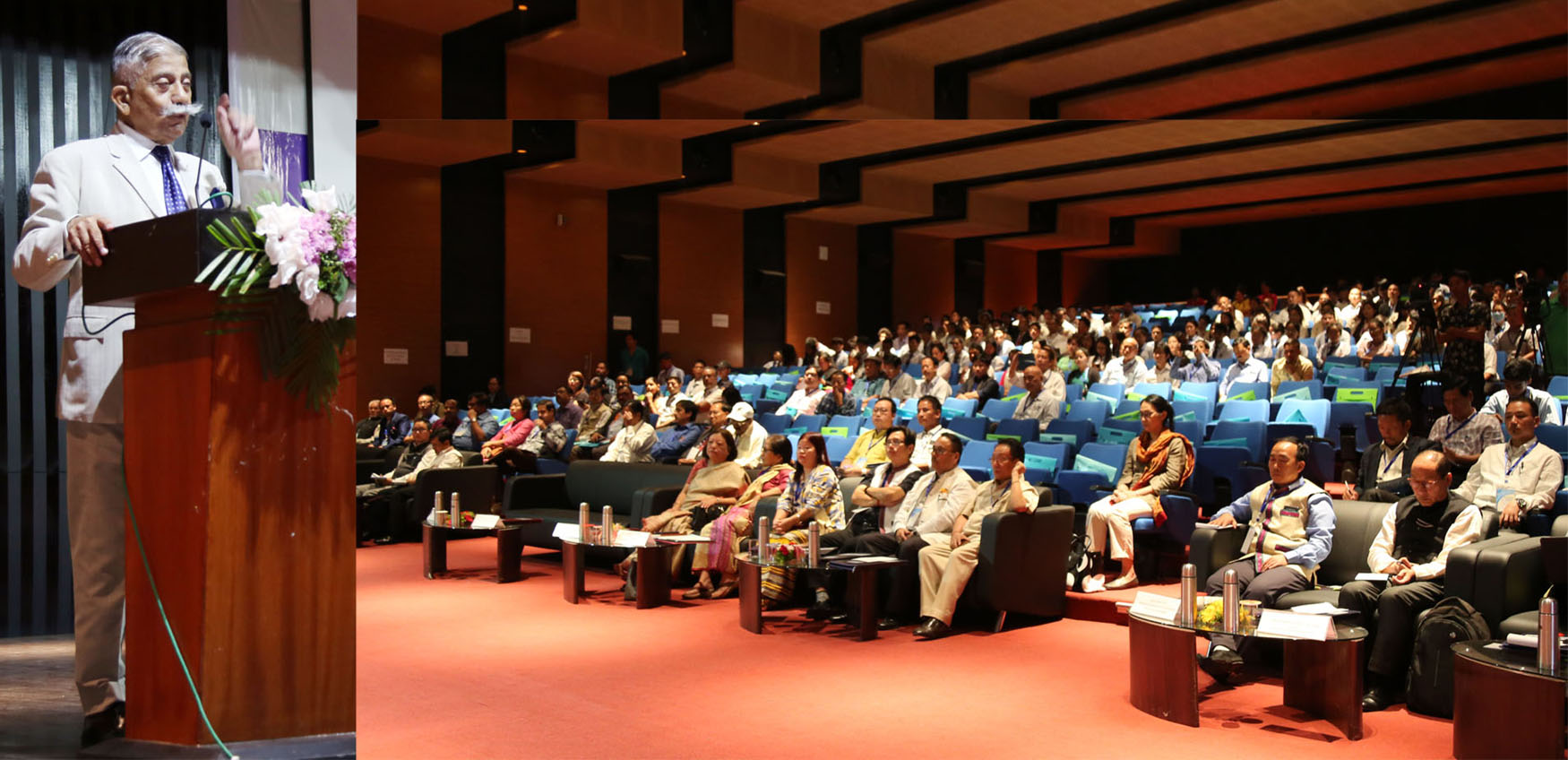
Addressing state convention on RTI Act-cum-13th foundation day celebration of Arunachal Pradesh Information Commission (APIC) at Dorjee Khandu auditorium of state assembly here on Saturday as guest of honour, he quoted from his experience that most information seekers through the Act are common people who seek simple solutions to their grievances.
He said that in case of complaints relating to airlines, mobile telephones, the applicants should approach civil aviation director general and telephone regulatory authority respectively, while the information seekers should find out the regulatory authority, like the DC and SP are regulatory authorities of hotels.
Pointing out that RTI is given a political colour in India contrary to the fact that 50% information seekers are ordinary innocent people while it has been misused in some quarters.
The RTI has been enacted with noble idea to empower the citizens, promote transparency & accountability in Govt working and contain corruption, he said adding the RTI is like sunshine which disinfect, contain corruption and check misinformation.
Though RTI provides an enabling ambiance but surprisingly 98% information seekers are only men, he said and exhorted women to make best use of the Act.
Referring to apprehension of losing rights due to recent amendment to RTI Act, he said that the Act maintains dignity and facilitate to ensure getting legitimate rights legitimately and the amendment has made no difference and question of rolling out the Act never arises.
Pointing out that he arrived here after 30 years when he had visited first to hold discussion on inter-state boundary dispute with then home secretary Anila Krimey, Das said that he was surprised to see magical changes of a small town of Assam type houses. “I am impressed and think of filing an application under RTI to know who did it and how?”
“No part of the country is as diverse as NE India but we people of one state hardly visit another to know each other culture. Such assemblies offer scope to know each other better for which more such conventions should be organized,” he said and congratulated APIC for its endeavour though many states have failed to do it.
The Act has come a long way since 1789 French Revolution as pointed out by Das and a good tool for a democratic society, Governor Brig. (Retd) B.D. Mishra, in his inaugural address as chief guest, adding it encourages Govts to ensure administrative honesty by its effective compliance and voluntary disclosures for good governance.
Good governance has seven pillars – transparency, accountability, honesty, continuity, audit, review and mid-course correction, he said, adding transparency and accountability build-up RTI, which aims at combating corruption, protect fundamental rights, prevent human rights violations, provide exigency in getting justice, eliminating administrative procrastination, prevention of distortion of procedures and provisions,.
He brushed away apprehensions of antagonists that RTI will hamper frank file noting, bold administrative recommendations and abet safe administrative approach. He wondered why the Govt officials fear once they maintain transparency and accountability with honesty. The more they hide, the more vulnerable they become, the more they reveal, the more working burden they shed, he said to underscore the importance of RTI.
He recalled that he had studied the Act in-depth as a law student in Delhi to secure good marks and congratulated APIC) for the event.
Advising the APIC to help iron out vague answers, couching and part replies, sub-quality information, shifting of responsibility when information are sought, he reposed his confidence that the APIC will continue to serve with dedication.
APIC CIC Dr. Joram Begi, in his address earlier, described RTI Act as master key to governance, efficiency etc. However, Assam representing highest population and Arunachal representing highest area of NE India could contribute a lot to NE India, he reasoned.
Assam CIC Das, a former top bureaucrat, is one of the senior most information commissioners of India and vice president of National Information Commission of India, whose address would be educative for all participants, including students of Jote Law Academy, RGU, Doimukh Govt College, Jollang Don Bosco College, DNGC and Aalo-based North East Frontier Technical University besides RTI activities, university and college teachers.
Appreciating the governor for his mission – “For me the well being and progress of Arunachal Pradesh comes first and always”, he termed him ‘Karmvir Governor’ and a true exponent of RTI Act while present ruling sate Govt adopting ‘minimum government and maximum governance’ policy in a state where development is yet to take deep roots underscores the importance of good governance, the need for the hour.
Moreover, the presence of first APIC CIC Nyodek Yonggam, who was 1st graduate of Arunachal Pradesh; former CIC Y D Thongchi, Sahitya Academy awardee and 2nd longest serving DC of India and Assam 6th Finance Commission chairperson Tsering Yongjam Das have made the convention meaningful, he said.
The lawmakers have vital role to play in bringing mass awareness on RTI Act, he said appreciating presence of MLA Dasanglu Pul, Nyato Rigia and Tarin Dakpe. The media not only should disseminate information about the Act but also use it investigative journalism, he said, adding expectations of people from information commission are too high as “I have been getting telephone calls from across the country seeking solutions to their problems”.
He urged former information commissioners Toko Anil, Nanom Jamoh, Techi Abraham and M Lingi to share their vast experience.
Lokayukta and information commission are complementary to each other, he said indicating at Arunachal Pradesh Lokayukta member Yeshi Tsering,
He said that 20 September is observed as World RTI Day, 12 October is RTI Day in India, 5th to 12 October RTI week while the APIC came into being on 13.10.06 but information commissioners took oath this day 13 years ago to make it the foundation day.
State information commissioner Goto Ete highlighted enactment and implementation of the Act in details while information commissioner Leki Phuntso also spoke followed by technical sessions.


 20
