
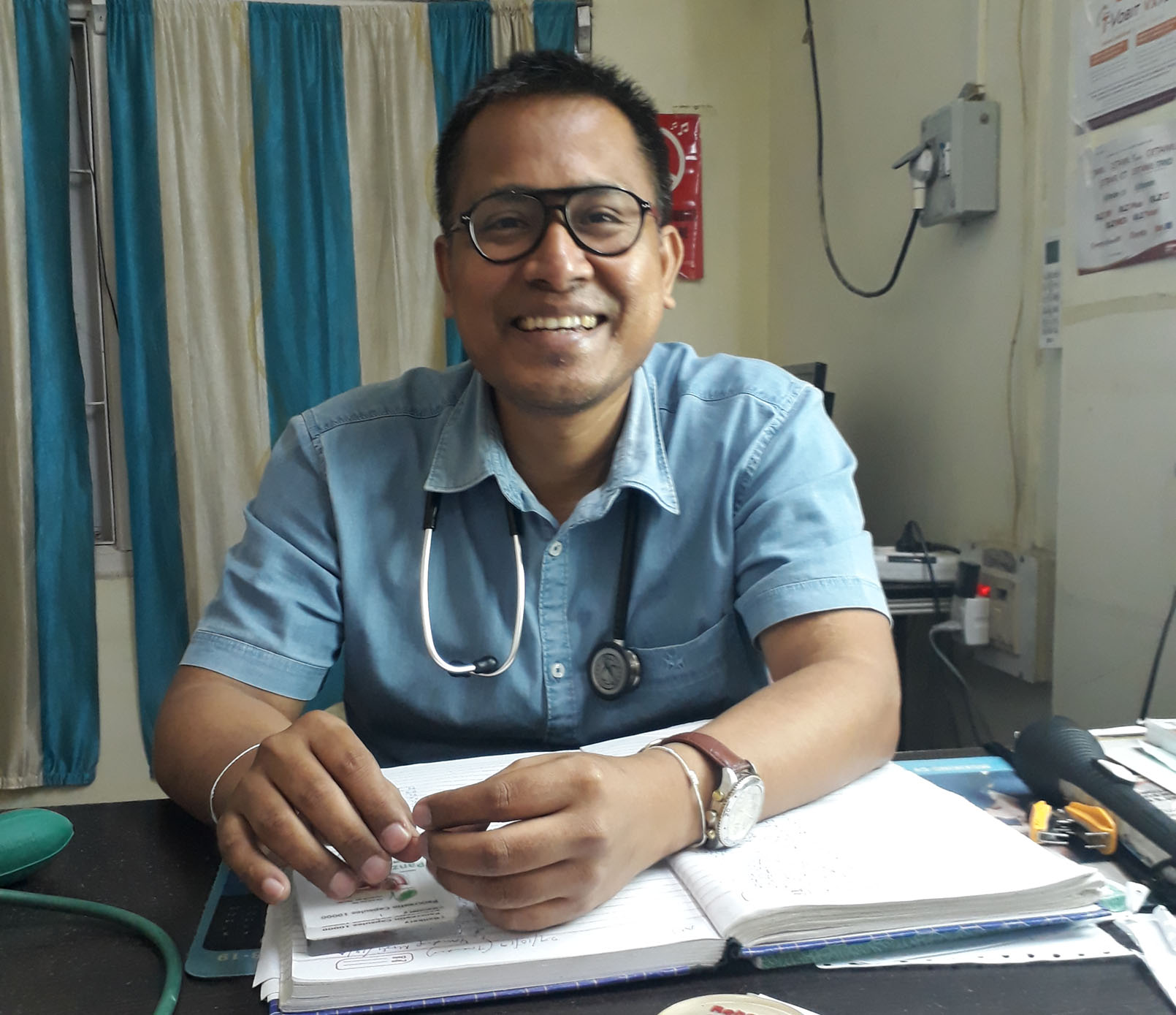
*TRIHMS to improve status: Dr Langkhun
By Pradeep Kumar
ITANAGAR, Oct 29: National Health Profile (NHP)-2018 paints a very poor health scenario of India with one allopathic Govt doctor available for around 11,082 people, more than 10 times of recommended ratio of 1:1000.
The NHP-2018 is a comprehensive annual compilation of data highlighting the demographic, socio-economic, health status, finance, infrastructure and resources in the country and has released on a regular basis since 2005, released by Central Bureau of Health Intelligence, the health intelligence wing of Directorate General of Health Services under Union Health Ministry.
Delhi tops the list with 1:2,203 followed by NE states of Arunachal Pradesh (1:2,417), Manipur (1:2,358) and Sikkim (1:2,437), the NHP-2018 says.
However, admitting the poor health scenario, Niba Hospital medicine specialist Dr C Chetha Langkhun said that Arunachal Pradesh development process begun too late. State’s present doctor:population ratio is poor in comparison to India’s poorest status of 1: 11,082, he said.
The Tomo Riba Institute of Medical Sciences (TRIMHS) with a 500-bedded hospital set up in 2012 with total 50 seats [ 39 seats (state quota), 2 (NRI), 1 (faculty) and 8 (all India)] is a blessing in disguise for more local youth to get medical education at their door steps. State’s health status would undoubtedly improve with more local doctors he said with confidence.
However, Chief Minister Pema Khandu, while chairing third meeting of TRIHMS Society governing council on 01.08.18, had assured all support of his Govt to provide quality, affordable and timely healthcare facilities to the people as topmost priority.
Khandu as its chairman had given go-ahead signal to increase MBBS student intake capacity of 50 to 100 and increase bed number from 300 to 500. Once intake capacity is raised with the approval of Medical Council of India, TRIMHS with Dr Moji Jini as its director would immensely contribute to change the health paradigm of this land-locked Himalayan state.
All said and done, the poor health scenario has a internal hurdle with most local doctors preferring to serve in state capital, administrative headquarters and avoid posting in far-flung areas. That is why many questions are invariably raised on the floor of the Assembly by the members to highlight shortage of doctors and demand immediate posting.
Interestingly, state’s first woman health minister Komoli Mossang while responding to many questions related to posting of doctors had categorically state that local doctors hesitate to take posting in interior areas. “If our doctors hesitate to serve out own people, how could we expect outside doctors to serve us,” she had wondered.


 20

