
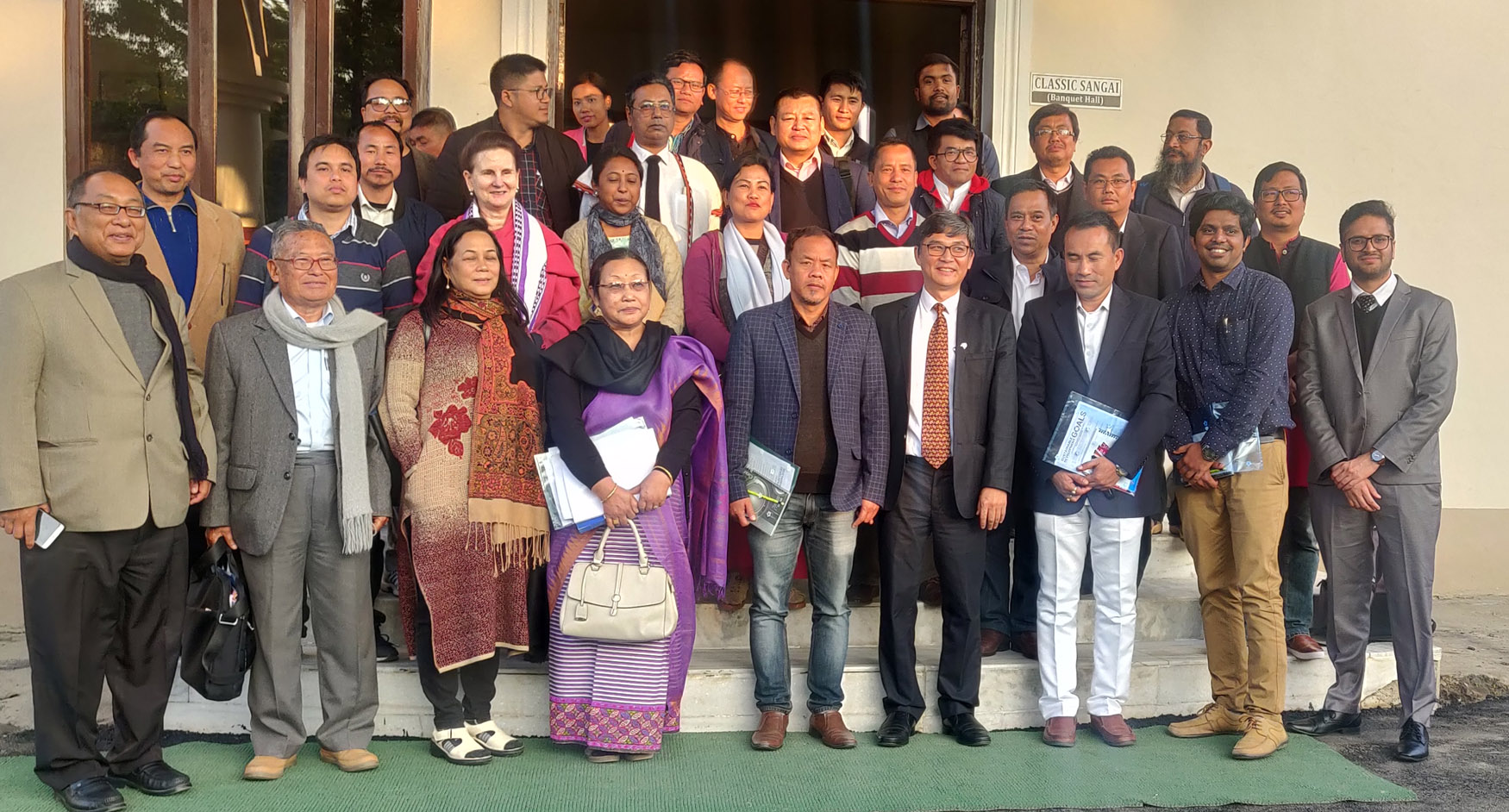
IMPHAL, Feb 05: Representatives of civil society organisations (CSOs) of NE, including Arunachal Pradesh discussed unique challenges and solutions to achieve United Nations’ Sustainable Development Goals (SDGs) to which India is a signatory here on Tuesday.
The North-East SDG Consultation on “Leave No one Behind (LNOB)” was held at Manipur’s capital, Imphal, from February 1 to 2 last.
India’s UN resident coordinator Renata Lok-Dessallien, who took part in the discussions, said that SDGs “are the blueprint to achieve a better and more sustainable future for all”.
“The SDG Goals address global challenges we face including those related to poverty, inequality, climate change, environment degradation, peace and justice. These are 17 goals which are inter-connected and it is important to achieve them by 2030,” she said.
Wada No Todo Abhiyan convenor Annie Namala and the NITI Aayog’s SDG advisor Sanyukta Samaddar dwelt on the challenges in achieving SDGs for vulnerable communities and India’s voluntary National review (VNR) process and vulnerable communities.
Speaking about challenges in the region, economist E Vijoykumar of Manipur University (economics department) said that the Centre has committed in every forum to realization of the SDGs. The NE region is going to get a permanent place in the development policy discourse under Sabka Sath Sabka Vikas, he said.
“No one is going to be left behind,” he said, adding that several states including Manipur inspired by NITI Aayog have brought out state Vision 2030 documents which seek to synthesise aspirations of the people with the SDGs.
The Human Rights Alert executive director Babloo Laitongbam earlier said that India is presenting its second VNR on SDGs in of UN resident commissioner’s office (UNRC), the NITI Aayog has proposed to integrate CSOs’ perspective, data, and inputs in the LNOB section. For this purpose, Vada Na Todo Abhiyan (VNTA) is anchoring a series of consultations throughout the country with CSOs working with various groups including children, adolescents, youth, women, elderly, dalits, adivasis, bonded labourers & victims of human trafficking, LGBTQIA+ groups, farmers, migrants, urban and poor people with disabilities, people living with HIV, religious minorities, refugees and NE,” he said.
Speaking about education, one of the components of SDGs), Arunachal Citizens’ Right (ACR) executive director Bamang Tago disclosed that Arunachal Pradesh does not have any transfer & posting policy/guidelines for teachers and we can’t expect quality education for want of such transfer & posting policy/guidelines.
It should be noted that the state Cabinet had recently approved Arunachal Pradesh Teachers’ Transfer & Posting Policy, 2020 to ensure need-based distribution of teachers.
Tago also pointed out that most of those posted as district project coordinator (DPC) in various districts are not the person(s) who have committed to implement the state/central schemes to bring quality education as they have vested interests. He moderated the plenary session of eight thematic groups that discussed and identified the obstacles and challenges in achieving SDGs.
During the discussion on food safety issues, Arunachal Pradesh Union of Working Journalists’ general secretary Ranju Dodum pinpointed absence of state policies to offer incentives to farmers.
“Almost all state Govts are willing to give subsidies to farmers to grow cash crops, but hardly any benefits are offered for those growing food crops,” he said, adding, “when there is a food crisis, we will need rice not rubber.”


 20
