

- Training sowed disaster preparedness seeds: Dir
By Pradeep Kumar
NIRJULI, Feb 28: Arunachal Pradesh being a very disaster prone state should assess and prepare an integrated system to respond to probable disasters, said National Institute of Disaster Management (NIDM) geo-meteorological risk management division head Prof Surya Prakash.
Prof Prakash, responding to questions in an exclusive to this daily here on Saturday, said that bad shape, steeply sloping landform of loose soil of this largest mountainous state of India are likely to cause disasters due to heavy rain falls.
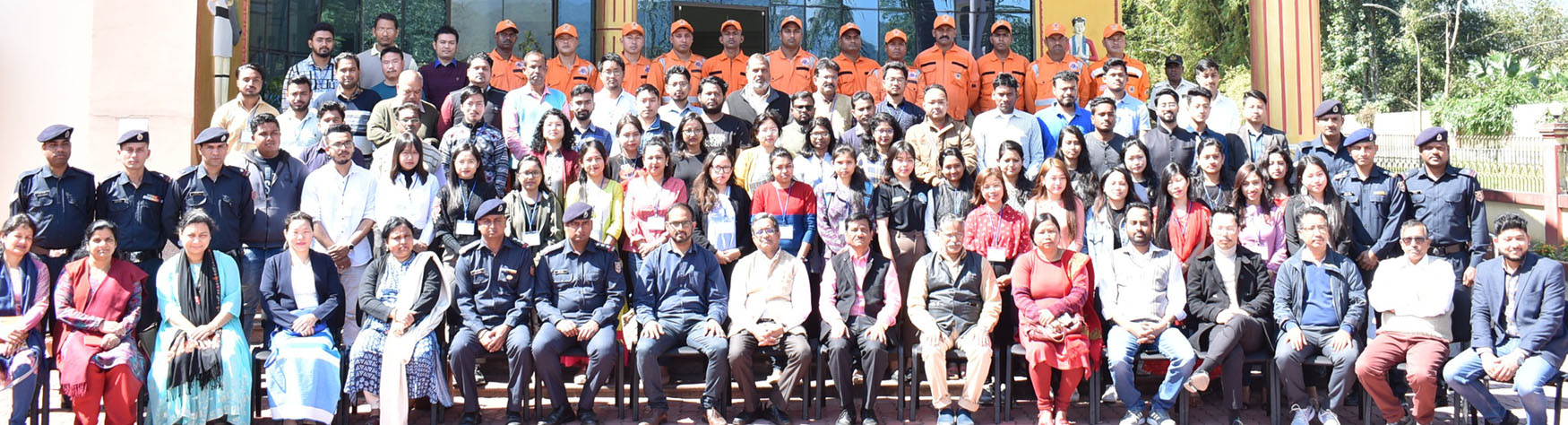
He was in the state on his maiden visit to attend the first ever two-day disaster management training, conducted by NIDM in collaboration with NERIST and National Disaster Response Force (NDRF) in at North Eastern Regional Institute of Science & Technology (NERIST) which begun here on Friday.
“Therefore, we need to plan and formulate policy and procedures for a systematic scientific development in a regulated and contextual manner with a rational and logical approach. We have to learn to live in harmony with the nature and work towards safety and sustainability in the fast changing climatic condition.
“The central Govt has ratified Sendai Framework for Disaster Risk Reduction while Prime Minister Narendra Modi had proposed 10-point agenda for disaster risk reduction and resilience in the first post-Sendai Asia Ministerial Conference on disaster risk reduction held in in New Delhi in November 2016.
“Moreover, the Centre has also ratified the 2016 Paris Agreement on Climate Change which actually affects the incidences and impacts of disasters due to variability in climatic conditions in geo-dynamically active Himalayan region, Arunachal Pradesh in particular, hit by earthquakes, landslides, flashfloods and other disasters. These situations call for proper assessment for timely management of risks by making the communities resilient to such risks.
“However, the government alone cannot do it without the active support and cooperation of the public, affected communities in particular. Thus, the community based disaster risk reduction and resilient plan and specific priority actions – Understanding disaster risk; investing in disaster risk reduction for resilience; enhancing disaster preparedness for effective response and to build back better in recovery, rehabilitation and reconstruction – as suggested by Sendai Framework.
“Seven global targets for disaster risk reduction are: 2016 –(a): Substantially reduce global disaster mortality by 2030, aiming to lower the average per 100,000 global mortality rate in the decade (2020-30) compared to 2005-15 period; 2017 (b): Substantially reduce number of people affected globally by 2030, aiming to lower average global figure per 100,000 in decade (2020-30) compared to 2005-15 period; 2018 –(c): Reduce direct disaster economic loss in relation to global GDP by 2030; 2019 (d): Substantially reduce disaster damage to critical infrastructure and disruption of basic services, among them health and educational facilities, including through developing their resilience by 2030; 2020 – (e): Substantially increase number of nations with national and local disaster risk reduction strategies by 2020; 2021 – (f): Substantially enhance international cooperation to developing nations through adequate and sustainable support to complement their national actions for implementation of the present Framework by 2030; 2022 – (g): Substantially increase availability of and access to multi-hazard early warning systems and disaster risk information and assessments to people by.
Therefore, he exhorted the state government to prepare its plan at all levels, right from state to village level, for the communities to bring mass awareness on above priority actions and seven targets which undoubtedly would prepare them to face any disaster”, he said with conviction.
The NIDM under Union Ministry of Home Affairs is a premier institute for training and capacity development in national and regional levels for managing natural disasters in India.
In his valedictory address earlier, he said that disaster management is an emerging area capable of offering huge opportunities to learn, save life and infrastructures. The education sector could carry forward the NIDM plans more than other sectors while the NERIST being an education institution has a vital role to play, he said as all officers have defined role and duties, but students being very flexible and keen to learn could be taught effectively.
Hinting at two-day 3rd session of multi-sectoral national platform for disaster risk reduction (NPDRR) proposed at Vigyan Bhawan from May 5 next, he said it would highlight excusive approach to reduce disaster risk. But added that: Manzil unhi ko milti hai Jinke sapno me jaan hoti hai, pankh se kuchh nahi hota hauslon se udaan hoti hai and quoted Swami Vivekananda again: Arise awake and stop till not the goal is reached to the applause of the participants.
Appreciating NIDM for the training, NERIST director Prof H S Yadav said the chemistry of highly educative training has shown the seeds of disaster preparedness. All through provoking lessons by experts would certainly make all participants, especially faculty and student of NERIST and RGU to prepare to face any disaster with full preparedness.
Thanking Prof Prakash for his initiative for the training and visiting this far-flung state to enlighten one and all on disasters, preparedness and risk reduction, he anticipated more such training in future.
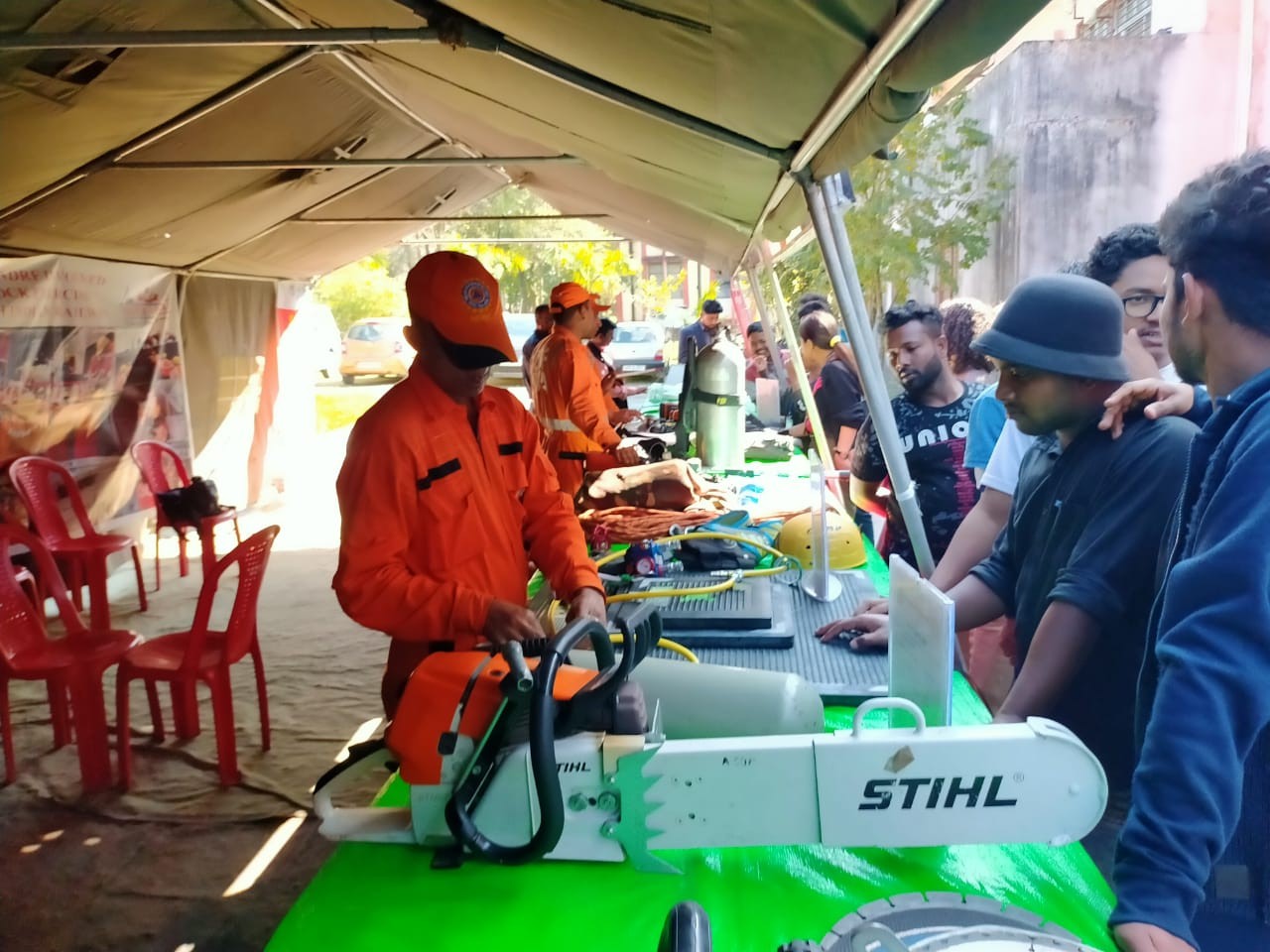
He also lauded the NDRF for its demonstrative exhibition of disaster equipments which immensely benefitted his institute faculty members and students.


 20
