

Beyond the Horizon
By Pradeep Kumar
Decreasing water level of prominent rivers or their dry tributaries that criss-cross the length and breadth of this Himalayan state of Arunachal Pradesh is an indicator of alarming groundwater level.
Many tributaries were dry with their stony base with grown up grasses were visible while water levels of prominent rivers Dibang, Koronu, xxx were very low except of Siang. This was found while travelling along NH-13 from Chowkham to Pasighat via Roing, Dambuk and Mebo on March 9 last.
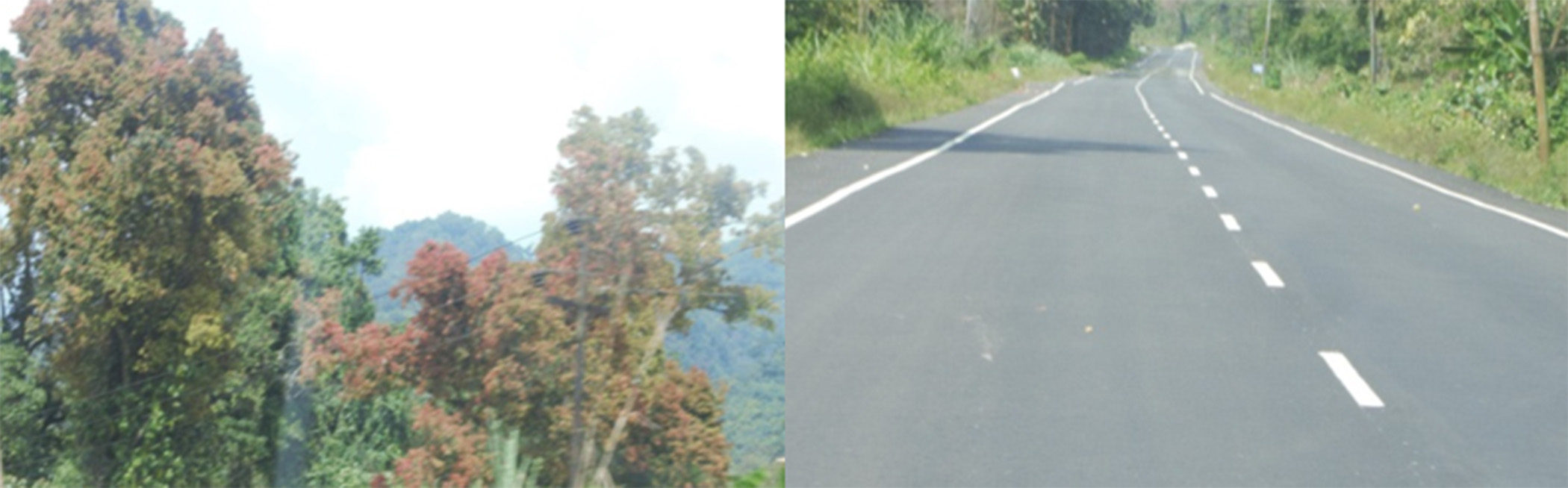
The multi-coloured forest was enticing while the most heart touching was the serpentine Tran-Arunachal Highway (TAH) passing through the lush green forest that promises speedy development of this vast natural resources rich hilly state. The TAH would undoubtedly be the harbinger of a new economic era for the state soon.
It was then Prime Minister Atal Bihari Vajpayee, while launching ‘Freshwater Year-2003’ at New Delhi on 05.02.03, had said: “Water sustains life. Now the time has come for us to sustain the availability of water. Civilizations have prospered on the banks of rivers. Many important cities of the world also have derived their sustenance from rivers. Today, however, it is rivers that are in need of sustenance.
With the phenomenal increase in population and the dramatic rise in living standards of people in many parts of the world, there has been a sharp increase in the demand for freshwater while, on the other hand, total availability of freshwater, has not increased.
To make matters worse, availability has actually dipped on account of man-made pollution. This is a cause for great concern, especially since the planet’s population is projected to increase to about 8 billion by 2025.
We in India face another problem. Rainfall is uneven across the length and breadth of our country. Also, it is not uniform throughout the year. This frequently causes twin problems of floods in some parts and drought in others.
The problem manifests in yet another peculiar way. Some areas, which receive abundant rainfall during rainy season, face acute shortage of water during the rest of the year. The case of Chirapunji, one of the wettest places on the earth, comes readily to mind. Thus, we see how a disturbed water cycle in Nature has caused a vicious circle of distorted development.
Mother Nature is reminding us to learn proper lessons from the wrongs we have committed. We have to respect and restore the delicate balance in Nature. Water is not unlimited. Therefore, we have to be wise and farsighted in using it.
Nearly 80% of the water requirement for irrigation, which is a major consumer of freshwater in India, is met from ground water resources. It is, therefore, necessary to properly conserve and equitably distribute our groundwater resources. We must put an end to the indiscriminate exploitation of groundwater, which we see in some parts of the country. For this purpose, a Model Ground Water Regulation Bill was circulated to all states for adoption some years ago. I urge the states to take immediate action in this regard”.
The groundwater situation and availability of overground water for irrigation has become alarming due to increasing number of dry days during Southwest monsoon, Ministry of Earth Sciences (MoES) secretary M Rajeevan told a parliamentary panel, reported an agency on March 9 supplementing Late Vajpayee’s views.
He testified to the panel that Delhi, Uttar Pradesh, Bihar and West Bengal have been witnessing decreasing number of low-intensity rainfalls which is not favourable for groundwater recharge and agriculture.
“The situation for agriculture and water recharges in Ganga basin states of Delhi, Uttar Pradesh, Bihar and West Bengal and some other states in extreme south peninsula is alarming, as the number of dry days during southwest monsoon is significantly increasing. The frequency of rainfall of lower intensities (less than 7 centimetres), favourable for soil and ground water recharges, is also decreasing over these regions,” he told the panel.
Bihar, Meghalaya, Nagaland, West Bengal, Uttar Pradesh, Arunachal Pradesh and Himachal Pradesh have shown significant decreasing trend in annual rainfall in the last 30 years and also shown a decrease in southwest monsoon. Significant changes have been noticed for most of the states in the district rainfall, Rajeevan added.
The MoES had prepared a report on ”Observed rainfall variability and changes” to find out recent changes in rainfall pattern over 28 states and UT of Jammu and Kashmir which was tabled in the Rajya Sabha last week.


 20
