
By A O News Service
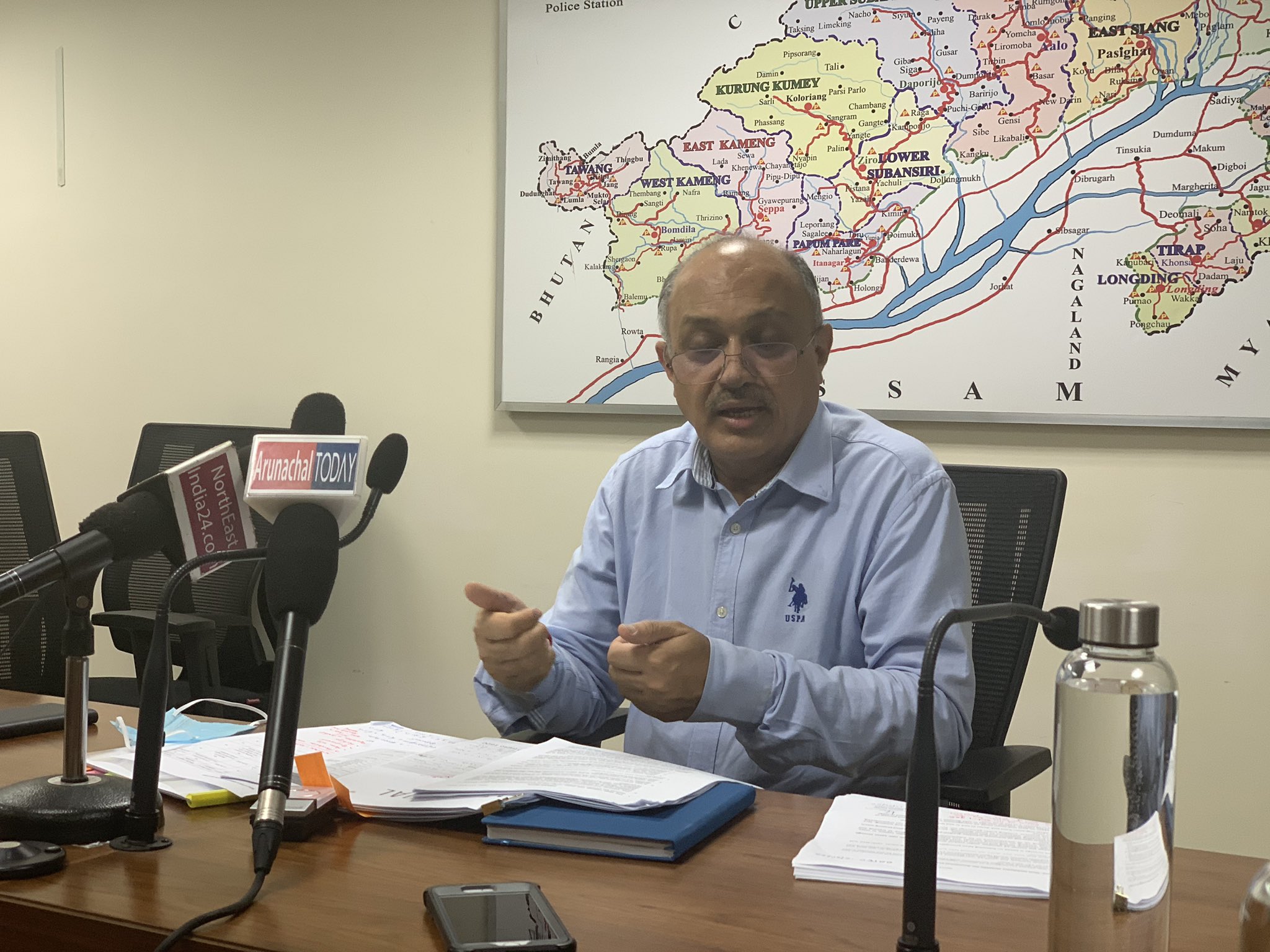
ITANAGAR, Apr 13: Arunachal Pradesh Cabinet headed by Chief Minister Pema Khandu, in a meeting on Monday discussed prevailing COVID-19 situation and post April 14 strategy and decided to extend ongoing lockdown from April 14 to 30 as told by chief secretary Naresh Kumar in Civil Secretariat here. He told media persons that state transport buses, not private ones, will be allowed to ply while maintaining social distance, construction works to resume with permission from authority concerned, but migratory labourers will not be allowed.
Small intensive care unit will be set up in hospitals at Tawang, Tezu, Aalo, Pasighat, Ziro and Khonsa within this month, he added.
Arunachal became seventh state after Odisha took the lead to announce extension, followed by Delhi, Maharashtra, Telangana, West Bengal and Tamil Nadu while Punjab has extended till May 1.
In fact, extension of nationwide lockdown to prevent spread of novel Coronavirus at least till April 30 was almost broad “consensus” of chief ministers during a teleconferencing on Saturday with Prime Minister Narendra Modi, who had stressed “jaan bhi, jahaan bhi”, indicating that restrictions may be tweaked as it was important to save livelihoods and lives.
The Cabinet acknowledged support from various sections of the society, including traders,NGOs, CBOs, gaon burhas, public leaders and media persons, since lockdown begun on March 24 and expressed satisfaction about overall handling by the administration.
It was decided to prompt steps to strengthen medical facilities while continuing with preventive measures. Thus, taking views of all state’s political parties, community based organisations and other stakeholders, the decision to extend lockdown till April 30 was taken.
However, an IPR press release, said all state and district government offices would commence working from April 15, except some non-essential offices. While all officers/officials would attend the offices, only 50% of MTS should be asked to attend the office on rotational basis. The GoAP employees are encouraged to use public transport for which passes will be issued for some important GoAP vehicles.
Agri–horti activities: Deputy commissioners and directors concerned to ensure that all agriculture, horticulture and MGNREGA related works to resume work due to sowing and harvesting season. Health department protocols should be complied with. No new workers from outside will be allowed entry, even from other districts and the DCs would regulate their movement. Social distancing should also be followed.
Industries would resume works on case to case basis as decided by the department in consultation with respective DCs, but such establishments have to strictly comply with all COVID-19 standard operating system. Permission of DCs to be obtained for transporting raw material from other districts or Assam as inter-state movement of labour is strictly prohibited.
Construction/infrastructure related works, where workers are already available would be allowed to resume their work. No new workers will be allowed.
Private vehicles will not be allowed to ply till April 30 so also no inter-district movement. Fixed schedule state transport buses to ply for intra-district movement following social distancing norms, means with only 50% occupancy and mandatory masks for all.
Arunachal students and others who are stranded at various locations in India are advised not to return till April 30 as the GoAP has appointed senior officers as nodal officer for each state to support them. It has been decided to release Rs.53 cror as post-matric scholarship to 20,500 students and stipend for 18,094 students immediately.
Check-posts: The state with long and porous inter-state border has 28 police check-posts on Assam-Arunachal border to check movement of people and vehicles. Keeping in view the possibility of un-authorised entry/migration through this porous border, police along-with GBs, CBOs and village voluntary forces have made elaborate arrangements to guard the inter-state border. Moreover, several temporary check posts will be set up at vulnerable areas to achieve the goal.


 20
