Representational picture
By Pradeep Kumar
ITANAGAR, Apr 29: Novel Coronavirus (COVID-19) has been spreading ‘kokua bhay’ (unknown fear of Lord Krishna era) forcing people indoors and wild animals venturing into inhabited areas and busy streets across the world.
Is this reflecting the pre-industrial civilization when wild animals used to roam around fearlessly near human inhabited areas? Of course, it is the human beings who continued to resort to wanton destruction of forests to invade into animals’ territory and interfered in their smooth life.
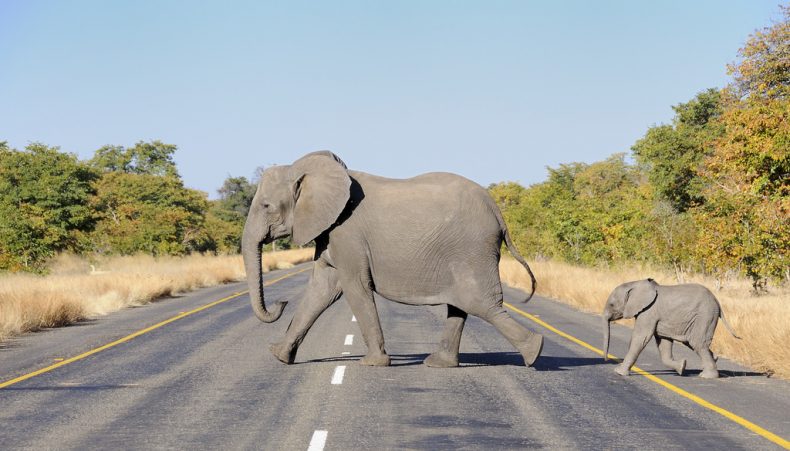
Arunachal Pradesh in 1980s with 82% forest cover (79.63% of state’s geographical area as per 2017 report, still one of the highest forest covers in India) is the best example. Doimukh Reserve Forest of Banderdewa Forest Division, an elephant corridor for them to cross from Arunachal to Assam, was full of wild animals and many species were seen crossing the highway near Banderdewa during that time. Besides elephants, deer, stags, wild cats etc were very often seen.
I myself saw a she elephant to protect her young baby had created havoc along the highway near Banderdewa in 1984 when forest official and police had to fire in air to chase her away to facilitate return of then chief minister Gegong Apang from Police Training Centre after a function.
The Wildlife Trust of India (WTI) book – Right of passage – categorically mentions about the elephant habitats and corridors in Arunachal Pradesh with a special reference to Banderdewa Forest Division. The WTI was working on 101 reserved elephant corridors in Assam, Meghalaya and Arunachal Pradesh with state Govts and their forest departments to keep those corridors intact, WTI head (wild land division) Upasana Ganguly, was quoted as saying in a May 2019 report.
Tiger havoc: I remember the last report of killing of a full grown Royal Bengal Tiger was hunted down by villagers of Numuk, about 30-km from West Siang district HQs Aalo in January 2010. As hunting was common then, the villager went to deep woods found this tiger and killed it, eyewitnesses had said.
But fear of wild animals still haunts in this Himalayan state as was reported from Pasighat in May 2018. A Royal Bengal tigress with two cubs reportedly had created panic among livestock owners of Ruksin, Bilat and Ledum hill adjacent to Gutin reserve forest in Pasighat West area of East Siang district after killing at least six mithuns and a cow. Moreover, pug marks of an adult Royal Bengal tiger was spotted the for the second time in Poba reserve forest near East Siang district, Assam’s Jonai, forest officials had claimed on 28.04.19 as reported by Times of India.
These sightings across India are though unusual but mind boggling:
Dolphins were spotted playing in sea water in Mumbai on 23.03.20, thanks to Mumbaikars for staying indoors and no tourist venturing into sea due to lockdown.
Nilgai: Impatient drivers amidst massive traffic honked around Great India Place mall in Noida after seeing a nilgai in late March. The Asian antelope walked about freely till it spotted some cops. These antelopes natural inhabitants of the area few decades ago were forced to look for safer areas after this city in Uttar Pradesh was developed on forests & farmlands.
Spotted deer and sambhar were sighted at dawn or after dusk at several places in and around temple town of Tirupati. Human activity came to a halt after the Tirumala Tirupati Devasthanams decided to shut down the famous hill temple. The empty ghat roads have become a frequent haunt of spotted deer.
An Indian civet was unusual visitor and spotted by cops one afternoon at zebra crossing at Meppayur in Kozhikode with vehicles off the roads due to lockdown. Authorities concluded that the nocturnal animal must have come from some faraway forest area in Western Ghats, but its video became viral on social media.
Peacocks: Mumbai’s Khareghat Parsi Colony in Tardeo residents saw dozen peacocks, possibly from nearby Doongerwadi forest, wandering on to the streets, much to their delight who watched from their homes.
A full grown one-horned rhinoceros ambled into Sonapur town, east of Guwahati, from 28-km away Pobitora Wildlife Sanctuary on March 28 creating havoc among local residents. The COVID-19 lockdown has activated poachers and at least six thwarted attempts were made within a week around Assam’s national parks but all attempts were thwarted, The Hindu reported on April 14. But villagers have also been hearing howls of a rare black fox. Guwahati, surrounded by several forest reserves and wetlands, has reportedly recorded some 200 species of mammals. Animals don’t venture out of these areas, but they ventured with humans locked inside.
Nesting in daylight: Mass nesting by olive ridley turtles in Odisha’s Rushikulya rookery and Gahirmatha Beach is not unusual, but daytime nesting is uncommon. This was recorded after almost seven years. Lack of tourists, trawlers & general human intervention prompted the turtles come out of their shell.
Wild animals roam world’s empty streets: As lockdown due to COVID-19 forces people indoors across the world, wild animals have begun to appear in deserted streets once full of cars and people, reported Candice Marshall in ESCAPE.
North Wales in UK saw a herd of goats in seaside town of Llandudno without caring for approaching vehicles.
Fallow deer from nearby Dagnam Park were grazing within a housing estate in Harold Hill, near Romford in England.
Without usual chaos of motorboats to scare, a seabird enjoys a paddle in a canal of Venice in Italy.
A young puma was seen in residential streets of Santiago, Chile, after venturing out from surrounding mountains.
Cock fight, common in many parts of Odisha, but the roosters engaged in fight in Florida’s popular Duval Street, which normally teems with tourists on the last week of spring break.
This fox leaves the woods and wanders casually through a residential street near West Middlesex in England.
This lone peacock just cruises through the streets in a normally bustling retail area of Dubai in UAE.
Lions in Kruger National Park in South Africa sported snoozing on a road taking full advantage of deserted due to COVID-19 impact, Ellie Walker-Amott reports on April 24.


 20