
NE safest place in India amidst COVID-19 pandemic: Talukdar
• Cover news, don’t be news: Kashyap to mediamen during PIB workshop
By Pradeep Kumar
NAHARLAGUN, May 06: “North East is the safest place of India amidst COVID-19 pandemic which calls for urgent response by journalists with responsible content to demystify numerous misgiving spread by social media platform’, said Guwahati-based senior journalist Mrinal Talukdar.
While taking part in an online workshop on COVID-19 between 12 noon to 1.45 pm on Wednesday, Talukdar minced no words to take a dig at negative impacts of social media, but hinted about present journalists defusing the misinformation boom by hard contents reflecting a visible change in the trend.
Talking about psychological aspects, he wondered that what is happening now in Tawang or Papumpare (Arunachal) or Mokokchang (Nagaland) or Tura (Meghalaya) not known and the PIB could play a very vital role to offer information.
Electronic channels cannot give more than 90 seconds to any news but print media goes to print daily for revenue is a fact, but hard contents with social responsibility would serve as the bullet, the need of the hour, he said with conviction.
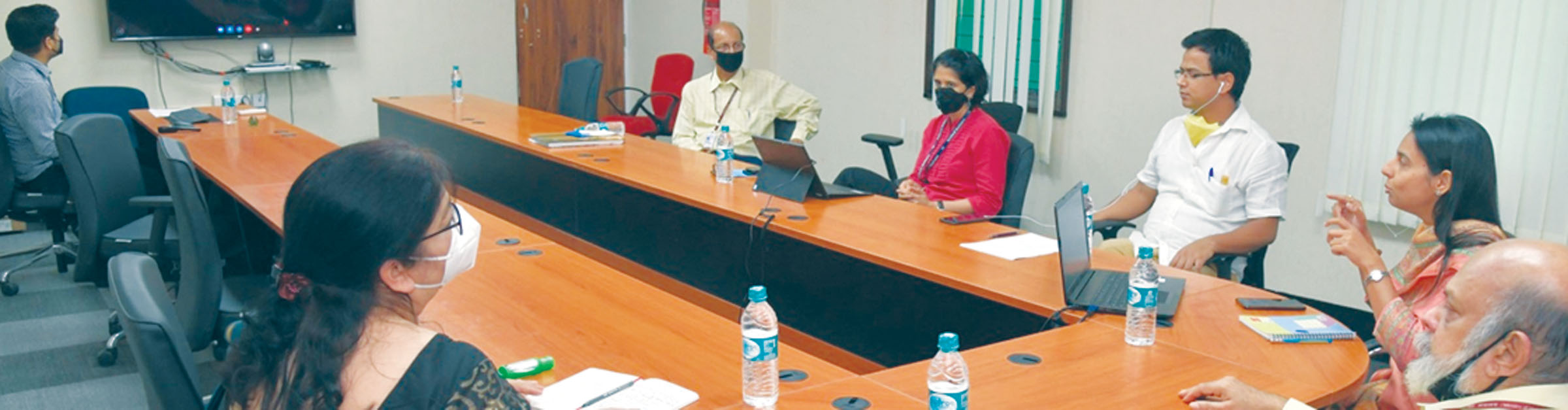
The Press Information Bureau-UNICEF webinar workshop, an initiative of PIB’s NE director general L R Biswanath (extreme right)and moderated by media & communication officer Gopajit Das, saw senior journalists from across NE, UNICEF and PIB officials taking part.
When asked by this editor to explain “Why and how North East is safest place of India”, a lesson for rest of India to emulate, Talukdar was already disconnected but none responded. Later when contacted over telephone, he said: NE has been least affected in comparison to rest of India because of less population, less exposure, people live in isolation and they maintained physical distancing strictly.
However, none could say when the second wave of positive cases started after Talukdar said that almost 4,000 to 5,000 cases are reported almost daily now. But, when asked if the wave was after Tablighi Markaz event in New Delhi’s Nizamuddin during March 15-17, the reply was negative as an expert said the virus would have spread by anyway.
But when asked to clarify whether it is social distancing or physical distancing as Prime Minister Narendra Modi in his maan ki baat on Apr 26 had asked to maintain physical distance, the reply came: physical distancing to be precise.
Highlighting on ethics of journalism, senior journalist Samudrgupta Kashyap in his power-point presentation enlisted eight golden rules, the do’s and don’ts for unbiased and impartial reporting without sensationalizing during this critical juncture.
“Don’t traumatize the victims by questions; avoid discrimination on sex, caste, creed, religion or region; look for information from official authorities as health ministers and chief secretaries of all states have been very active”, he said and cited example of Assam Health Minister Dr Himanta Biswa Sarma.
Total population of Mumbai, Pune & Brihat Mumbai is more than many state’s population and after it posed serious challenge after becoming COVID-19 hotspot, Mumbai-based Deccan Herald bureau chief Mrityunjay Bose said to begin, adding it was followed by fast development of health infrastructures and COVID hospitals.
Though everyone is volatile to the virus, but the media persons have been trying to educate the masses. Regrettably, 53of total 107 journalists on duty got infected during this never seen before situation. But, he applauded PIB offices for never seen before proactive role, which was dittoed by next speakers.
Pointing out that Coronavirs is not new but like SARS, which had moved from animals to human being killing nearly 800 people globally in 2002 and 2003, UNICEF NE chief Ashis Dadwal said that it surfaced again in December 2019 for whose symptoms are fever, tiredness, dry cough, nasal congestion, running nose & sore throat etc.
Explaining about its many myths and facts, he said the virus could survive in cold and hot weather, but media being 4th pillar of democracy could help to combat the misinformation being spread now. The media being torch bearer could work with transparency to achieve the goal, he said.
Expressing concern over fake and discriminatory news about COVID-19, UNICEF NE child specialist Laxmi Narayan Mishra highlighted various prevailing protective laws for children and women, As number domestic violence and sexual abuse cases against them has risen, he urged to dial up national helpline 181(women) and 1098 (children) to inform such cases.
Terming COVID-19 as a public health emergency, he said that the GoI has activated the legal framework under Disaster Management Act, 2005 and empowered health, home, police, disaster management and state disaster management task force, only official authorities involved in combating operation.
The media being duty bearer and works 24×7 should demystify all fake news for safety and security of the people, he added.
DDK staff Sanjoy Pratap Singh, who was also online, had linked me to this workshop; PIB’s Sr photographer Suresh Ku Dorjee always seeks pictures when any union minister visits Itanagar.
The PIB, in a release, said that Vishwanath credited media for doing a commendable job in disseminating information with accuracy and integrity in this crisis situation. This maiden workshop involved 25 journalists from seven NE states through video conference, he said.
UNICEF Assam field office chief Dr Madhulika Jonathan said: “Media, among other agencies, has a critical responsibility. They play an important role in raising awareness, dispelling myths, exposing misleading information, promoting kindness, preventing stigma and building confidence among the masses by fair and accurate reporting”.
A handbook for journalists on safety guidelines were released to mark the occasion, which was earlier addressed by PIB joint director Keerti Tiwari.
However, many may not remember about 3rd All India Editors’ Conference at Guwahati on 16.07.2010, attended by Kanaksen Deka (Dainik Agradoot), PJ Baruah (Assam Tribune), NI Laskar (Eastern Chronicle) and I myself.
When Union I&B Minister Ambika Soni, in her inaugural address said “The fruits of development could percolate down to the people if alone the Govt being the facilitator and the people being the benefactors become proactive” and looked at us. I had pitched in: Madam, the people of NE are straight and they talk straight without being hypocritical to convey their sentiment which the newspapers reflect. When allocation of funds is higher to NE, why is the grumbling? I highlighted various reasons behind underdevelopment of NE Soni quipped: Ek haat se tali nehin bajta (You can’t clap with one hand).
However, as most of the editors complained of various lacunas in various wings of I&B and either non-receipt or delayed receipt of PIB releases, she said all top ranking officers met earlier during the days to review the situation to overcome the shortcomings in NE.
She nodded approvingly to discuss my suggestion for a NE desk in PIB HQ to specifically deal with the sensitive and isolated region with senior officers as PIB principal DG Neelam Kapur and additional DG DN Mohanty keenly watched the conversation. Later, taking into view Arunachal Pradesh as a very sensitive border state had urged her for an office at Itanagar which she had nodded to consider.


 20
