
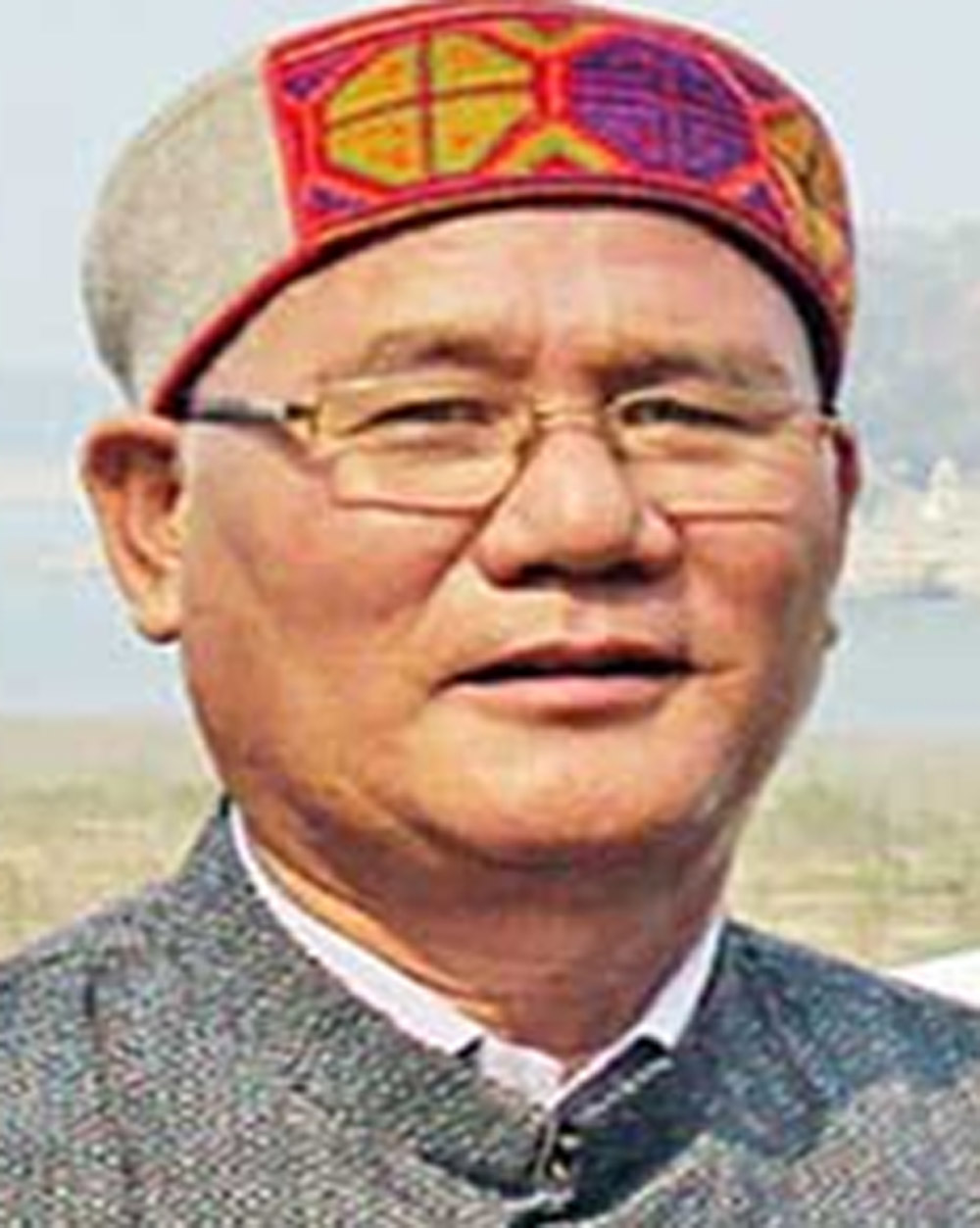
Unique record inked
Translating Bodhicharyavatara, written by Shantideva, a famous scholar and yogi of India in 8th century, in five years and to be published soon his undoubtedly his greatest achievement in life. Shantideva, a prince who became a monk and studied in legendary Nalanda University and always very devoted to Manjushri, the Bodhisattva of Wisdom. He had recited it from his mind, as per university record.
Beyond the Horizon
By Pradeep Kumar
No one ever dreamt that Yeshe Dorjee Thongchi, who was born 69 years ago on this day (June 13) in 1952 to late Tashi Phuntsu Thongchi and late Rinchin Chojom Thongchi of Sherdukpen community in remote Jigaon village in West Kameng district, would turn into one of the greatest literary lights of India.
On his birthday, wishes have been pouring in which could be summed up as jiyo hazar saal, oh Arunchalki Laal.
Though he began his career as a circle officer in 1977 and EAC in 1980 to be inducted into IAS in 1992, but became the second longest serving deputy commissioner of India (12 years 4 months) after Ajit Jogi (13 years). He also worked as state’s Chief Information Commissioner (2011 march to 2015 October).
Interestingly, many are not aware of his many unparallel records – in disposing of court cases, including rapes, all in record time, and his verdicts were upheld by the HC. He had given 14-yr jail term to three Assam Rifles jawans in a rape case relating Mago village and to BRTF driver in another rape case as Tawang DC (Sept 93-July 96); gave the landmark judgement that “No outsider can own land in Arunachal other than indigenous Arunachalees, which was upheld by the HC on 10-12-99 (Case No. 14/1996, Misc case (8) No. 170/ 1996) relating to ownership of a Jairampur petrol depot filed by owner Yan Tikhak besides stirring the entire nation after seizing 99 kg of charas (drug) as Changlang DC (Apr 98-May 2001). Charash brought from the infamous Golden Triangle during 1998 assembly polls was Rs one crore/per kg in global market then.
Thongchi started his literary pursuit from his childhood in school days. Though his mother tongue Sherdukpen, a dialect spoken by few thousand people, he started writings in Assamese, medium of instruction in NEFA schools and also acted as a lingua franca among various indigenous tribes then.
His first poem Jonbai was published in 1967 in an Assamese children’s magazine of same name, followed by some patriotic poems in some leading Assamese news papers and magazines. He became too popular as a poet among his teachers, fellow students, friends and other residents of Bomdila, then HQs of Kameng Frontier Division. With encouragement of his teachers for writing one act plays on the life of tribal people of NEFA and on patriotic theme, Thongchi wrote several one act plays and staged at several places. Himantar Dabanol Fire at Border, one of his one act plays, was amalgamated with another such drama and performed at National Dramatic Festival at Bangalore. Thongchi gained immense popularity among the readers for uniqueness of his writing style of using simple language followed by the masses.
The Assamese author, to his credit has 11 books – eight novels, three folk tales, while novel Sonam, converted to state’s first celluloid film. He is also working on his four short story collections. However, he was greatly influenced by Assamese literature ‘Sahitya Surjya’ Lummer Dai and pride of Arunachal Pradesh to lead literary light in the world.
Arunachal, with its rich folksongs, folklores, songs and dances has enough depth and variety to encourage creative writing, drama, fiction, poetry, novel, etc, Padmashree Shree Arun Sharma, the lone Sahitya Akademi and Sangeet Natak Akademi awardee in the country, had said once.
That was why Thongchi was instrumental in forming Arunachal Pradesh Literary Society as its founder president in 2006.
There is a general misconception about the Northeast as being insurgency infested, but the region’s uniqueness centers around love as the main theme of literature. Thongchi getting Sahitya Akademi award in 2005 for his Assamese novel Maun Oth, Mukhar Hriday (Silent Lips, Murmuring Heart) proved that Indian languages could unite people of this vast nation. Sonam, In the Land of Poison Women and Mising, his novels converted into films have also won National Film Awards (Rajat Kamal).
He has 14 awards to his credit, including Phulchand Khandelwal Sanghati Bata award (2001), Bhasha Bharti Award (2005) from Mysore-based Central Institute of Indian Language; Basudev Jalan Award from Asom Sahitya Sabha; Bhupen Hazarika Award (2017) by Pune-based NGO Sarhad. Assam Valley Literary Award from Magor Tea Compnay, Kolkata, Badosa Integrity Award from All Moran Students’ Union, Acharya Hazari Prasad Divedi Sanman Bharatiya Hini Parishad, Pryagraj, Bihsnu Prasad Rava Award, from Asom Sahitya Sabha.
Lord Buddha used to conclude his discourses and sermons daily with Charaibeti…Charaibeti, meaning, oh traveller march along… march along. Thus, this son of the soil should marh along…!


 20

