
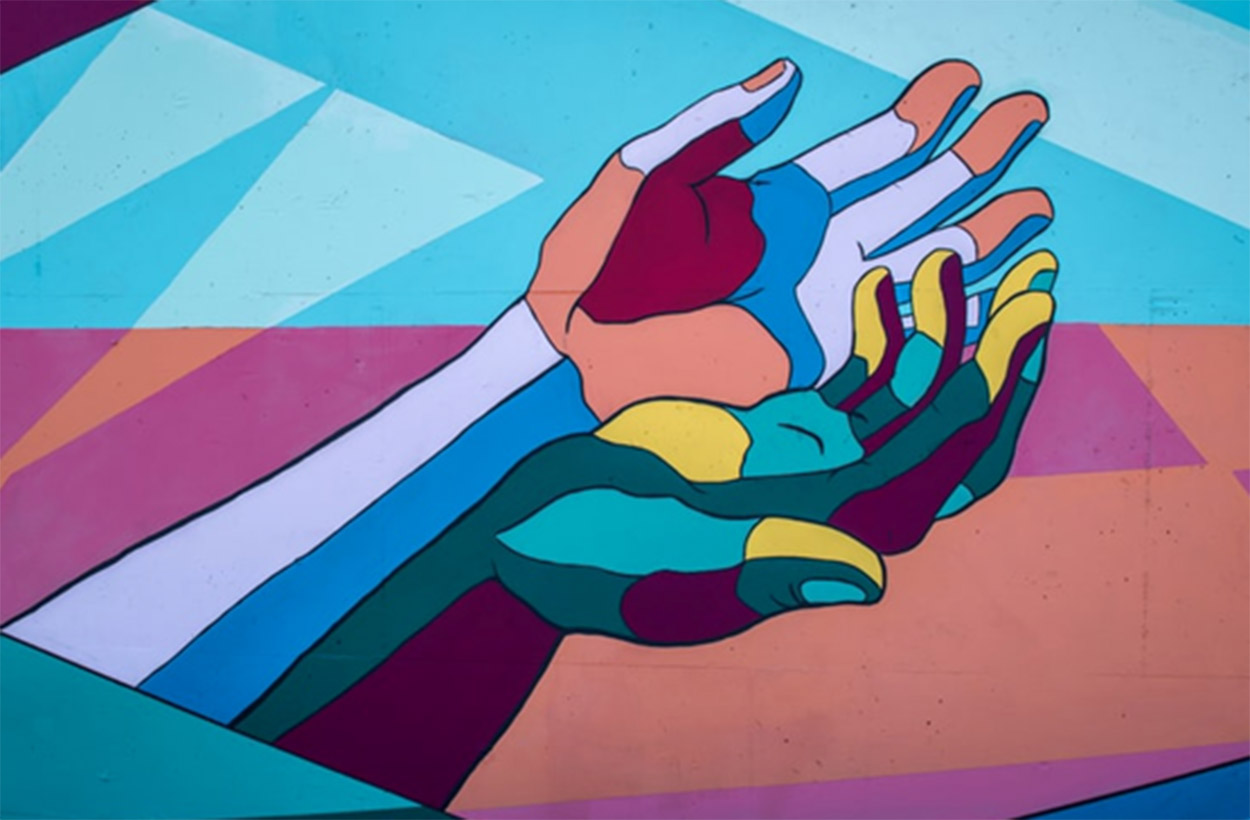
Pic: Tim Mossholder/Unsplash
(What stares at us are those fundamental questions: How human beings are supposed to conduct lives in accordance with nature?)
By Apilang Apum
 Ever since the outbreak of Coronavirus, panic has spread across the globe, many nations have adopted physical distancing strategy to contain the spread of the virus. I am, in this juncture, self-quarantined at home, like most of us are. I have been thinking about a few key lessons that we can learn from this new reality.
Freedom: The first and immediate lesson is to understand that we human beings are innately relational. The novel COVID-19 is contagious and spreads through respiratory droplets produced when an infected person coughs or sneezes. The rate of volatility of the virus is high if the people do not maintain physical distance. All of us have to take precautionary measures, irrespective of religions, castes, races and creeds.
In short, we can exercise freedom, but only within boundaries – which shows that freedom is also relational. We exercise freedom in relation to others. To put it simply, an individual is free only when he, she or they have a healthy relationship with others. Dietrich Bonhoeffer, late German Theologian and an anti-Nazi dissident, said: “Freedom is a relationship between two persons. Being free means ‘being-free-for-the-other’ because I am bound to the other. Only by being in relation with the other am I free.”
Health is not private: The second lesson that comes to us louder is that good healthcare must be accessible to all and it isn’t a private entity. India spends only a meager 1.28% of its GDP (2017-18) for public healthcare, but our per capita expenditure has only been seeing a rising curve.
Gospel truth out!
This creative writer’s opinion is gospel truth, particularly the questions she has raised. Chief Minister Pema Khandu on 18.06.20, while addressing leaders of political parties and community-based organisations had said that the COVID-19 pandemic has highlighted the importance of a robust healthcare system and self-sufficiency.
Therefore, it is imperative to proactively work towards a well planned, robust healthcare infrastructure, build human resources and affordable public health care facilities for all the citizens. It’s high time the government realised the tremendous importance of public healthcare.
Meaning of life: Third, we need to think where our ultimate hopes lie. As a nation, communities and individuals, where do we pin our hopes at – Success or Wealth or Power?
You might have read that Spain’s Princess Spain’s Maria Teresa died while battling the virus and Germany’s Hesse state finance minister Thomas Schaefer committed suicide while helping people cope up with the economic stress the virus has caused.
Similarly, people have started taking refuge in all sorts of traditional and religious rituals to contain the spread of the pandemic. Can such steps really protect us from the threat of the virus?
Why are nations, which have the best of religious traditions, weapons, wealth, technology and information, still lost as much as, if not more, than others?
Isn’t this the time to question our existential purpose? Where do we find the ultimate meaning of life?
Earth needs to rest: The fourth lesson that I could derive is that even our planet needs to rest. Our greed, our desires, our wants constantly motivated by the competitive and capitalistic world has exploited our planet to an alarming extent. May be it’s time for nature to clean herself.
What stares at us are those fundamental questions: How human beings are supposed to conduct lives in accordance with nature? How care is to be shown to the environment too? How much is too much to consume?
Power of citizens: The fifth and final lesson that I could draw is the tremendous power of citizens. A society cannot be changed by the efforts of the government alone, nor without our unity and cooperation. We are seeing it right before our eyes. Shall we let this pandemic make us realise the real power of thoughtful and responsible citizens of a society and what we can accomplish?
I hope we all might have learnt our own lessons too. What if we take this as an opportunity to see those faces we had ignored for so long, keep physical distancing, share our love and wealth, feed the fellow humans who are dying out of hunger, provide shelter to the homeless, pay our maids and labourers, and waive the rental fee of those who cannot afford to pay due to the lockdown, speak up for those neglected.
Unfortunately, physical-distancing could be a privilege for only a few in our nation. We may be separated by distance, but can we not connect by our hearts and spirit? Can we forget to hate and remember to love? We might say, “I wish it never happened in our life, not in our generation”.
I wish the same, but the bigger question is – what to do with the time that is given to us now? (The author
is assistant professor(economics)at Jomin Tayeng Govt Model Degree College at Roing)


 20
