This is the route used by HH Dalai Lama to enter India in 1959
Beyond the Horizon
By Pradeep Kumar
Arunachal Pradesh is still an undiscovered land true to what I have oft-repeatedly been writing for no survey conducted so far but one stumbles upon and discovers one or other mysteries in this enigmatic land.
Indigenous experts albeit whimsically decide to document some unique social, cultural, natural aspects of this Himalayan state that fascinates the humanity.
Politician-cum-social activist Naresh Glow of Tenga in West Kameng district, who had served as MLA of Thrizino-Buragaon Assembly seat, of late has turned into a film maker in collaboration with his friend noted film maker Dorjee K Thongun.
His first documentary – The Incredible Buguns – with Thungon as director had won NE best film award and best Tribal Film award of MP government. His second, a 29-minute documentary film – Wildlife-Our Lifeblood – broke many a records.
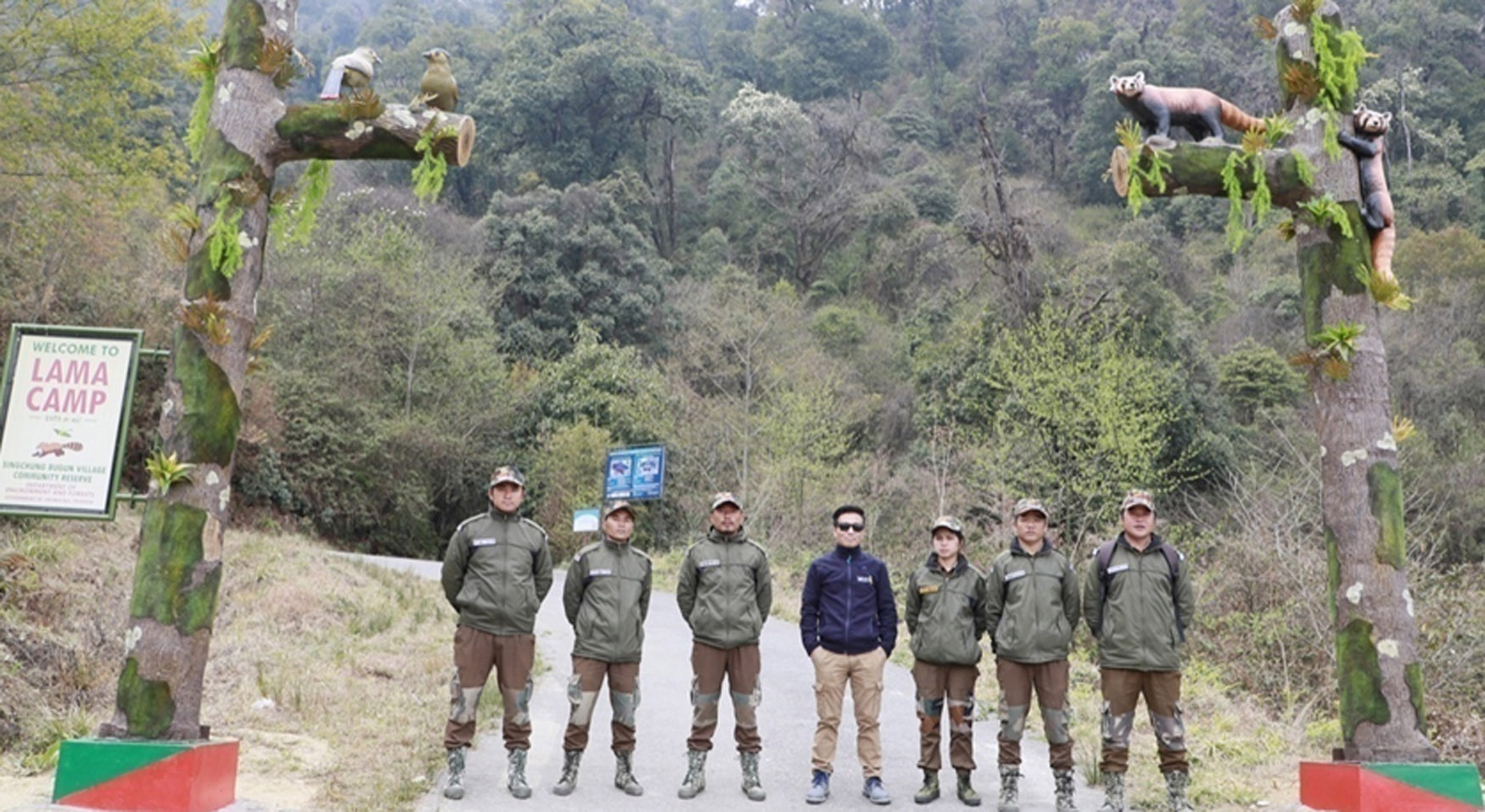
It highlights contributions of Bugun community to wildlife conservation by setting up of Singchung Bugun Village Community Reserve (SBVCR), a 17-sqkm biodiversity hotspot in 2017, next to the Eaglenest Wildlife Sanctuary, home to rare species of bird Bugun Liocichla.
The bird was first spotted by birdwatcher-cum-astronomer Dr Ramana Athreya and recognised as a new species in 2006 while International Union for the Conservation of Nature (IUCN) classified it as Critically Endangered (CR).
The Bugun Liocichla, a small babbler (20 cm (7.9 in) with olive-grey plumage, a black cap, face marked with prominent orange-yellow lores, wings have yellow, red and white patches, with fluty and distinctive voice, is found only in Arunachal Pradesh with small population. It is capable of living in degraded forests, and possibility of its discovery in other areas of Arunachal or neighbouring Bhutan cannot be ruled out.
“As the bird derives its name from Bugun community, efforts to protect it are on and I decided to make this film within only one week as a producer,” said Glow, who is also one of the founders and chief patrons of SBVRC who tried to capture the entire process in his documentary film.
The 15th edition of International Wildlife Conservation Documentary Film Festival (IWCDFF) 2020 will be held during December 1 to 7 next at Café de la Gare in Paris in association with European Film Council (EFC), World Documentary Forum (WDF) and Cultural affairs of Paris, he said, adding the KLEFF 2020 which is slated to start from October 8 to 11 will be screening 53 films via its digital screening platform, KLEFF during the virtual festival week, he disclosed.
His first feature film The Land of Bugun Liocichla (LoBL) was released last year while Molan reflecting life of monks and nuns of Mahayana Buddhism would be ready within few months.
“Shooting documentaries was quite simple process since all Buguns took active part. The Incredible GUGUNs, is based entirely on this tribe, – from their historical migration from central Asia to their present dwellings, their culture and traditions. However, covering all major nine scattered Bugun villages poised tough challenges for lack of road communication and hostile climatic conditions besides few less enthusiastic villagers. The Buguns divide their community land among individual members. A piece of land, called Lama Camp, as HH Dalai Lama’s entourage had stopped for a night there while fleeing from Tibet in 1959, was used to set up basic tourism infrastructure,” Thougun said responding to questions.
“The documentary on SBVCR showcases conservation efforts of an NGO of villagers to protect and preserve wildlife, spearheaded by Naresh Glow. Covering the idea from the village to famous Eaglenest Wildlife Sanctuary was a hard work as the wildlife and forest pose difficulties along with bad weather but their efforts won award. Shooting solely depends on weather conditions and dense fog takes the toll on time.
“Making feature film is far more tedious and problematic than the documentaries. From technical, technicians to actors, I have to handle everyone. And during shooting of LoGL, I had to change few actors mostly because of their personal and domestic issues. The shooting continued for six months as I had to wait for a particular festival that was to be celebrated few months later. After that I did face few problems from my actors during dubbing of their dialogue and the COVID-19 pandemic has also taken a toll,” he said.
In Monlan, “my technical team left before shooting I could be completed. I managed to shoot last few scenes but again remaining actors were in a hurry to go home. This is quite common since we lack professionalism. The film was given to en editor in Itanagar who took a long time and didn’t finish the editing due to his personal reasons.
“One more problem was hiring equipments from within my state. That had forced me to hire hands from outside. During my almost 30 years of film making experience, I always faced these problems. Until we have professionals in every department of film making all film makers will face these short comings,” he said.
However, I have never come across a producer, like Mr. Glow, who was very clear that his objective was not profit but conservation and highlighting our rich cultural heritage. His responsible attitude as a public leader would be cherished by the Buguns for generations, he said with conviction.
People would have never known about the unique traditions had Sahitya Akademi award-winning author Yeshe Dorjee Thongchi not written novel – Sav Kata Manuh (The man who cuts corpses) vividly explaining the tradition of how human bodies are ritualistically cut into over 100 pieces before disposing it off in to river or ‘In the Land of Poisonous Woman’ that break the myth of ‘poison women‘. And Glow among few others is visibly emerging as a trend setting film maker to document most unique aspects of this ‘Land of Culture’


 20