By Pradeep Kumar
ITANAGAR, Aug 04: Conceiving any idea and translating it into reality are two sides of a coin. But team spirit catapulted the success of 17-sqkm biodiversity hotspot, namely Singchung Bugun Village Community Reserve (SBVCR), formed in 2017 close to Eaglenest Wildlife Sanctuary of West Kameng district.
The sanctuary spread in about 217 sqkm with 545 species of birds and various species of plants and animals, besides known for the existence of Bugun Liocichla, a bird species found only in the area in the world.
Social activist Naresh Glow, one of the chief patrons and founders of the SBVCR, motivated the Bugun community to conserve and protect the rich flora and fauna to serve as harbinger of multi-faceted development in future. Convinced with his idea a group of youth volunteered to shoulder the responsibility by working in the field.
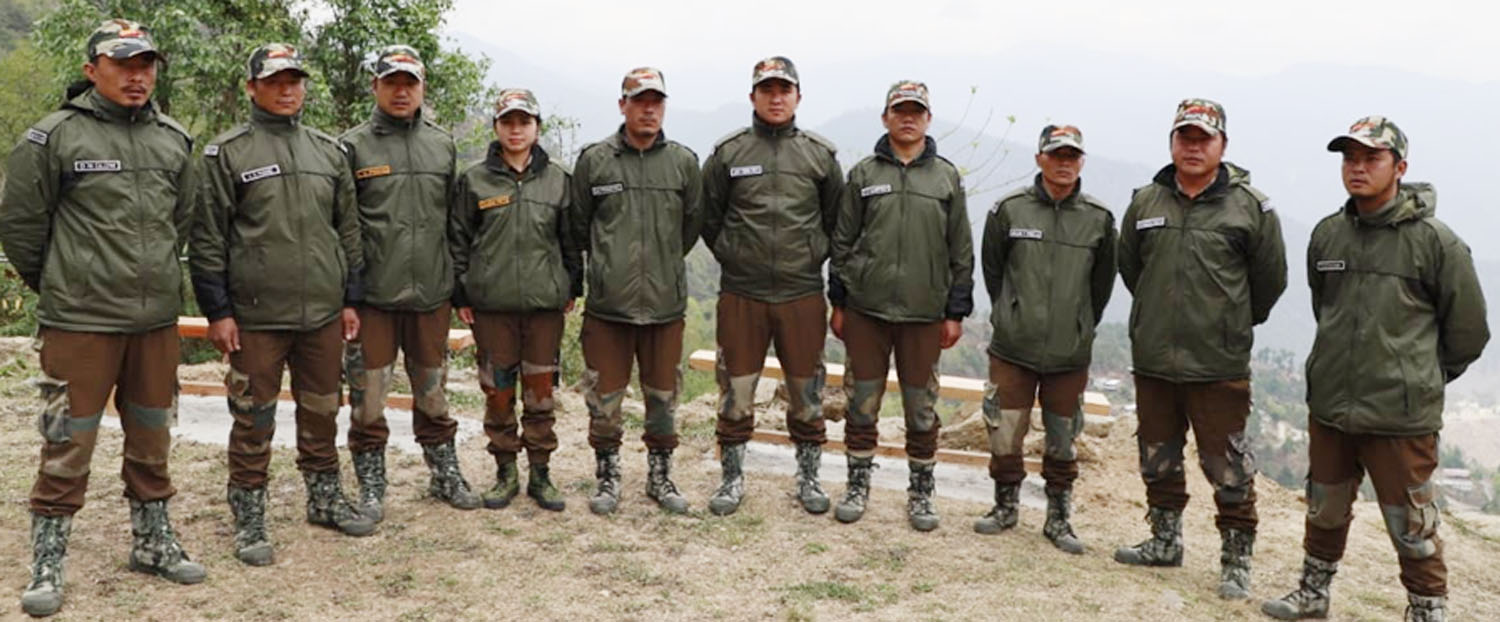
They include Dawa Norbu Glow, Leiki Dorjee Phiang, Leki Norbu Phiang, Shaleena Phinya, Micheal Phiang, Lucky Tsering Phinya, Dorjee Phunsto Marphew, Arjun Tsering Phinya, Wangchu Phinya and Thinley Norbu Glow.
This group created their own mechanism by developing a network among their own community members to ensure the very purpose of protecting the environment from all aspects with Indi Glow constantly supporting, Shaleena told this daily over telephone.

In fact, Rupa DFO Millo Tassar was behind promoting conservation in SBVCR since 2016. The “unique conservation model” to save rare wildlife resources in the area had bagged the first prize from National Bio-diversity Authority (NBA) with a citation, a memento and Rs one lakh during a function in Hyderabad on 22.05.18, she said.
Shaleena, with a one-year course on videography and photography from Tezpur-based Green Hub on a fellowship, has become an ace photographer to shoot and edit the film – The Bugun& The Liocichla.
Young Shaleena, daughter of a GoAP employee, though has lost her mother but while taking care of a younger brother and a sister by shuttling between home chores and professional works, is keen to pursue higher education through open school.
“We have been working since 2017 though Dr Raman Arthreya, a birdwatcher and an astronomer of Indian Institute of Science Education and Research, Pune and credited with spotting the new bird species BugunLiocichla in Eaglenest Wildlife Sanctuary in 2006 and Bangaluru-based IISc (Centre for Ecological Sciences), assistant Prof UmeshSirnivasan were working much ahead of us,” she said, adding “we are still working underWorld Wildlife Fund (WWF) and Wildlife Conservation Society.”
The documentary – Wildlife-Our Lifeblood– shot by noted film maker DK Thungon and produced by Glow followed by other documentary and feature films are outcome of painstaking efforts of these 10 committed youths, agreed Glow.
Asked about any rare incident while on field duty, she recalled that once few team members including herself had an encounter with a wild elephant but had a narrow escape.
When asked how many BugunLiocichla birds they have seen together, she said none has seen more than two. And the bird has mostly spotted during its breeding season in April-July
Dr Arthreya had spotted the bird first in 2006 at an altitude of 6,600 ft on disturbed hillsides covered with shrubs and small trees and an estimated total 14 to 20 individuals. Ecologist AshwiniRamesh in “Beyond the BugunLiocichla: What the discovery of a bird means to me”, wrote that it was the first bird species to be described in India in more than 50 years!
As the news of the discovery spread, ornithologists across the world flocked to see it. One such ornithologist from across the world spent a week at Eaglenest trying to get a glimpse of this aerial beauty. Since the activity of the BugunLiocichla peaked at dawn and dusk; the ornithologist ventured out only twice each day in quest of the bird until he spotted it.
The GoI had released a Rs 25 postage stamp in 2012 featuring BugunLiocichla to record the historic event of finding 20-cm songbird with olive-grey plumage and a black cap. This ultimately lured tourists, nature and bird lovers from and far wide to the frontier state which facilitated curbing poaching and hazardous jhumming and generated more livelihood opportunities for local Bugun tribe, whose population is around 3,000 only.


 20