
- China’s claim over Arunachal pooh-poohed
By Pradeep Kumar
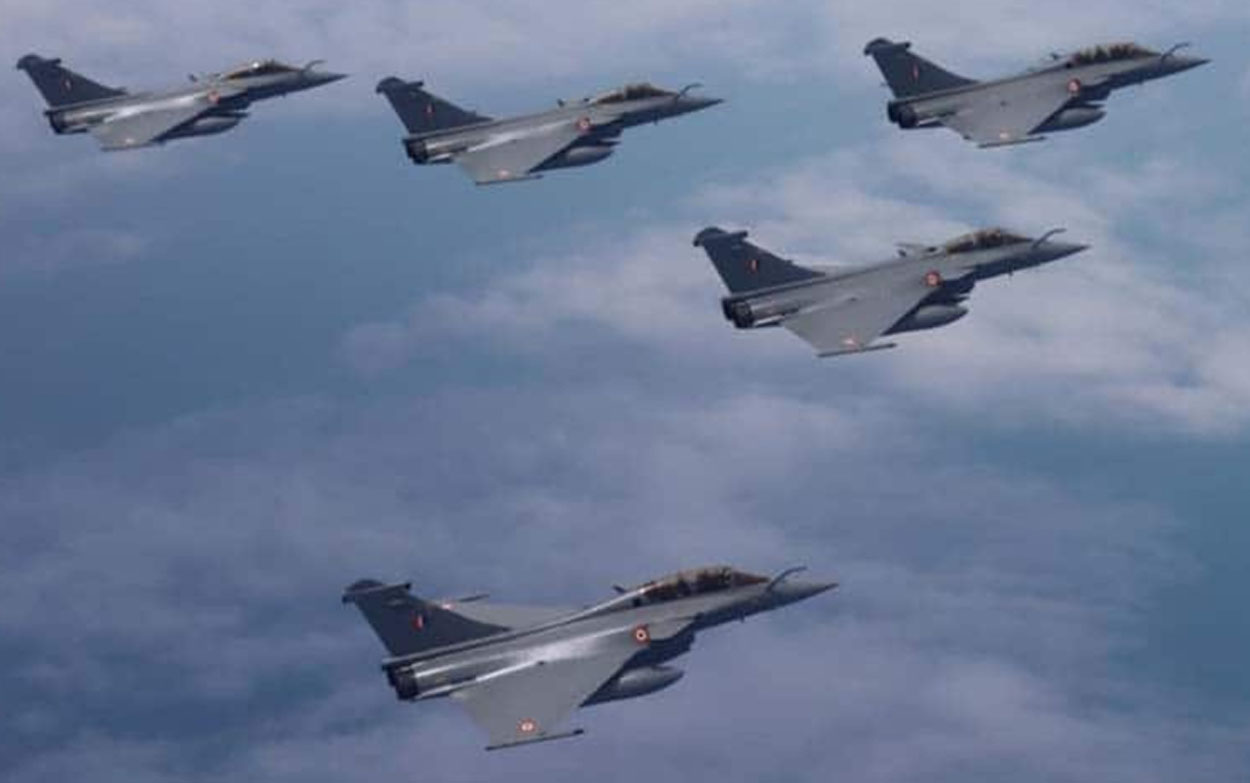
ITANAGAR, Sept 10: Indian Air Force formally inducted five Rafale fighter aircrafts into 17th Squadron, also known as Golden Arrows, at Ambala Air Force Station on Thursday in presence of Defence Minister Rajnath Singh, Chief of Defence Staff General Bipin Rawat, Air Force Chief Air Chief Marshal RKS Bhadauria and France Minister of Armed Forces of Florence Parl.
The induction of Rafale jets amid escalating border tension between India and China along the Line of Actual Control.
“The induction of these fighter jets is a big message to the entire globe especially to those eyeing India’s sovereignty. This induction is important considering the kind of atmosphere at created at our borders. In my recent foreign trip, I put the point of view of India in front of the world. I also made everyone aware of our resolve to not compromise our sovereignty and territorial integrity under any circumstances. We’re committed to doing everything possible towards this,” the defence minister said.
Although China claims air superiority over India, the Rafale jest could give India much-needed confidence to take on China’s J20 5th generation aircraft. India would gain a military edge against neighbouring nations. China has J-20 and Pakistan JF-17 & F-16, all modern fighter jets.
Experts have warned that even a limited border war between China and India, two of the world’s largest militaries with nuclear arsenal, would be devastating for regional peace and stability. It would potentially pull in third parties, such as Pakistan or the United States.
The flurry of diplomatic activities between both nations during past few months reflects that they feel the gravity of their situation. But despite both sides proclaiming they seek a peaceful resolution to the ongoing standoffs, a culture of mistrust continues make bilateral talks fruitless.
Negotiations on the disputed border have always been tough for both nations. Both sides took nearly 12 years of tentative negotiations before signing their first treaty in 1993, in which they agreed to “maintain peace and tranquility” along the LAC.
Subsequent agreements were reached after negotiations in 1996, 2005 and 2013. These govern military conduct on the border and guidelines for a diplomatic resolution while 1996 agreement prohibited against use of weapons along the Line of Actual Control.
“Neither side shall open fire, cause bio-degradation, use hazardous chemicals, conduct blast operations or hunt with guns and explosives within 2-kms from the LAC”.
Border confrontations have gradually escalated from farcical shoving matches to fully-fledged brawls and stone flinging, which caused injuries in 2017. This year has seen both sides up the ante, with the introduction of makeshift clubs in a lethal melee at the Galwan Valley in June and China now seemingly equipping some border patrols with pole arms.
Indian and Chinese armies have been locked in a bitter standoff in multiple locations in eastern Ladakh since mid-May which undoubtedly reflected a dangerous trend as both nations share unsettled 3,488-km border. It directly contravened the rules and norms painstakingly established by both nations to govern their armies along the border.
However, amid ongoing border tensions with five Arunchalees abducted by China’s PLA, China on Sept 7 provoked India again with Chinese Foreign Ministry spokesperson Zhao Lijian saying “China has never recognized so-called “Arunachal Pradesh,” which is China’s south Tibet region, reported Global Times.
This has been evoking strong protest Arunachal leaders. Home Minister Bamang Felix and Rajya Sabha member Nabam Rebia on Tuesday dismissed China’s statement terming – Arunachal Pradesh as ‘South Tibet’.
Felix told media persons: “Arunachal Pradesh is the integral part of India. Therefore, China should stop the pigmentation of imagination by claiming our state as ‘South Tibet’.”
Rubbishing China’s claim, Rebia termed it as a “figment of their imagination” and urged Beijing to release five abducted Arunachalee youth soon. (With ANI inputs)


 20

