
By Arjan Chonker
Management has been defined by Harold Koontz and Heinz Weihrich as “The process of designing and maintaining an environment in which individuals, working together in groups, efficiently accomplish selected aims”, common objectives with limited resources in a dynamic environment.
Today’s business environment is filled with volatility, uncertainty, complexity and ambiguity. The impact of crisis such as market and government instability, pandemics, natural disasters etc. play a very major role in unsettling our environment and we can only counter such crisis by preparing for them well in advance and developing a swift and efficient response (Plan-[1]).
Manager Vs military leader: A manager plays a role similar to a military commander; just like a commander is in charge of his troops and has to guide them to victory in a war like situation by making plans and discussing them with his subordinates in order to achieve efficient achievement of objectives, similarly a manager plays the role of a leader who’s able to influence his workers, guide them towards a common goal, assist in aligning individual goals to the organizational goals, motivate personnel in times of distress and use his interpersonal skills to help his followers, subordinates and colleagues.
A case in point is the COVID-19 pandemic which has disrupted workplaces and caused companies, cities, states and nations into complete shutdown. The role of the management increases further in such a situation as they need to act as a strong pillar firmly rooted exhibiting strength, trust and leadership among its employees.
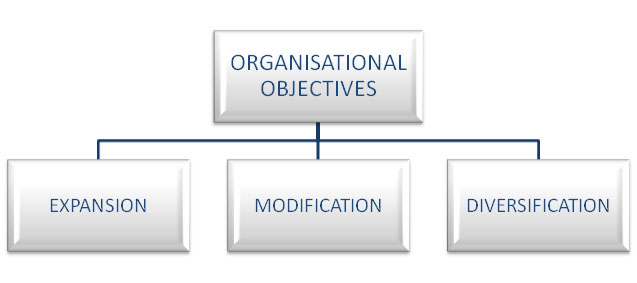
Aligning personal objectives with organisational objectives. There are two types of objectives of an organization, namely organizational objectives and personal objectives. In times of crisis, the personal objectives need to be fulfilled first and foremost for achievement of short term objectives of business which are primarily employee satisfaction and employee motivation, however the organizational objectives like fulfillment of growth targets, expansion, modification and diversification of business activities and products need to be kept in mind in the long run.
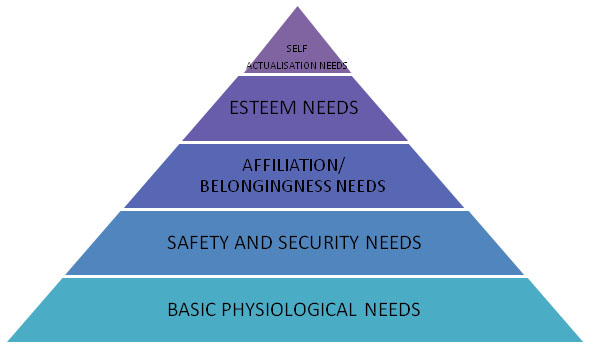
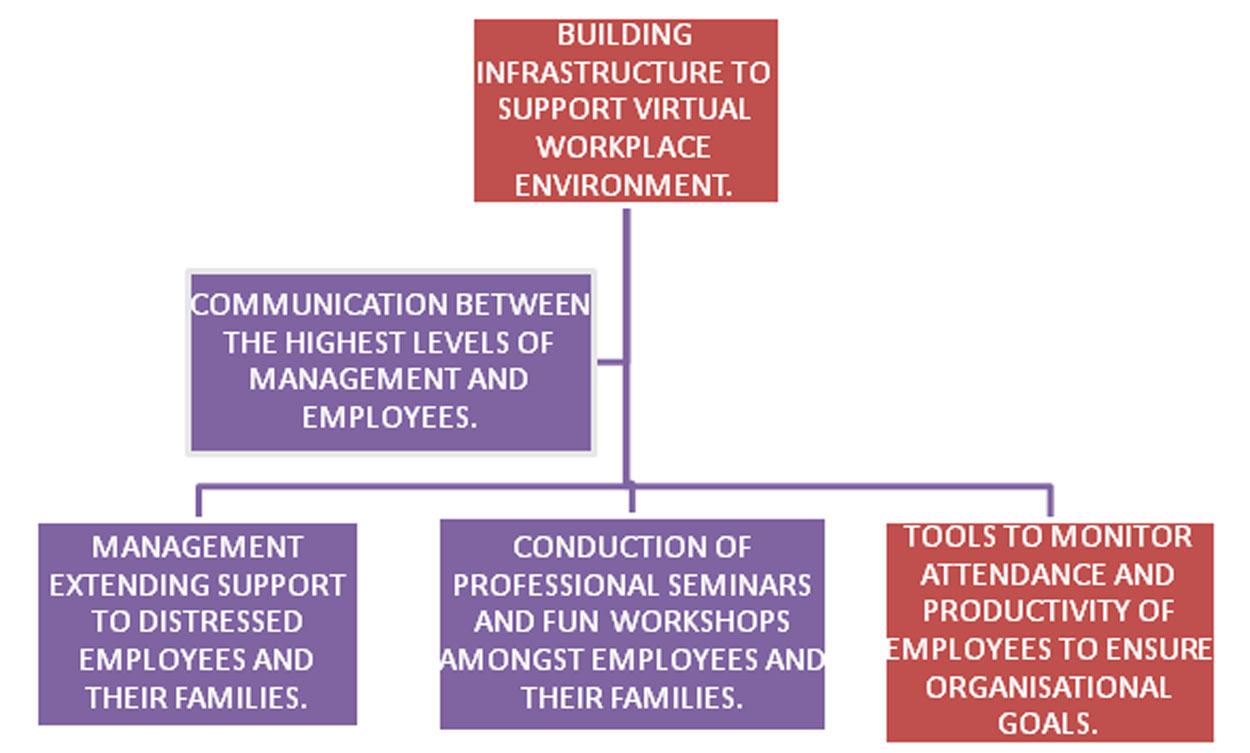
The guiding principles of Abraham Maslow’s needs hierarchy theory which stresses on understanding that employee’s behavior is based on their needs, and satisfaction of such needs influences their behavior; have been carefully applied by management during the COVID-19 pandemic to achieve short term objectives of employee satisfaction and focus first and foremost on the security of the employees followed by building the right infrastructure for a virtual workplace.
The compounded threat of COVID-19, job security, family issues, and the loss in communication amongst peers in society has caused the stress level of employees to shoot massively and impacted employee resilience which might lead to the employees eventually burning themselves out. Thus, the management needs to stand up and act on the guidelines of trust, empathy, and communication to generate improved employee productivity. At the end of the day it is the loyalty and determination of the employees which will determine a company’s success in the foreseeable future.
Abraham Maslow’s needs hierarchy theory
FLOWCHART DEPICTING OGANISATIONAL OBJECTIVES
A positive example of aligning personal objectives with organisational objectives in COVID-19 pandemic
A leading IT company has focused on retaining clients along with employee satisfaction and motivation by aligning business goals with talent development and engagement strategies which will focus on transitioning to artificial intelligence while focusing on skill development of employees. They are aiming at tweaking their marketing mix in order to create demand for their services and also maintaining a balanced approach to investments in terms of the risk factor.
Recommended response plan: Given below a plan which I would set up to manage my employees during COVID-19:
Towards successfully riding the COVID-19 tide: The Covid-19 pandemic has left many companies high and dry, while some have capitalized on this opportunity to grow into major players, a lot of micro, small, and medium enterprises have failed to retain employees as well as well as sustain future business growth targets; mainly due to a lack of high capital and less focus on human resources. The larger companies with higher capital have focused on investing in human resources and provided their employees with support in this difficult time and thus managed to sustain their employees faith in their organization and are now capitalizing on this opportunity of a heightened employee motivation to boost their productivity ultimately leading to growth and achievement of organisational targets.
With the micro, small, and medium enterprises losing their brand value, and trust which they had developed in their employees and customers, there will be a huge scope for startups to build and capitalize on the unemployed but skilled youth, however initially they will have to focus primarily on employee satisfaction and fulfillment of individual goals of employees so as to build their trust in the organisation which they had previously lost.
After second wave of COVID-19, work from home and from remotely shared spaces has become the new normal, but has its own peculiar problems of lack of organizational climate, soft signals and water cooler talk which are elements that provide binding as well as release to the employees, and therefore a new normal of management, through provision of artificially created reality will also become important for success seeking companies.


 20
