
By Pradeep Kumar
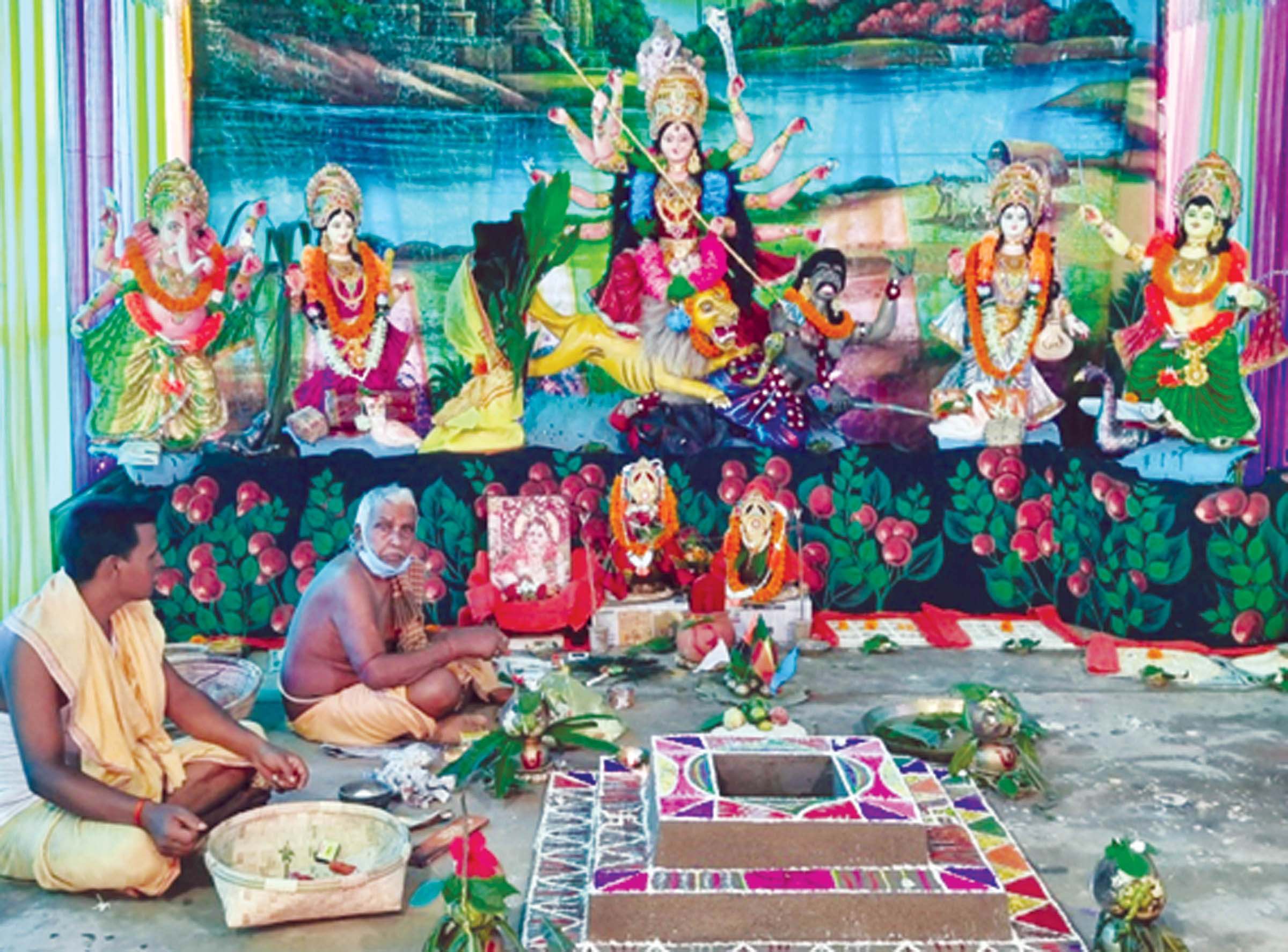
BHIMDA, Oct 23: Devi Durga beginning her journey from divine cosmos on palanquin on 7th and 8th day and horse as her steed on 9th day to land on earth to be worshipped by her devotees. But Devi Durga would return on an elephant after Dussehra, said Umesh Chandra Pani, chief priest of Bhimda-Arjunbaria-Tikayatpur Sarbajani Puja celebrating the festival for 12th year here on Friday. He is assisted by Suresh Chandra Mishra and Birendra Panda.
As per scriptures, the mode or vahana that Goddess Durga uses for her arrival and departure often indicates how the year will unfold. Her arrival on the palanquin indicates plague. So it is being believed that even if the arrival of the Goddess means a plague will haunt Earth, she will continue to provide food security to her devotees. But her departure on elephant (Gaja) considered auspicious. It is believed that it brings plenty of rainfall for bumper harvesting in coming year.
Today being Ashtami (8th day), Atanu Behera and Chitaranjan Mandal went with earthen pots and Nava Patrivi by Bhaktabandu Mohapatra in procession with Jugal Kishor Sankirtan Mandali led by president Atulya Kumar Behera beating murdhangs and kartals. After worshipping in village pond, they return with filled water when Smrutirekha Behera worshipped then on arrival to the tune conch blown by Madhusmita Behera.
The 10-day Durga Puja in Shaktism tradition of Hindu epitomises the victory of good over evil marks with the victory of goddess Durga in her battle against demon Mahishasura. Devi Durga is worshipped as goddess showcasing motherly power behind all of life and creation.
Originating in Indian subcontinent as annual Hindu festival to revere and pay homage to the goddess Durga and popular and traditionally celebrated in West Bengal, Assam, Odisha, Tripura, Mithilanchal regions of Bihar & Nepal besides Bangladesh in September–October months. Though its exact origins are unclear, surviving manuscripts since 14th century provide guidelines for Durga puja, while historical records suggest that royalty and wealthy families were sponsoring major Durga puja festivities since 16th century.
The prominence of Durga Puja increased during the British Raj in the provinces of Bengal, Odisha and Assam. Durga Puja is ore a social-cultural festival than religious as people of all sections join its celebrations irrespective of caste, creed and community reflecting its uniqueness. Thus, Durga puja has become an inseparable part of Indian culture.
The festival coincides with Navaratri and Dussehra that celebrates the victory of Rama against Ravana. The festival begins on Mahalaya which is believed to mark the start of Durga’s journey to her natal home, followed by 6th day (Shasthi), on which the goddess is welcomed with rituals and ends on the 10th day (Vijaya dashami), symbolizing her return to divine cosmos and marital home with Shiva in Kailash.


 20
