
By Pradeep Kumar
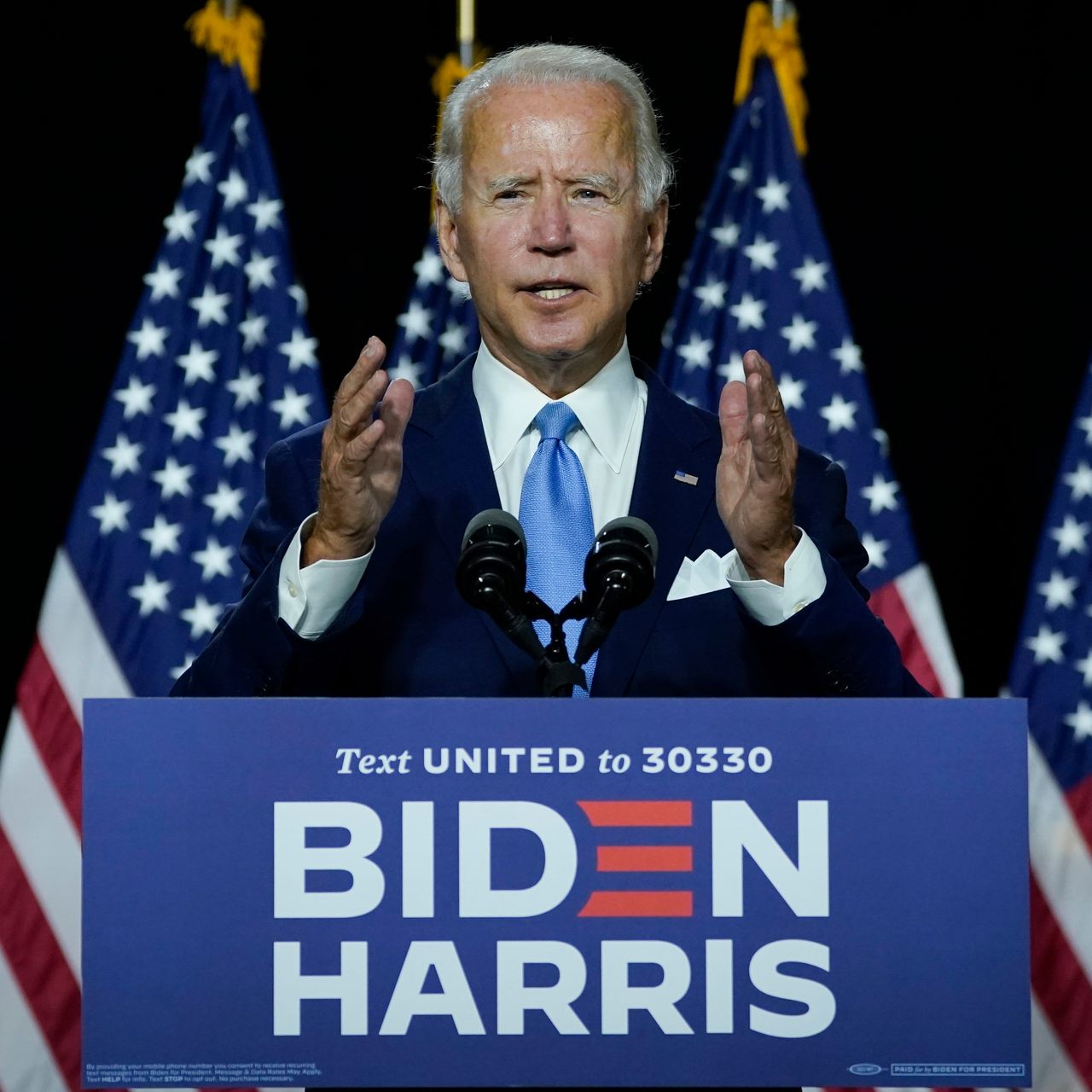
Will victory of Democratic nominee Joe Biden, former vice president in President Barack Obama tenure, as 46th President of the United States, be a boon for India?
With more than 75 million, the highest ever 50.5% votes even surpassing Obama’s 69,498,516 votes in 2008, to create political history in best democratic nation of the world. Biden, in his address, paid tributes to American people on Wednesday. “Yesterday once again proved that democracy is the heartbeat of this nation. Here the people rule. Power can’t be taken or asserted. It flows from the people, and it is their will that determines who will be the president of the United States and their will alone.”
At least 159.8 million Americans voted, the highest turnout among eligible voters since 1900 to bolster both candidates.
“Trump continued his criticisms of Clinton in the ensuing weeks, routinely referring to her as “Crooked Hillary” and repeatedly vowing to put her in jail if he were elected. Trump’s threat to jail his political opponent was unprecedented in modern US political history and was not founded in any constitutional power that a US president would have. In 2005 Trump married Slovene model Melania Knauss, and she became only the second foreign-born first lady of the United States upon Trump’s inauguration as president in 2017. In 2019, Trump became only the third president in US history (after Andrew Johnson in 1868 and Bill Clinton in 1998) to be impeached by the U.S. House of Representatives, but first president to be impeached during his first term of office.” These could be some factors for the voters to prefer Biden for his 40-year successful political career.
Much before becoming Vice President in Barak Obama administration, Biden had advocated a stronger relationship with India. He played an important role, both as Chairman of Senate Foreign Relations Committee and later as Vice President, in systematically deepening strategic engagement with India.
There has been a major concern for Indians under the Trump administration. As Democrats are seen to be more liberal on immigration, Biden is expected to be softer towards Indians who go to the US to study, work and live there, and aspire for a better life. He has promised to support family-based immigration, increase the number of visas offered for permanent, work-based immigration, reform the temporary visa system for high-skill, specialty jobs, eliminate the limits on employment-based green cards. He has also promised to restore the naturalisation process for green card holders.
But as the Trump administration has tightened the rules, it may not be very easy for Biden to reverse some of the approaches adopted.
In 2006, three years before he became the Vice-President, Biden announced his vision for the future of US-India relations: “My dream is that in 2020, the two closest nations in the world will be India and the United States,” he had said.
Although (then) Senator Obama was initially hesitant to support the Indo-US nuclear deal, Biden led the charge and worked with both Democrats and Republicans, to approve the nuclear deal in the US Congress in 2008.
Biden was one of the key advocates of strengthening the Indo-US partnership, especially in strategic areas. During that time, the US officially declared its support for India’s membership in a reformed and expanded United Nations Security Council. This had been a key demand of successive Indian Govts, which was fulfilled by Washington during Biden’s term as VP.
The Obama-Biden Administration also named India a “Major Defense Partner” – a status approved by the US Congress – which made it easier to share advanced and critical technology to India to strengthen defence ties. This was crucial since it was for the first time that any country was given this status, outside of the US’s traditional alliance system.
In fact, in August 2016, at the fag end of the Obama administration, the two sides signed the Logistics Exchange Memorandum of Agreement (LEMOA), the first of the three “foundational pacts” for deeper military cooperation.
LEMOA allows the militaries of the US and India to replenish from each other’s bases, and access supplies, spare parts and services from each other’s land facilities, air bases, and ports, which can then be reimbursed.
LEMOA is extremely useful for India-US Navy-to-Navy cooperation, since the two countries are cooperating closely in the Indo-Pacific. To put the usefulness of this agreement in simple terms, it is like being able to stop at a friend’s garage or workshop to refuel your car or get it repaired when you are far away from your own home or workshop.
Later on, Trump administration signed the remaining foundational pacts – COMCASA and BECA.
Obama and Biden also strengthened cooperation with India to fight terrorism in each of their countries and across the region.
“Biden believes there can be no tolerance for terrorism in South Asia – cross-border or otherwise”, his campaign document says.
While there is not much he said during his time in the administration on Pakistan-sponsored terrorism, New Delhi hopes that he will be carrying forward the legacy of the US administration’s approach towards India-Pakistan when it comes to cross-border terrorism.
Over the last few fyears, there has been a realisation in Washington about China’s aggressive behaviour and there is a somewhat bipartisan consensus amongst the Democrats and the Republicans on China as a strategic rival and a threat.
While the Trump administration has been extremely vocal in India’s support in the last six months of the border-stand-off with China, New Delhi will expect a similar approach from the Biden administration as well.
One will have to wait and watch if Biden follows the same path, but there could be nuancing of the language and the rhetoric from US officials.
“A Biden Administration will also work with India to support a rules-based and stable Indo-Pacific region in which no country, including China, is able to threaten its neighbours with impunity,” his campaign document says.
While Trump administration officials including Secretary of State Michael R Pompeo had been attacking the Communist Party of China quite openly, Biden administration’s language might be more calibrated.
Although some US Congressmen and women had raised red flags on the human rights situation following the revoking of Article 370 and passage of the Citizenship (Amendment) Act (CAC) alongside the proposed nationwide National Register of Citizens (NRC), the Trump administration had not taken any actions beyond making some perfunctory statements. But, Biden’s VP Kamala Harris being a fierce advocate for human rights is a major concern for the Indian Govt, which has got support from the Trump administration on the issue of Jammu and Kashmir.
Thus, with Democrats in power, the Indian Govt can expect some tough statements from the Biden administration on these issues.
Biden has been “disappointed by the measures that the Indian Govt has taken with the implementation and aftermath of the NRC in Assam and the passage of the CAC into law”, the Biden campaign’s policy paper had said.
Obama had recognised India’s increasingly pivotal geopolitical role since the start of his presidency. Just days after his election, the attack on Mumbai, 26/11, highlighted the common threat India and America face from global jihad. The President sent his central intelligence director to India just weeks after his inauguration to improve counter-terrorism cooperation. His first state visit and state dinner at the White House was for Prime Minister Manmohan Singh. He travelled to India in 2010 and paid his respects in Mumbai to all the victims of the Lashkar-e-Taiba (LeT) attack.
Last September, Prime Minister Narendra Modi visited the White House. Going to New Delhi for Republic Day is an unprecedented symbol of the importance Obama and Washington focus on India. India is pivotal to every issue that matters for America today, from climate change to nuclear arms control to balancing the rise of China. There is wide bipartisan support for courting India.
About 60 years ago, John F Kennedy had appreciated India’s pivotal role in the world’s future and made India a centrepiece of his presidency. During his campaign for the presidency in May 1959, he gave a major speech on India and China, in which he said the rivalry between democratic India and communist China for leadership in Asia was the defining conflict of the Cold War and that “we want India to win that race”.
He hosted Prime Minister Jawaharlal Nehru in 1961 and planned a visit to India for 1964, a visit that never came due to his assassination. Economic aid increased significantly and after the Chinese invasion in October 1962 — at the height of the Cuban missile crisis — the US airlifted arms to hold back the Chinese. In 1963, the US carried out a major air force exercise in India with Britain and Australia to deter any further Chinese aggression.
America’s conflicted relationship with Pakistan. Like Kennedy, Obama inherited a large economic and military aid relationship with Pakistan from his predecessor. The Eisenhower administration had poured hundreds of millions of dollars in aid into Pakistan to make it a front line state in the Cold War. The George W Bush administration poured in billions in aid to fight al-Qaeda.
In both cases, the new administration was rightly skeptical the money was producing a reliable ally, but was reluctant to cut off the aid. Kennedy grew to doubt Pakistan would use its US-supplied arms against the Soviets or China. Obama rightly doubts Pakistan is a reliable foe of al-Qaeda, especially since he found Osama bin Laden hiding in the front yard of the Abbottabad military academy.
In 1962, Kennedy’s most serious challenge during the Sino-Indian war was to keep Pakistan from opening a second front against India. Pakistani President Ayub Khan told Kennedy he wanted “compensation” from India in Kashmir for neutrality during the war. Kennedy made it clear to Ayub that no such compensation would be tolerated. After the war ended, JFK did encourage Indian-Pakistani talks on Kashmir, but refused to pressure Nehru when Ayub put outrageous demands on the table. Instead, he increased military aid to India, aid that would prove critical in the 1965 Indo-Pakistani war.
The ISI also provides support to LeT for its attacks in Afghanistan, like the attack on the Indian consulate in Herat last May on the eve of Modi’s inauguration.
The challenge for Obama and Modi was how to ensure Taliban-ISI conspiracy to restore the Islamic Emirate of Afghanistan is thwarted. It was here that 9/11 was planned and executed. It was in the same emirate that the hijacking of Indian Airlines Flight IC814 was planned and executed. Washington and New Delhi share a common interest in not letting the Taliban recover control of most of Afghanistan.
Over the last 20 years, every US President — Bill Clinton, George W Bush, Barack Obama and Donald Trump — had differences on many issues, but if there was one common theme on which all of them agreed was this: a stronger relationship with India.
What that means is that there has been a tradition of bipartisan support in favour of better ties with India, and every US President has made it better than what he inherited from his predecessor over the last two decades.
So, there is no reason to believe that Biden will not continue the tradition — but of course, he will have his own style and nuances, and will put his personal stamp on the relationship.
“As the world’s oldest and largest democracies, the United States and India are bound together by our shared democratic values: fair and free elections, equality under the law, and the freedom of expression and religion. These core principles have endured throughout each of our nations’ histories and will continue to be the source of our strength in the future,” Biden’s campaign document says.
How Biden follows up on his campaign commitment will be something to watch out in times to come!


 20

