Who is next after DC Singh?
Unfolding numerous unrecorded ancient events hidden across Arunachal Pradesh would underscore the relevance of this Himalayan state and draw tourists, researchers and historians fro far and wide. And that is what Lower Siang deputy commissioner A.K. Singh did with his past experience as tourism director to make Malinithan temple an asset of great value for the state to woo tourists from far and wide. This was his two-year hard works albeit with approval of Chief Minister Pema Khandu with needed fubnds.
Besides famous Tawang Monastery, there are many ancient treasures, like 700-year-old Tserteng Gompa (located in Lumpo village in Tawang district), Parshuram Kund, Bhismaknagar Fort, 1962 hero martyr Shere Thapa in Tama Chung Chung rige etc, if developed and popularized could serve a panacea for the present state Govt targeting to tap the vast hidden tourism potentials of the state.
By Pradeep Kumar
ITANAGAR, Nov 29: The renovated ancient Malnithan Temple-cum–archaeological site, located on the foothills of Siang hills, hardly a kilometer from Likabali in Lower Siang district bordering Assam, rekindle around 5,000-year-old legend of Krishna-Rukmini.
Princes Rukmini, daughter of King Bismak, had fallen in love with Krishna for his virtue, character, charm and greatness. Rukmini’s parents wanted to marry Rukmini to Krishna but her brother, ambitious prince Rukmi, strongly opposed and proposed her marriage to his friend Shishupala, the crown prince of Chedi, a close associate of ruthless Emperor Jarasandha and hence an ally of Rukmi.
On receiving message, Krishna then King of Dwarka, located on right bank of Gomti River in Gujarat, riding a horse driven chariot had come the way to Bhismaknagar, located 30-km away from present Lower Dibang Valley district headquarters Roing, to elope with princes Rukmini, daughter of King Bhishmaka of Vidarbha. However, Rukmi chased and fought with Krishna to be defeated. Krishna spared his life at the plea of Rukmini, but as punishment shaved his head as a visible sign of defeat. Rukmini, known as principal wife and queen of Lord Krishna, is in true sense is the daughter of Arunachal Pradesh.
Krishna While returning to Dwarka on their arrival at on the foothill, they were received by Pravati flanked by Lord Shiva with garland had received with garlands made with flowers plucked from her orchard. Krishna was so much fascinated by the scent of a flower that he addressed Parvati as Malini, meaning “the mistress of the garden,” for which the place got its name – Malinithan.
Though Bhagabat Gita and Mahabharat offer conclusive references to this history, but first archaeological excavations at Dwaraka port in Arabian Sea were done by Gujarat Govt in 1963 and 2nd by Marine Archaeological Unit of Archaeological Survey of India in 1979 under the supervision of most revered scientist-archaeologists of India Dr S. R. Rao to find clinching evidences of Dwarka, which as per historical record had submerged in 574 AD, occurs in the Palitana Plates of Samanta Simhaditya.
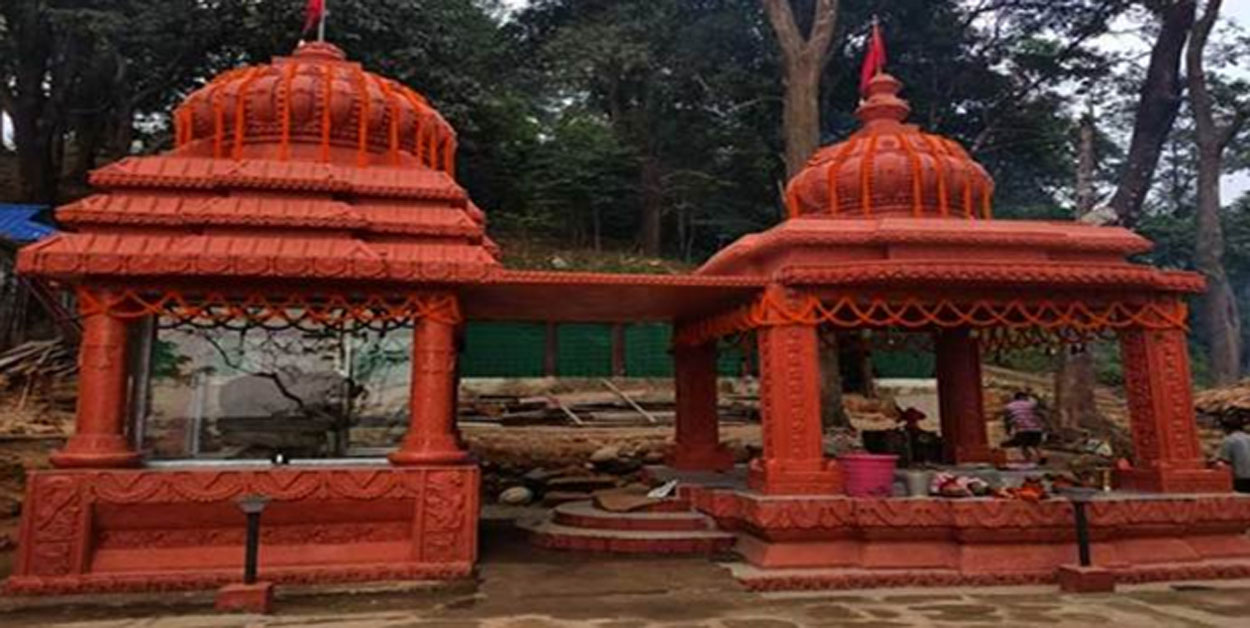
The temple opened recently for visitors as a new grand temple built as a replica of the ruined one, display gallery for displaying the monuments found from excavation, landscape lightings are the added attractions. The entire campus is illuminated, which greatly enhanced the beauty of the archeological site. Engineer Kirpak Dini, who designed and supervised electrification works, told that the landscape lighting was strictly while maintaining sanctity of the grand temple and aspects of monumental lighting.
After the construction of the grand new temple, the main challenge was to shift the idol of the main deity, weighting 2.5 metric ton, from old temple to new one. The task was challenging and critical because the idol was needed to be shifted unhurt as in Hindu mythology broken idol cannot be placed in a new temple.
DC Singh had assigned the critical responsibility to Er. Dini, who designed lifting structure and combined trolley as per the shape and size of the idol, executed the most critical task and successfully shifted the idol on November 17 last without even a minor scratch.
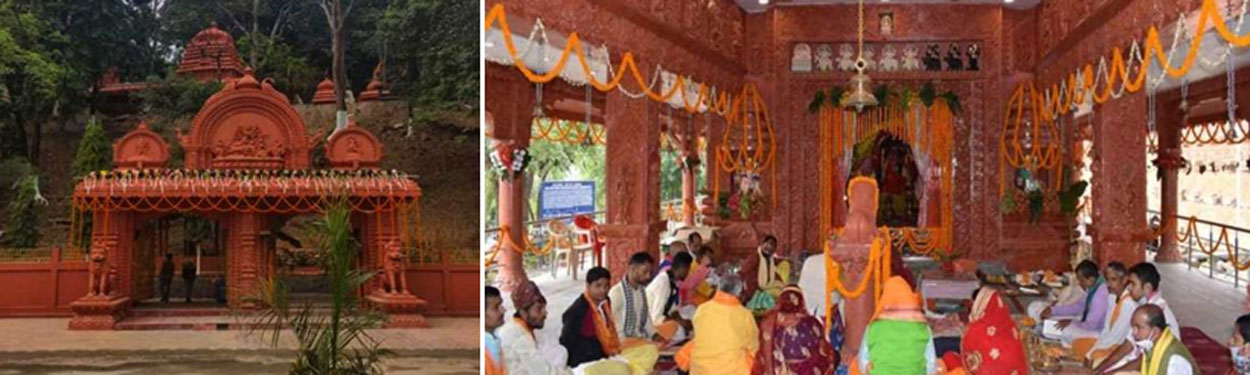
Excavation between 1968 and 1971 by research department various relics were unearthed at this site and ruins found nearby the temple indicated that it was built with granite stones during the period of Aryan influence in the region, which is quite unique as most of the temples in Northeast are build with bricks. Four sculptures of lions on two elephants, granite sculptures of Indra riding his mount Airavata; Kartikeya riding a peacock; Surya (Sun) riding a chariot, and Ganesha mounted over a mouse and a large Nandi bull were also found during excavation.
The image of a female without the head was unearthed during the excavations, which represented Malini who was the lover of Shiva. The image of the goddess Durga found is known as “Pupane”, an ancient name for the Divine Mother. There are few erotic sculptures in different postures as Tantrism as a fertility rite of the tribal people in the region prevailed when the temple was under construction
However, the ruins of Bhismaknagar, which I have visited many times, are glittering proof of Krishna-Rukmini heritage. The site under the care of tourism department is lying neglected with over grown bushes.

The Fort adorned with pottery was built with clay bricks by Vidarbha King Bhismak in 8th century BC and was the site of Chutiya Kingdom who had ruled the area during 12th to 16th century. Bhismaka was the vassal of King Jarasandha of Magadha.
This hill Fort, excavated during 1969 to 1973, is considered as one of the oldest archaeological sites of Arunachal Pradesh. It is a symbol of past grandeur and signifies high standard of civilization. The lush green surroundings of this valley are enchanting and its natural beauty is eye catching. One of the most popular archeological sites and sacred heritage has been attracting numerous tourists from far and wide.
Excavations have thrown new light on its much earlier antiquities. It stands for what is best in the tribal and Aryans way of life. The Fort is the nucleus of a renaissance, a determination of a sturdy race to revive its traditional culture, while accepting everything that is progressive. Reflecting the rich culture of this place, it displays various artifacts like potteries, terracotta figurines & plaques and decorative tiles found during excavation. Spread in around 1860.52 sqm, the Fort includes three halls, six entrances and two extension rooms.
However, when attention of present lawmaker Mutchu Mithi was drawn he has promised to bring tangible development to make the fort an attractive tourist spot.


 20