
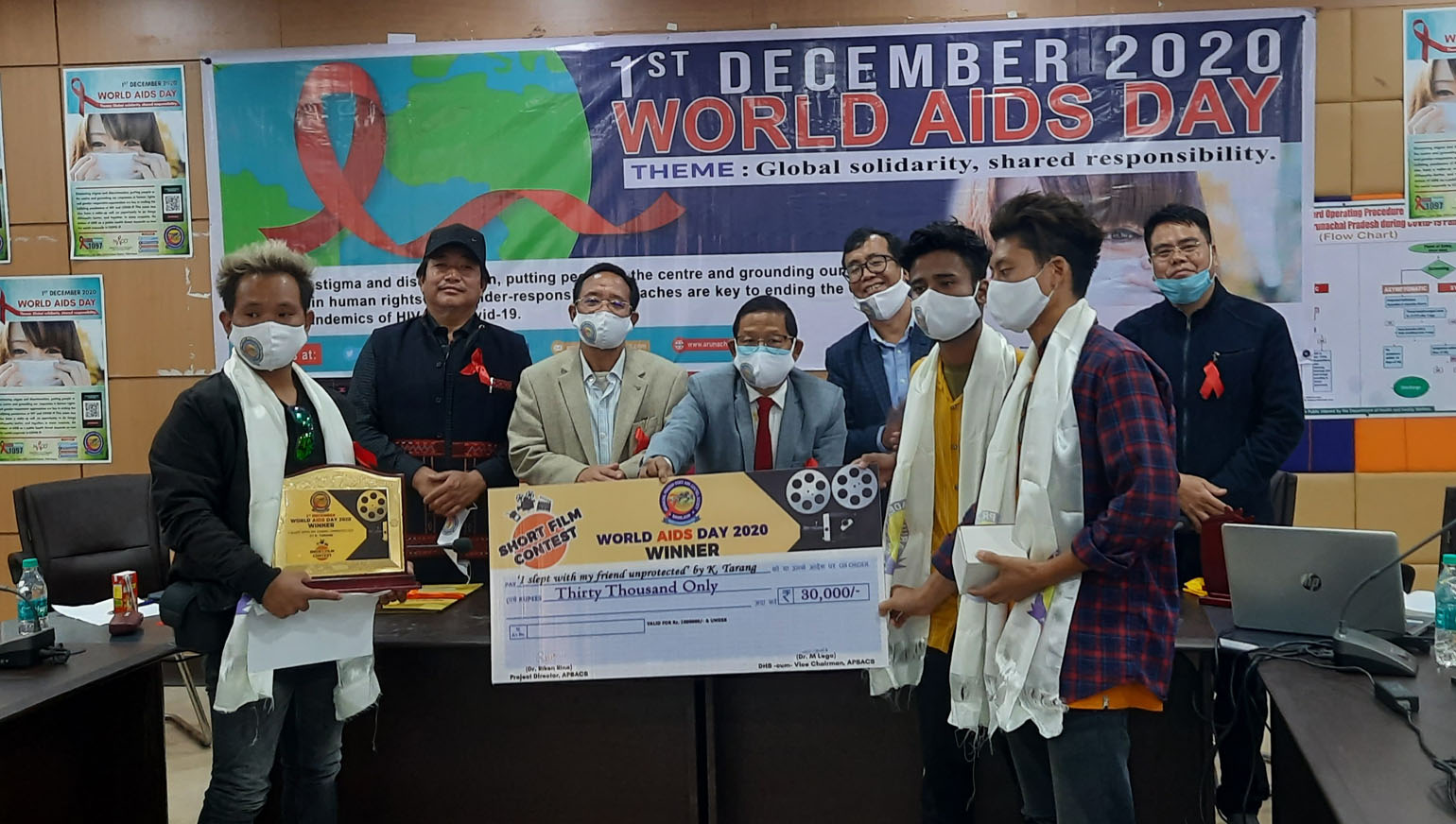
By A O News Service
NAHARLAGUN, Dec 01: The role of younger generations (GenNext) of Arunachal Pradesh is pivotal though of late they have started realizing ‘what is what in life’ that has helped the state to have distinction as 2nd lowest (0.06 per cent) prevalence with 456 positive HIV cases, second to Sikkim (0.05 per cent) in India, said health director Dr M Lego.
Addressing participants of World AIDS Day celebration, particularly students of Global Academy and staff of health department and Arunachal Pradesh State AIDS Control Society (APSACS) here on Tuesday, he said that a rubber stretchable to a limit would be rigid and not expand if stretched beyond limit.
Pointing out that this is the status of Acquired Immune Deficiency Syndrome (AIDS) across the world today without any cure for the disease, he quoted this year’s theme of celebration ‘Global solidarity, shared responsibility’ and exhorted one and all to rise above stigma not to discriminate anyone infected by HIV of AIDS.
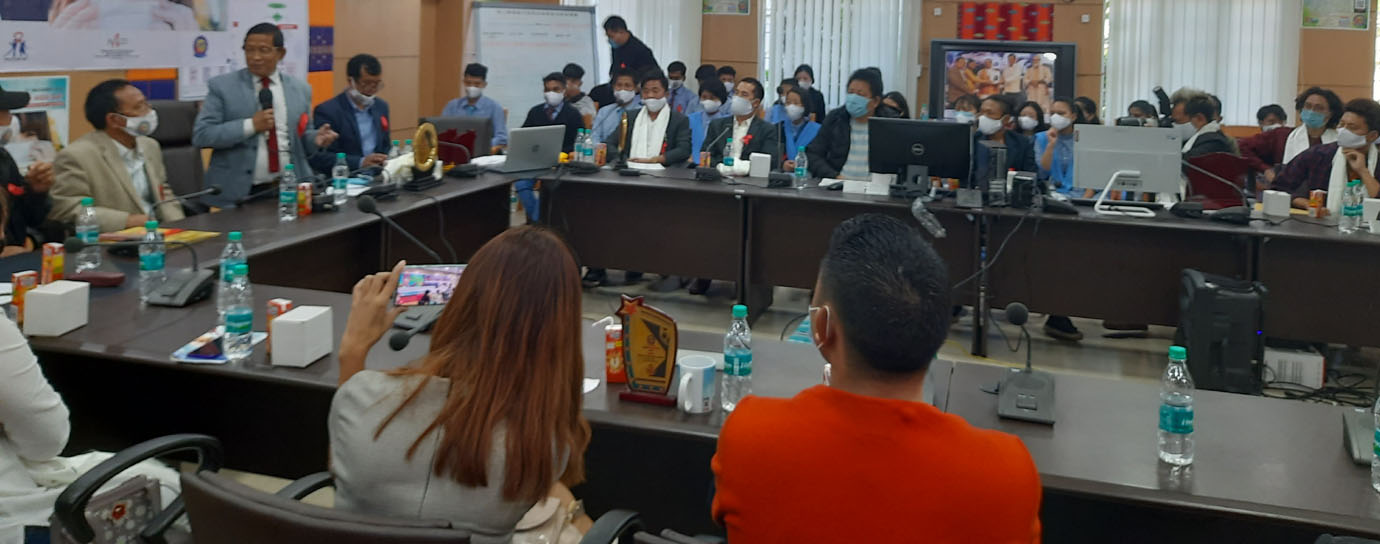
Even people with AIDS could live with dignity if few villains in the society shake off their whimsical attitude towards AIDS, he said.
He lauded the winners of short film contest, saying though only three films were selected as 1st, 2nd and 3rd winners to receive cash award of Rs 30,000, Rs 20,000 and 10,000 respectively along with citation and trophy each. However, all those involved in making these films based on AIDS theme reflected their creativity, skill and wisdom are winners, he said to the applause of the gathering before Dr Lego along with APSACS project director Dr Riken Rina gave away the awards.
Dr Rina along with deputy director (BSD) earlier highlighted district-wise positive HIV cases, saying Papum Pare topped the list with 284 while Upper Subansiri and Dibang Valley were at the bottom with only one each. The districts in descending order were Lohit (49), East Siang (28), West Siang (21), Changlang (19), West Kameng (15), Namsai (13), Lower Subansiri (8), East Kameng (5), Tawang (4), Lower Dibang Valley & Tirap (3 each), Upper Siang (2), taking the total to 456. Appreciably, no case was reported from Kurung Kumey and Anjaw district, they informed.
APSACS deputy director (IEC) Tasar Pali stressing on elimination of stigma, exhorted one and all to shoulder the social responsibility to prevent AIDS from creating social barriers as prevailing COVID-19 pandemic has created a colluding situation.
However, the National Aids Control Organisation (NACO) targets to “reduce new HIV infections by 75% from baseline value of 2010 is an integral component of the 2020 Fast track targets,” as decline 27% decline in new HIV infections (37% in Rajasthan) was reported in India. India is estimated to have had around 22,677 HIV-positive women who gave birth in 2017 and needed prophylaxis for prevention of mother-to-child transmission (PMTCT) of HIV. State-wise, the PMTCT need was highest in Maharashtra followed by Uttar Pradesh, Bihar, Andhra Pradesh, Karnataka, Telangana, West Bengal, Gujarat, Tamil Nadu and Rajasthan. Together, these 10 States contribute almost three fourth of the total PMTCT need in the country.
Our careful acts key to prevent AIDS: Students
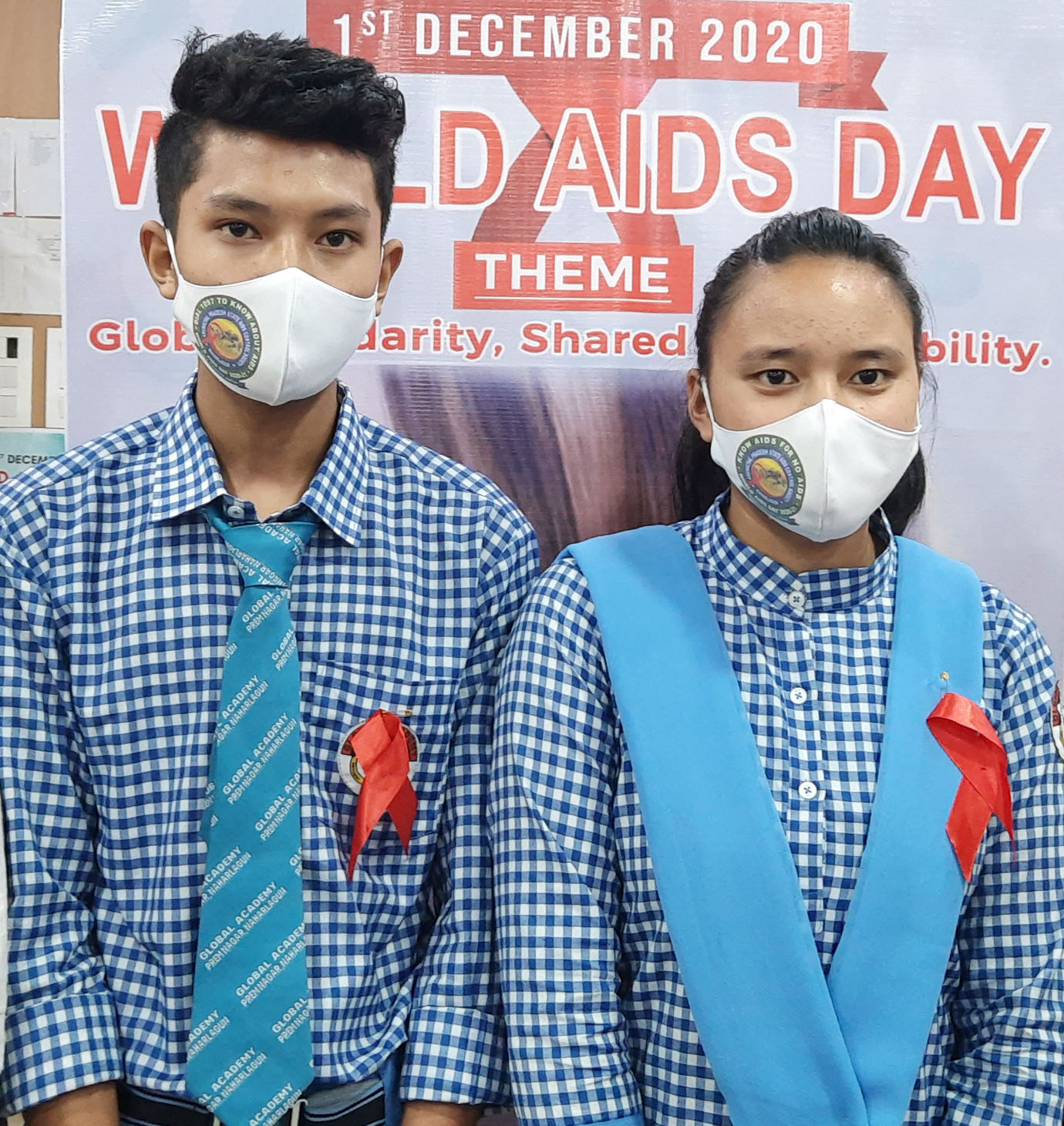
“It is our life and we have to take care of ourselves besides making family members and others in the society conscious about the dangerous impacts of AIDS if anyone gets infected,” said class-X students Pema Eton and Sonam Norbu.
They were among few dozen students of classes IX, X, XI and XII of Global Academy, a higher secondary school, who escorted by teachers Radhe Meena and Leena Sora attended the event.
Responding to questions immediately after the function, they said that though they knew about HIV and AIDS earlier, but thought provoking addresses were very educative which would widen their knowledge base about the disease, what to do and what not and help in educating others.
However, “we should not hesitate to talk openly about it and speak up and act when someone behave in ways amounting to stigmatizing. Raise awareness on how hurting it could be besides explaining prevention strategies and that medical help is always available for any one infected”, they said reflecting their sense of awareness.
When told that they are passing through adolescence being most vulnerable period of their life, they nodded in affirmative saying that their parents being conscious keep watch on their activities, particularly mothers so that they don’t go wayward.


 20

