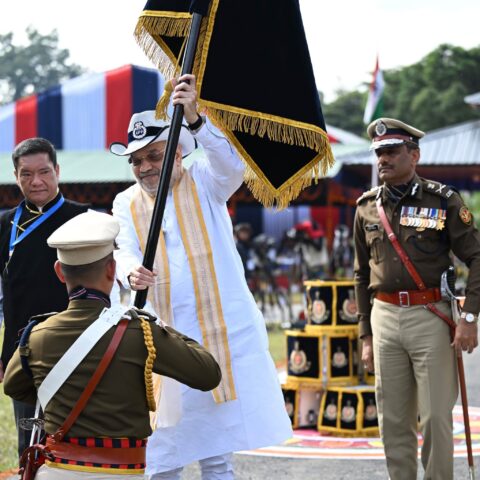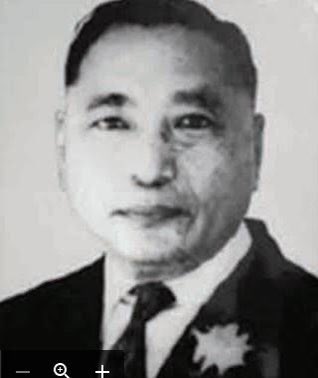
TAWANG, Jan 15: Arunachal Pradesh Govt would recognize contributions of Maj Bob Khathing for officially bringing Tawang under Indian rule in 1951 by building a memorial, Chief Minister Pema Khandu announced here on Friday.
Speaking at a function to felicitate newly elected gram panchayat and zilla parishad chairpersons, Khandu said that a memorial will be built by the state Govt in honor of Maj Khathing at a site to be decided by district administration. The memorial will also house a museum of Monpa tradition and a cafeteria, he said
He further informed that The foundation stone of the memorial will be laid on February 14 next, when in 1951 it is believed Maj Khathing had hoisted the tricolour in Tawang for the first time.
Ralengnao Khathing, popularly known as Bob Khathing, is relatively an unknown figure across India, even in Arunachal, but Tawang people still remember him with respect for being the lone Indian official to come as their saviour when the Chinese threat loomed large.
“Not many of us are aware of Maj Khathing and his contribution to Arunachal Pradesh. Once the memorial is built, visitors will come to know about him and his contributions while having a glimpse of Monpa life,” he said.
As per sources, Bob Khathing served in British Army and fought World War II. A British officer, finding the pronunciation of his name, ‘Relengnao’ being too difficult, decided to call him Bob, and that was the name Khathing came to be known by. During WWII, he served in the famous V Force and was awarded Military Cross besides and Award of Member of British Empire for his gallantry.
He was inducted as an assistant political officer in November 1950 in Tirap division and was posted to Pasighat and then to Kameng division with headquarters at Charduar.
Maj Khathing is believed to have started on an arduous journey from Charduar with a team of soldiers from 5 Assam Rifles on 17.01.1951. This was the first expedition to negotiate extremely inhospitable terrain in sub-zero temperatures, and he with his team of Assam Rifles soldiers reached Tawang on 06.02.1951. The frontier region was sparsely populated and the road network was practically non-existent.
To establish Indian presence upto the extent of McMahon Line, which was demarcated as the border between India and Tibet in 1914, under the terms of the Simla Treaty, required covering the area by foot over very difficult terrain. This, Maj Khathing and his 5 Assam rifles troop successfully accomplished. He then met and interacted with a number of gaon buras and effectively established authority over Tawang soon. Indian administrative presence was thus established in this remote part of the country. Thus, “this memorial will be our tribute to Maj Bob Khathing,” Khandu added. (DIPRO)
AONS adds: His stories was highlighted in this daily in July last. “The border between British India and Tibet at that time (Shimla agreement in 1914) had three buffer Kingdoms, all of them simple monarchies propped up by treaties with British India. Nepal was ruled by the Ranas, Sikkim by the Chogyals and Bhutan by the Wangchuks. Eastwards from Bhutan lay the large 61,000 sqkm stretch of sparsely populated and utterly inhospitable never never land, the barren mountains and jungles beyond any man’s ambition and aspiration. In those days it did not even have a name, at best it was referred to by the British as the ‘Dirang Dzong of Twang’ (it became North East Frontier Agency or NEFA, only in 1954 and Arunachal Pradesh recently in 1986). (With inputs from Claudearpi and few senior BRO officers).


 20