
Beyond the Horizon
By Pradeep Kumar
Millions of people across India had come out to their balconies and clapped or rang musical instrument even kitchen utensils like plates and bowls at 5 pm on 22.03.20 for five minutes to show their unprecedented support to emergency workers, like doctors, paramedics, Army, police, media personnel, among others,.
This was in response to plea of Prime Minister Narendra Modi to show their appreciation to these emergency workers who risking their lives have been working round-the-clock against the global pandemic.
PM Modi took to twitter to thank the people for their support in and wrote: “For last 2 months, millions are working day and night in hospitals, airports and those serving others by not taking care of themselves. On Mar 22, at 5’o clock, we should stand in our doorways, balconies, in our windows and keep clapping hands and ringing the bells for 5 minutes to salute and encourage them.”
Clapping helps immunity by boosting white cells, which are essential for fighting germs and therefore reduces the occurrence of frequent infections. Regular clapping is also shown to have benefits on improved bone health in cases of arthritis and associated pains.
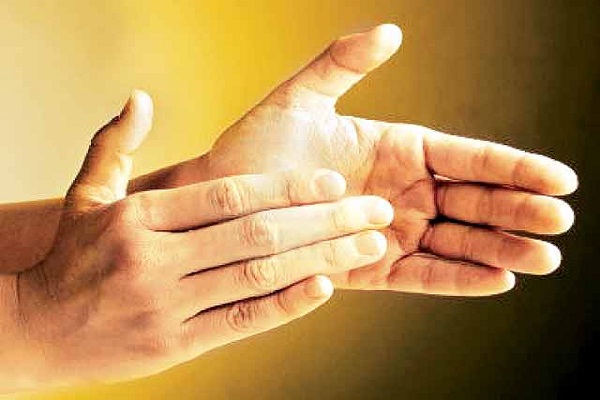
Humans clap by striking together their both palms often quickly and repeatedly making percussive sound to express appreciation or approval. Clapping in rhythm as a form of body percussion matches sounds of music, dance, chants, hand games and clapping games as recorded in Athens. Clapping is often used to help people recognize the rhythm in sounds. It can be used to help musicians count out rhythms and teach phonological awareness to students learning the ways words are constructed. They often clap out syllables to learn to break words into their component sounds.
History of clapping: “No one knows if cavemen and human ancestors clapped hands or not or the origin of clapping. Primates clap hands in the wild not to applaud something but because they’re frightened or want to call attention to food. Domestic primates clap only after they are taught to do so,” says Duke University Fossil Primates Division head Elwyn Simons.
The custom of clapping associated with audience approval dates back to at least 3rd century BC, Yale University professor (classics) Jay Fisher says adding: “You see it at the end of a lot of plays by Plautus and Terence, where they have this word ‘plaudite’, which is means ‘applause’ or ‘clap’.”
Pediatric physical therapist and researcher of University of Hartford, Yvette Blanchard, says that human clappers are made, not born. “I think it’s a learned behavior. What I’ve seen babies do spontaneously, from excitement, clasp their hands together. But the motion of clapping is a learned behavior.”
In 6th century BC, Athens lawmaker Kleisthénes made it so that audiences would have to clap in approval of their leader, since there were too many people to meet individually. Through this came the “applause”, the unified voices of all these people in the form of clapping together in admiration.
It’s worth noting that the ancient Romans also demonstrated their approval of a public performance with finger-snapping and that modern Canadian concertgoers signal delight by screeching at the organ-grinder’s monkey.
In 7th century BC, the decline of Roman Empire began and fell. Emperor Heraclius made plans to meet a barbarian king. Heraclius wanted to intimidate his opponent. But he knew that the Roman army, in its weakened state, was no longer terribly intimidating, particularly when the intended intimidatee was a barbarian. So the emperor hired a group of men to augment his legions — but for purposes that were less military than they were musical. He hired the men to applaud.
Heraclius’s tactic of intimidation by noisemaking did nothing to heal the wounds of a bleeding empire. But it made a fitting postscript to that empire’s long relationship with one of the earliest and most universal systems people have used to interact with each other: clapping of hands. Applause, in the ancient world, was acclamation as well as communication. It was power and a way for humans to recreate, through hand-made “thunderous.”
Applause today is much the same. In the studio, in the theater, in places where people become publics, we still clap together to show our appreciation — to create, in cavernous spaces, connection. (“When we applaud a performer,” argues socio-biologist Desmond Morris.
“We are, in effect, patting him on the back from a distance. We applaud dutifully. We applaud politely. We applaud, in the best of circumstances, enthusiastically. We applaud, in the worst, ironically. We find ways, in short, to represent ourselves as crowds — through the very medium of our crowd-iness,” adds Morris.


 20

