

- History proves Odisha-Arunachal link
Beyond the Horizon
By Pradeep Kumar
State of Odisha is famous for ancient temples and architectures, like of Lord Jaganath at Puri, 10th century Lingaraj Temple dedicated to Lord Shiva at Bhubaneswar, Devi Sambaleswari at Sambalpur, 13th century Konark Temple (Sun Temple) near Puri built by King Nrasimhadeva of Eastern Ganga Dynasty of about 1259 CE & a UNESCO World Heritage site, to name a few, while Capital Bhubaneswar, boasts of 11 famous temples known as ‘Temple town’.
One such temple located at Chandidiha under Barasahi police station of Myurbhanj district is Hingula Temple. The annual four-day Hingula Devi mela begun on March 3 which drew thousands of devotees from far and wide for which Hongula Surakshya Trust headed by president Sunil Dash had made full-fledged arrangements for the convenience of the devotees.
The 100-odd-year-old temple has many unique features, like all devotees give their offering at Agni Kunda on the front of the temple and nothing is taken back home before seeking blessings of the Devi. The pundits don’t ask for anything and the devotees offer only Rs 10 fixed by the Trust. Many to fulfill their mannat move while sleeping on the road and stand to sleep repeatedly to move.
Movement of four-wheelers was strictly prohibited a kilometer ahead and section 144 CrPC was imposed to prohibit mass gathering due to prevailing COVID-19 pandemic otherwise the mela would have been much more enjoyable and lively, Das said.
Bamboo posts were fixed for orderly movement of the devotees while maintaining physical distance while the announcer was continuously cautioning to use mask and maintain distance. Dozens of police and home guard personnel were on duty to manage the crowd while hundreds of volunteers were assisting the devotees to not face any difficulty at any point. One of them was a bank officer Manoj Kumar Chaudhury, who was receiving donations against receipts.
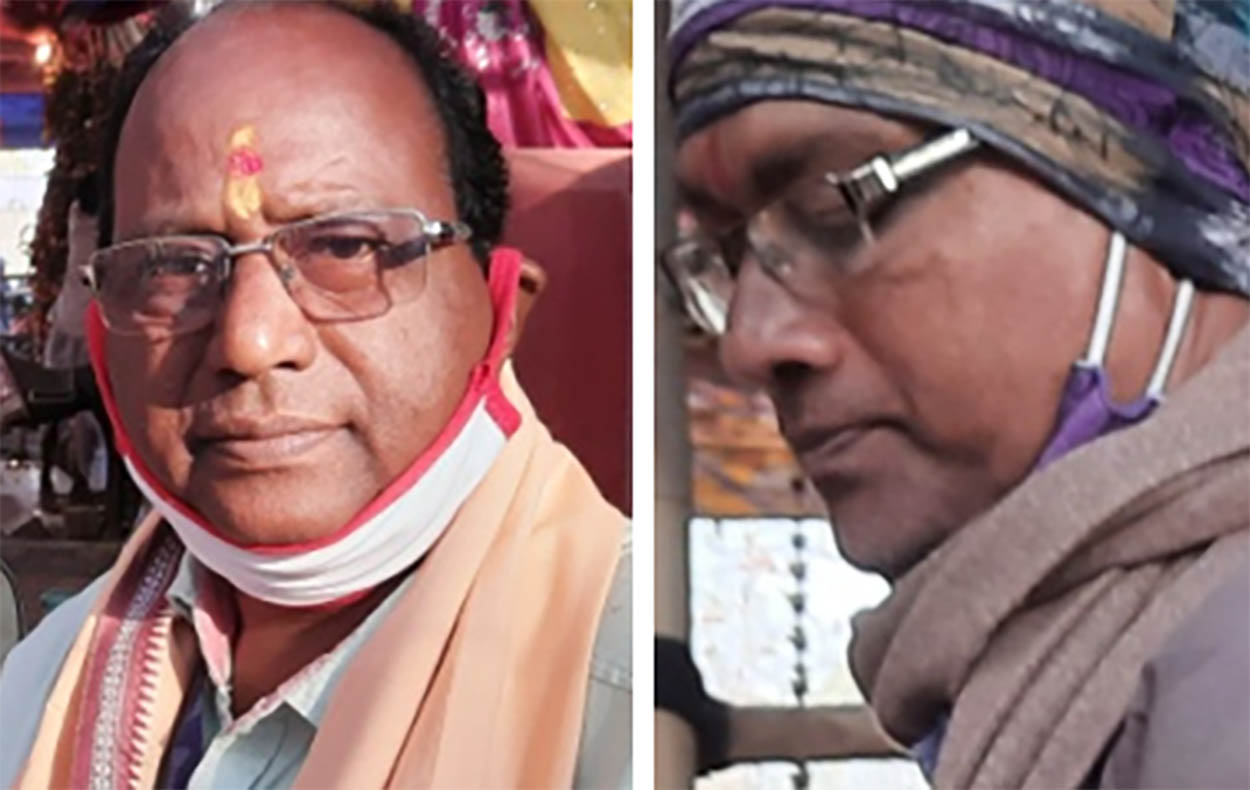
Responding to questions, Das recalled the mythology that once upon a time dozens of houses used to get burnt in summer in nearby Chelia village. Once pundit Janeswar Das of Jajpur visited the village and the villagers approached him with their problem. On his advice, they worshipped Hingula Devi that brought the problem to an end for which the Devi gained prominence. Though the Devi was worshipped at the present place then, the villagers decided to form a committee in 2007 but wanted Chelia village people to be its members Those villagers shifted the Devi to Chelia.
As the situation turned ugly, the local administration had imposed section 144 CrPC. Another committee was formed, followed by constitution of the Trust with Dr Sarat Kumar Dash as head of rituals & rules and the new temple was constructed in 2014. People visit daily to worship Hingula Devi, Das added.
Lingaraj Temple in Bhubaneswar, is described as ‘truest form of dream and reality’ and its intricate carvings and the architecture is mindboggling. This again offers link to early medieval period Malinithan, built by Chutirya kings in 13th-14th century at present Likabali in Lower Siang district of Arunachal, whose ruins have uncanny similarity with Orissan architecture. But Lord Krishna while eloping to Dwarka with Bhismak princess Rukmini had rested at Malinithan on where Durga, consort of Shiva, had welcome them with beautiful garlands. Krishna was so enamoured by the beauty and the scent of the flowers that he addressed Parvati as Malini, meaning “the mistress of the garden”, and since then the place is named as Malinithan.
Emperor Ashoka had fought the dreaded Kalinga War at Bhubaneswar to become Chandasoka and due to repentance for the brutality of war embraced Buddhism to turn Dharamsoka to spread Buddhism in South East Asia.
Emperor Ashoka’s son Mahendra and daughter Sanghamitra while spreading message of Lord Buddha starting in Sri Lanka had travelled all along to reach Burma (present Myanmar) and entered India via Patkai Range of hills through Changlang district. Its glittering proofs are available at Motongsa, also known as Kongmu, located in inaccessible jungle along the Jairampur-Pagsau Pass route bordering Myanmar which provides evidences of spread of Buddhism.
A huge stone slab with stone engraving and serenity justifies the divinity and importance of the pilgrimage. Buddhist monks from across the world reach the place of pilgrimage by trekking on foot for two to three days. They fast, worship and mediate there for days together and take shelter in the ‘staging hut’ built by former speaker, late Setong Sena.
Arunachal Pradesh, the Land of the Rising Sun, is a stunning example of peaceful coexistence where tourism would flourish in times to come to immensely benefit India in general and Arunachal in particular if all its unique places of tourists importance are projected in right perspective.


 20
