
Beyond the Horizon
By Pradeep Kumar
March 21, designated as International Day of Forests by the United Nations UN General Assembly proclaimed in 2012 to commemorate and raise awareness of the significance of all types of forests. It reminds the value of forests in the lives of living creatures as forests play a major role in providing food, water, shelter to animals as well as human beings in uncountable ways,
This year’s theme is “Forest restoration: a path to recovery and well-being.” The restoration and sustainable management of forests can help in addressing issues related to climate change and biodiversity.
It is impossible to think of a world without forests as life on Earth would struggle to survive if forests disappear from the face of the planet. In spite of this fact, the world continues to practise as well as witness large-scale deforestation in every single nook and corner continues unabated. It is time to act and save life giver forest, which cover approximately 31% of Earth’s total global land area.
Approximately half the forest area is relatively intact, and more than one-third is primary forest (i.e. naturally regenerated forests of native species, where there are no visible indications of human activities and the ecological processes are not significantly disturbed. Total forest area is 4.06 billion hectares, approximately 5 000m2 per person.
Forest ecosystems are critical component of the world’s biodiversity as many forests are more biodiverse than other ecosystems Besides producing many resources for use of human beings for their survival and benefit,forests also offer a range of other services to the planet—from carbon sequestering and soil conservation, to water cycle regulation.
India’s forest cover around 7,12,249 sqkm is spread across 21.67% geographic area of the country/. There are 188 different types of forests. It is time to act to protect these forests from threats of wildfires, climate change, deforestation & encroachment, by monitoring the change of land use which helps use of forest land for non-forestry purposes.
Arunachal Pradesh, nestled in the foothills of Himalayas with over 50,000 sqkm of moderate to very dense forests is equivalent to 550 million cubic metre growing stock or living assets (equivalent to 2000 million metric tons of carbon dioxide) and richest bio-diversity hot spot in the world serves as one of the major ‘carbon sinks’ or ‘lungs’ of the globe.
The carbon being a blanket of the earth to allow life to sustain,” Arunachal and Arunachalees have been shouldering a huge responsibility as conservators of great ecosystem through their traditions and customs. The ecosystem represents huge tropical, temperate and Alpine forest ranges not seen anywhere else in the country.
Every human action – from the use of fossil fuel to setting up industries – is affecting the ecosystem. We want development is necessary for a comfortable life, but for what gain – short term or long term? Considering the destructive effects of human activities, the concept of ‘development and environment’ has changed to ‘green development’ to strike a golden mean between development and conservation, while also adopting new methods of lifestyle in tune with the inevitable impacts of climate change,
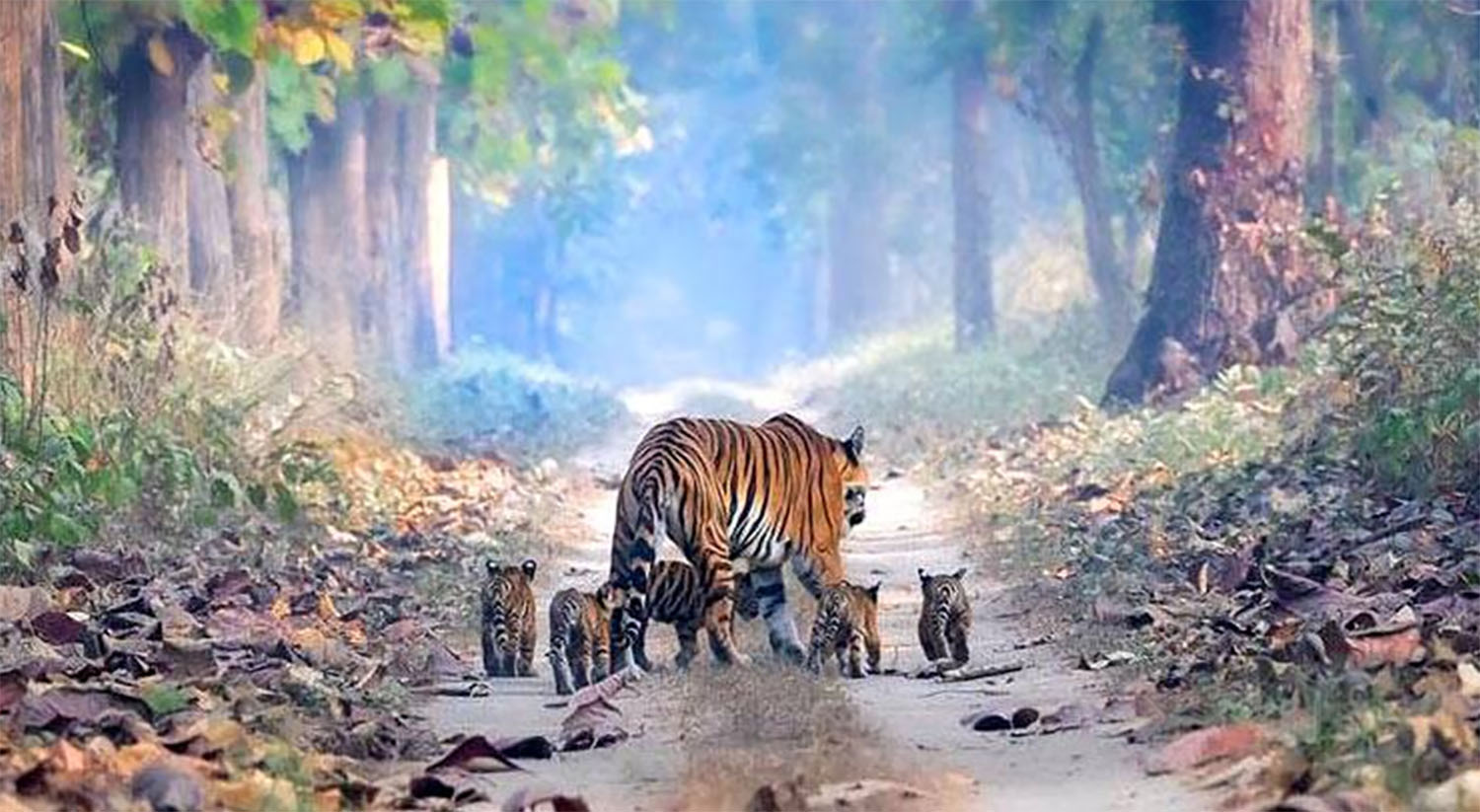
The tiger is considered by the Apatani tribe as elder brother and anyone killing the big cat is either boycotted by the society or the person observes self-exile for a few months away from the village to observe rituals for purification, This reflects value of Arunachalee traditions and taboos serving as deterrent against wanton destruction of the ecosystem.
The Bambusa bamboo from Arunachal’s Van Vigyan Kendra in Chessa was used to seal a portion of the porous 4,095 km Indo-Bangladesh border to prevent infiltration and insurgents. Altogether 3,500 seedlings of the dense and thorny variety were taken by the Indian Army in 2006 from the VKV.
Lack of involvement of communities living in and around forests and inadequate resources at their disposal is putting India’s forests at risk, believe experts. Uttarakhand is home to country’s oldest forest management system, van panchayats (VPs), but only about half of state’s 11,522 VPs are currently functional. Formed in 1931 under Indian Forest Act 1927, VPs give villagers the power to do what is needed to protect forests. Forest-rich Madhya Pradesh has more than 15,228 joint forest management committees (JMPs) and eco-development committees followed by Maharashtra with 12,665 JMPs and Odisha 12,494 JMPs.
The Amazon rainforest is the undisputed leader of the largest forests in the world. It stretches to a land of more than 55,00,000 sqkm and covers much of Brazil, Bolivia, Colombia, Ecuador, French Guiana, Guyana, Peru, and Suriname. It is a treasure trove of diverse and unique flora and fauna, which cannot be found in anywhere. Between the forests flows the great Amazon River, world[‘s second-longest river. Amazon accounts for 628 million hectares of tree cover, including 526 million hectares of primary forest as of 2020.
Sundarban Mangrove Forest occupy about 10,000
sqkm areas of land across Bangladesh and India. The largest mangrove forest in the world, it is popularly named after Sundari tree, which covers a majority of the land in the region. It is also a well-known hotspot of Bengal tiger, other wild animals like wild boars, river dolphins, cobras, Indian pythons, and crocodiles. It hosts around 60 species of reptile, over 300 bird species, and more than 300 species of plants.
Legendary ayurvedist Charak, who famously failed to offer his teacher the guru dakshina that was sought of him. On being asked to bring a leaf without any use, Charak set out on his search. He roamed the length and breadth of the earth and studied every plant he came across, only to find that there was no plant on the planet without any medicinal value. His researches are recorded in the book, Charakh Samhita.


 20
