
Beyond the Horizon
By Pradeep Kumar
People in 21st century have become too health conscious more than ever before in human civilization history, Illness, particularly lifestyle diseases, are very common while India is known as diabetes capital of the world with highest number of 50 million people suffering from type-2 diabetes. The WHO has estimated that global burden of type-2 diabetes is expected to rise to 438 million from 285 million and 58% rise in India from 51 million to 79.4 million by 2030.
There are many people who abuse their bodies with the notion that ‘you only live once, why not enjoy it,’ or ‘we are all going to die anyway’. But how much the quality of life is hindered when we abuse our bodies by not eating correctly, not moving enough, thinking negatively and by keeping demeaning perceptions that prevent us from growing.
Tremendous advancement in medical field can repair and replace body structures, like skeletal replacements, organ transplants and laser treatment, gives us no excuse to disregard our health. Original parts always work better! Thus, “Prevention is better than cure”, goes the Chinese proverb,
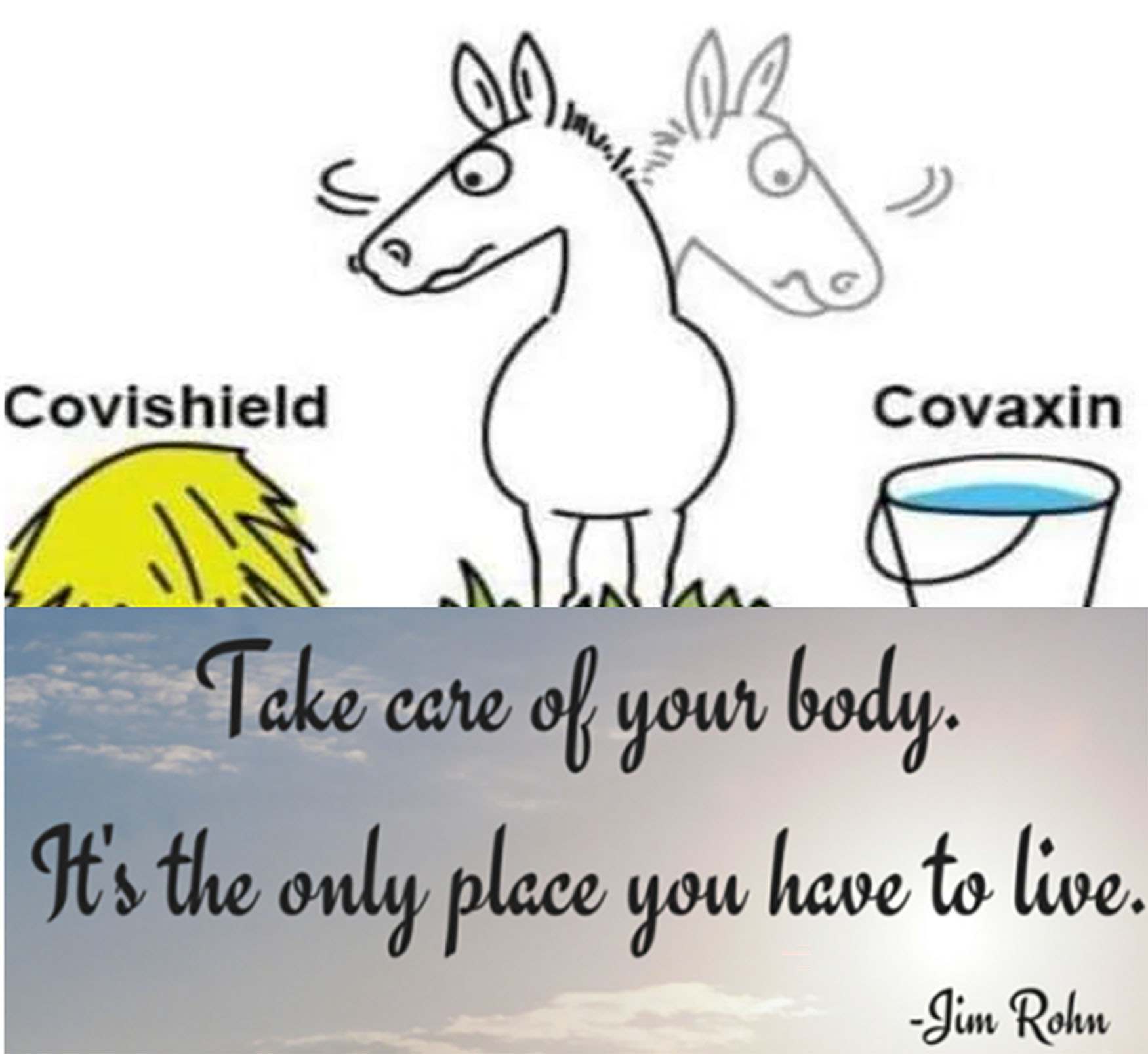
“Look after your body, it is the only place you have to live”, says well known author Jim Rohn. Our bodies are the only ‘permanent places’ we have to reside while we live on Earth – is a gospel truth.
But, these philosophy and medical science collapsed with the emergence of newly discovered coronavirus (SARS-CoV-2) or COVID-19 from Wuhan city of China in December 2019. This infectious disease spreads fast primarily through droplets of saliva or discharge from nose when an infected person coughs or sneezes was declared as pandemic by the WHO on 11.03.20.
With neither medicines nor vaccine, the killer virus spread like tsunami across the world to 220 nations and territories to put humanity to test across the world to make COVID a geopolitical challenge and health a geopolitical issue.
What is SARS-CoV-2? There are hundreds of coronaviruses, including four that can cause the common cold, as well as the one that sparked the severe acute respiratory syndrome (SARS) epidemic in 2002 and emergence of Middle East Respiratory Syndrome (MERS) in 2012, according to National Institute of Allergy and Infectious Diseases Trusted Source,
Scientists have been studying coronaviruses for over 50 years, said Dr. Eric J. Yager, an associate professor of microbiology at Albany College of Pharmacy and Health Sciences in Albany, NY. This means scientists had existing data on the structure, genome and life cycle of this type of virus.
“Research on these viruses established the importance of the viral spike (S) protein in viral attachment, fusion, and entry, and identified the S proteins as a target for the development of antibody therapies and vaccines,” Dr. Yager explained.
Vaccine: Under normal circumstances, making a vaccine can take up to 10-15 years because of complexity in vaccine development. “Vaccines train our immune system to remember an infectious agent without our having to contract it,” says Dr. Michael Parry, the chair of Infectious Diseases at Stamford Health in Stamford, CT.
“Early efforts by Oxford University scientists to create an adenovirus-based vaccine against MERS provided the necessary experimental experience and groundwork to develop an adenovirus vaccine for COVID-19.” However, amid a global pandemic, researchers quickly mobilized to share their coronavirus data with other scientists.
“Thanks to advances in genomic sequencing, researchers successfully uncovered the viral sequence of SARS-CoV-2 in January 2020 roughly 10 days after the first reported pneumonia cases in Wuhan,. The ability to fast-track research and clinical trials was a direct result of this worldwide cooperation. Dr. Yager said.
India, largest vaccines producer of the world, developed Covaxin, first indigenous vaccine, followed by Covishield in tune with its ‘Go Corona Go’ initiative.
Though COVID-19 reports have been hogging the print and electronic media since then, but former PCCF-cum- special sectrary to state CM KD Singh, a prolofic writer, stirred my psyche by sending a cartoon on COVID-19 vaccines.
It reads: Buridan’s ass, is a philosophical paradox on the conception of freewill, named affter 14th century French philosopher Jean Buridan. In this hypothetical scenario, a rational ass is placed between hay and water. It’s equally hungry & thirsty. Since it’s a rational ass, it is confused whether to eat first or drink fast. Since water and hay are equidistant, it’s unable to make a rational choice despite equally hungry and thirsty, Thus, the rational asss dies. People who wastetime deciding between Covishield and Covaxin, often meet the same fate as Buridan’s ass.
Interestingly, a through comparison between efficaies of both vaccines would leave no scope for apprehension.
Covaxin has been developed by Hyderabad-based Bharat Biotech International Ltd in association with Indian Council of Medical Research (ICMR) and the National Institute of Virology (NIV).
Covishield, developed by Oxford-AstraZeneca, is being manufactured by the Serum Institute of India (SII).
Both the vaccines, following a two-dose regimen, administered 28 days apart, have shown more than satisfactory results since inoculation in India. The effectiveness of Covishield is nearly 90% as per global reports while Covaxin’s 81% as per interim 3rd phase trial results.
Covaxin was granted a restricted-use authorization in clinical trial mode, while Covishield allowed for restricted use in emergency situations that can potentially prevent coronavirus infection in people aged 18 years and above.
When ‘co’ (cooperation) is common in Covaxin and Covishield, it would be risky to get squeezed between ‘vaxin’ and ‘vishield’, but go for any vaccine to protect life. Thus, 5th greatest female screen legend of classic American cinema Mae West once said: ‘You only live once, but if you do it right, once is enough’.


 20
