
- 40,000 vaccination in Calcutta gave Cholera vaccine recognition
By Pradeep Kumar
Beyond the Horizon
A vaccine is a biological preparation that provides active acquired immunity to a particular infectious disease. The term vaccine derives from the Latin word for cow, reflecting the origins of smallpox vaccination.
The terms vaccine and vaccination are derived from Variolae vaccinae (smallpox of the cow), the term devised by British doctor Edward Jenner (who developed the concept of vaccines and created the first vaccine) to denote cowpox. He used the phrase in 1798 for long title of his ‘Inquiry into the Variolae vaccinae Known as the Cow Pox’, in which he described the protective effect of cowpox against smallpox.
In the 20th century, the smallpox vaccine was identified as a separate viral species known as caccinia, which was serologically distinct from cowpox. Whole genome sequencing has shown that vaccinia is 99.7% identical to horsepox, with cowpox being a close relative.
Smallpox vaccine was first vaccine to be developed against a contagious disease. In 1796, Dr Jenner demonstrated that an infection with the relatively mild cowpox virus conferred immunity against the deadly smallpox virus. Cowpox served as a natural vaccine until the modern smallpox vaccine emerged in 20th century. From 1958 to 1977, the World Health Organization (WHO) conducted a global vaccination campaign that eradicated smallpox, making it the only human disease to be eradicated. Although routine smallpox vaccination is no longer performed on the general public, the vaccine is still being produced to guard against bioterrorism and biological warfare.
Cholera vaccine was first developed by Louis Pateur on chicken and other animals. They were the first widely used vaccine that was made in a laboratory. In 1884, Spanish physician Jaume Ferran i Clua developed a live vaccine he had isolated from cholera patients in Marseilles, and used it that on over 30,000 individuals in Valencia during that year’s epidemic. However, his vaccine and inoculation was rather controversial and was rejected by his peers and several investigation commissions.
Russian bacteriologist from Russain Empire Waldemar Mordechai Wolff Haffkine, who later migrated to France, became a French citizen and worked at Pasteur Institute of Paris in 1892 developed an anti-cholera vaccine that he tried out successfully in India. He is recognized as the first microbiologist to develop and use vaccines against cholera and bubonic plague with less severe side effects. He tested the vaccines on himself. Lord Joseph Lister named him “a saviour of humanity”. He was appointed Companion of the Order of Indian Empire (CIE) in Queen Victoria’s 1897 diamon jubilee honours.
The vaccine was later testing on more than 40,000 people in Calcutta area from 1893 to 1896. His vaccine was accepted by the medical community, and is credited as the first effective human cholera vaccine. The Jewish Chronicle of that time noted “a Ukraine Jew, trained in the schools of European science, was decorated by the descendant of William the Conqueror and Alfred the Great for saving the lives of Hindus and Mohammedans.
Finally, in 1896, Wiihelm Kolle introduced a heat-killed vaccine that was significantly easier to prepare than Haffkine’s, using it on a large scale in Japan in 1902. Oral cholera vaccines were first introduced in the 1990s. In 2016, the FDA approved Vaxchora,a single-dose oral vaccine to prevent cholera for travelers. As of June 2016, Vaxchora was the only FDA-approved vaccine for prevention of cholera.
In 1881, to honor Jenner, Louis Pasteur proposed that the terms should be extended to cover the new protective inoculations then being developed. The science of vaccine development and production is termed vaccinology.
Oral vaccines of two or three doses were first introduced in the 1990s and in WHO’s list of essential medicines. In 2010, in some countries an injectable cholera vaccine was available.
BCG vaccine: The history of the BCG vaccine starts with Albert Calmette and Camille Guerin. They were two French scientists who from 1905 had been working on developing a vaccine against TB. BCG is an abbreviation of Bacillus Calmette-Guerin, meaning the bacilli of Calmette and Guerin.
Between 1905 and 1918, Calmette and Guerin carried out research into the mechanisms of tuberculosis infection. They demonstrated that small doses of injected and weakened animal bacilli could be used as a protective vaccine against TB, in cattle and various species of monkey. So they then cultured the bacillus, and found that successive culturing weakened the bacillus.
Calmette and Guerin tried to produce ever more weakened strains of the bacillus by successive sub culturing every three weeks. The research had to stop during the first world war, but was resumed in 1918. By 1921 the TB had been sub cultured 230 times, and it was so weakened that it was believed that it could confer immunity without causing disease in humans.
The BCG vaccine was first used in humans in 1921 when it was given to a child in Paris by Dr Weil-Hale. The baby’s mother, who had TB, had died just after the baby was born, and the baby was due to be brought up by its grandmother who also had TB. The baby was given 6 mg. of BCG orally, and was said to have developed into a perfectly normal boy. During the next three years (up to July 1924) a further 317 infants were also successfully vaccinated.
Influenza or flu vaccines: Worldwide Spanish Flu pandemic of 1918, “Pharmacists tried everything they knew, everything they had ever heard of, from the ancient art of bleeding patients, to administering oxygen, to developing new vaccines and serums (chiefly against what we now call Hemophilus influenzae – a name derived from the fact that it was originally considered the etiological agent – and several types of pneumococci). Only one therapeutic measure, transfusing blood from recovered patients to new victims, showed any hint of success.” Vaccination against influenza began in the 1930s, with large-scale availability in the United States beginning in 1945.It is on World Health Organization’s list of essential medicines.
In 1931, viral growth in embryonated hens’ eggs was reported by Ernest William Goodpasture and colleagues at Vanderblit University. The work was extended to growth of influenza virus by several workers, including Thomas Francis, Jonas Salk, Wilson Smith and Macfarlane Burnet, leading to the first experimental influenza vaccines. In the 1940s, the US military developed the first approved inactivated vaccines for influenza, which were used in the Second World War. In 2012, US Food & Drug Administration (FDA)approved influenza vaccines made by growing virus in cell cultures and influenza vaccines made from recombinant proteins.
Human papillomavirus (HPV) vaccine was first developed by Australia’s University of the Queensland (UoQ) iand the final form was made by researchers of UoQ, University of Rochester, Georgetown University Medical Centre and U.S. National Cancer Institute. Researchers Ian Frazer and Jian Zhou of UoQ have been accorded priority under U.S. patent law for the invention of the HPV vaccine’s basis, the VLPs. In 2006, the FDA approved the first preventive HPV vaccine, marketed by Merck & Co. under the trade name Gardasil. By second quarter of 2007, it was approved in 80 countries- in Australia (June 2007), European Union (Sept 2007), the US approved similar vaccine, Cervarix (Oct 2009).
German researcher Harlad zur Hausen, who proved that genital HPV infection can lead to cervical cancer, was awarded half of $1.4 million 2007 Nobel Prize while French virologists Francoise Barre-Sinoussi and Luc Montegnier shared the hal for discovery of HIV.
In December 2014, the FDA approved a vaccine (Gardasil) 9 to protect females between the ages of 9 and 26 and males between the ages of 9 and 15 against nine strains of HPV.
As of 2017, 71 countries include it in their routine vaccinations, at least for girls and it is on World Health Organization’s list of essential medicines besides 25 different preventable vaccines.
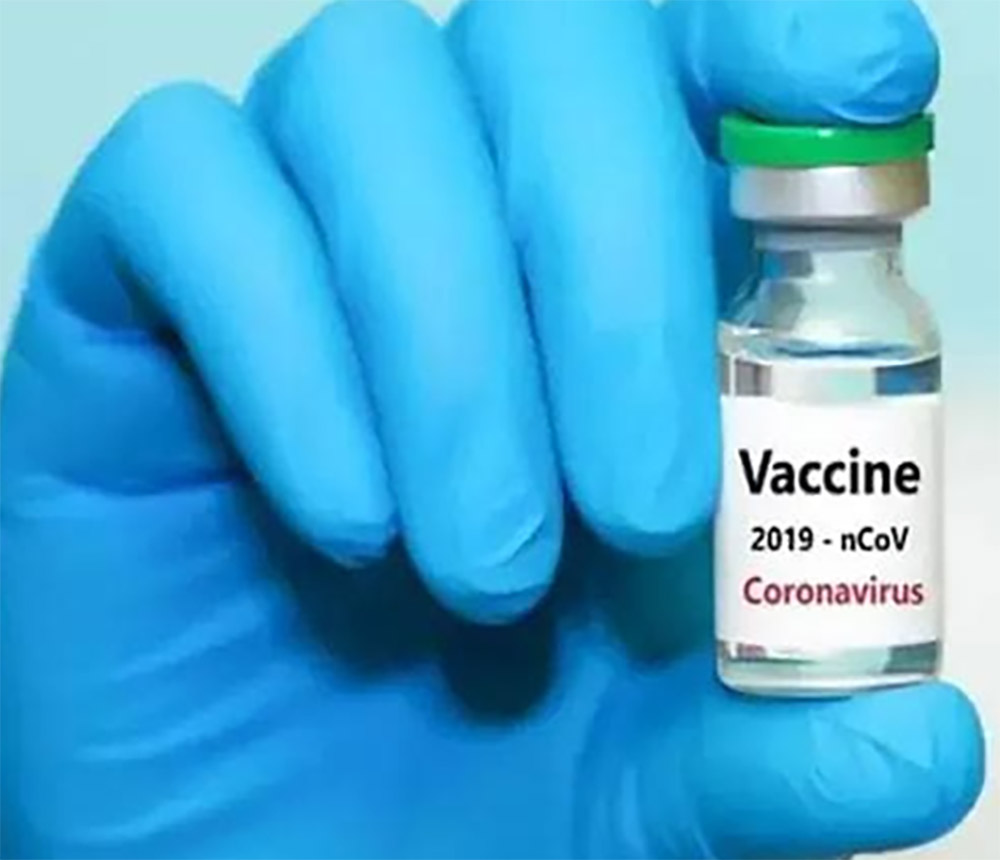
COVID‑19 vaccine is intended to provide acquired immunity against SARS‑CoV‑2 or COVID-19 virus. Before it, there was an established knowledge about the structure and function of the viruses causing diseases, like severe acute respiratory syndrome (SARS) and Middle East Respiratory Syndrome (MERS), which enabled accelerated development of various vaccine technologies during early 2020.
On 10.01.20, the SARS-CoV-2 genetic sequence data was shared through GISAID, and by the global pharmaceutical industry March 19.03.20 announced a major commitment to address it.
In Phase III trials, several COVID‑19 vaccines demonstrated efficacy as high as 95% in preventing symptomatic infections. As of April 2021), seven conventional inactivated vaccines (BBIBP-CorV, CoronaVac, Covaxin,WIBP-CorV, CoviVax, Minhai-Kangtai, & QazVac), five viral vector vaccines (Sputnik Light, Sputnik V, Oxford-AstraZeneca, Convidecia & Johnson & Johnson), and two protein subunit vaccines (EpiVacCorona & RBD-Dimer).
Total 308 vaccine candidates were in various stages of development as of March 2021 with 73 in clinical research, including 24 in phase-I, 33 in phase- phase-I-II and 16 in phase-III trials.
Many countries have implemented phased distribution plans that prioritize those at highest risk of complications, such as the elderly, and those at high risk of exposure and transmission, such as healthcare workers. Single dose interim use is under consideration in order to extend vaccination to as many people as possible until vaccine availability improves.
As of 18 May 2021, 1.53 billion doses of COVID‑19 vaccine have been administered worldwide based on official reports from national health agencies. Astra Zeneca anticipates producing 3 billion doses in 2021, Pfizer–BioNTech 1.3 billion doses, and Sputnik V, Sinopharm, Sinovac, and Johnson & Johnson 1 billion doses each. Moderna targets producing 600 million doses and Convidecia 500 million doses in 2021. By December 2020, more than ten billion vaccine doses had been preordered by countries, with about half of the doses purchased by high-income countries comprising 14% of the world’s population.


 20

