
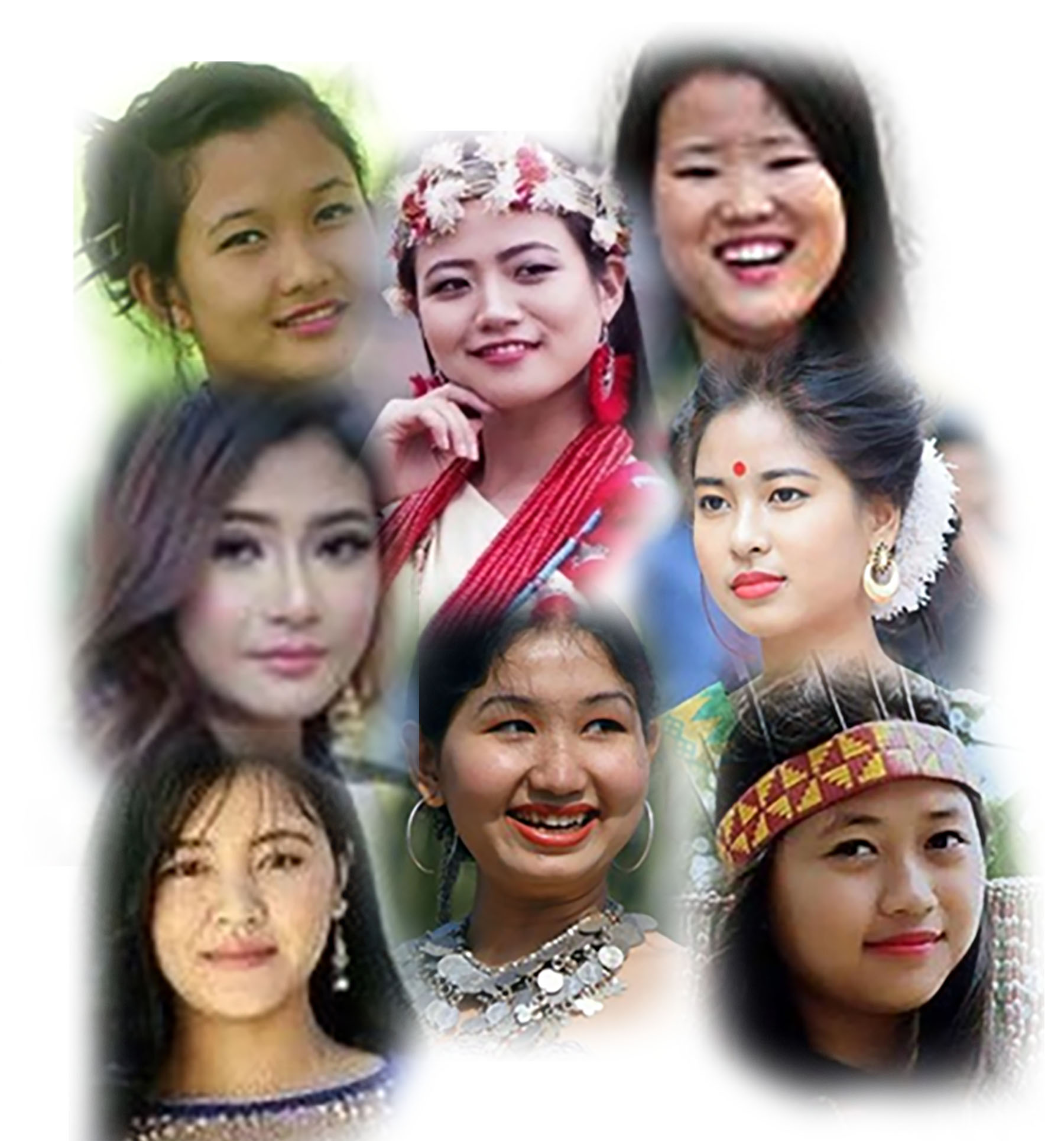
- Educating women means educating the society
By Bipasha Das
The Northeast India consists of eight states, namely, Arunachal Pradesh, Assam, Manipur, Meghalaya, Mizoram, Nagaland, Sikkim and Tripura. These NE states are abundantly blessed by Mother Nature in their best form. Socially speaking, according to an article by She the people, NE women are most empowered in India.
As a matter of fact, Meghalaya is the only matrilineal state in the country and one of the six matrilineal states in the world. Women like Mary Kom and Sanjukta Parashar and Anshu Jamsenpa (of Arunachal Pradesh is the only woman on earth to have conquered Mount Everest) who have brought immense glory to the country in their respective fields, belong to the NE region. Yet, there are many things left unheeded in this feminist region too. This region of India also has its own set of drawbacks.
Women in the NE area are known for working hand-in-hand with men. The women here are gifted with the skills of knitting and sewing. They are equally cultured about the fishery, handicraft and tourism like the men. Yet, the women are classified as an inferior breed. By why is an intriguing question?
Customary Laws: In the NE, the customary laws regarding marriage and divorce are biased, for instance, the custom of bride price. The bridegroom has to pay a certain amount of money to the bride’s parents as if they were purchasing a commodity. Anyhow, this compensation does not protect the bride from any exploitation. It somewhat prevents the women from initiating divorce as it ‘entails the obligation to return the bride price to the husband’.
Thus, the woman ends up suffering in silence. Due to this customary law, women play no role in the decision-making too. They are also excluded from the said institution. Even though Meghalaya is the only matrilineal state in the country, yet the society follows patriarchal norms. Women are privileged in the matters of inheritance but not decision making. The man in the house handles the decision-making powers and represents the family or the kin group at the community level.
Education: According to the 2011 census, the literacy percentage of NE states was 70.5% – mals literacy was 80.3% and female literacy 60.5%. The highest literacy rate was recorded in Mizoram with 91.30% (93.30% males and 89.30% females).
Although according to the census, Manipur was ranked 5th, it reflected a tremendous gap between the rates of literacy among males and females. The differential between gender-gap was 13.32%. The overall differential between gender-gap in the NE states was 19.8%.
The enlisted drawbacks must be rectified under the supervision of the concerned authority. The women have equal rights as the men on papers, but no one is concerned about what happened behind closed doors. The empowerment of women is or was never a matter of being privileged. It is, in fact, a necessity. It is as essential as the air we breathe.
Empowerment is not an achievement. It is the right of every girl at the face of the Earth. Education of men remains only to benefit them. The knowledge of women is carried forward from one family to another. Her education educates the society. Thus, educating her should not be interpreted as an achievement or privilege. She has inherited this right, and it is a necessity.


 20
